

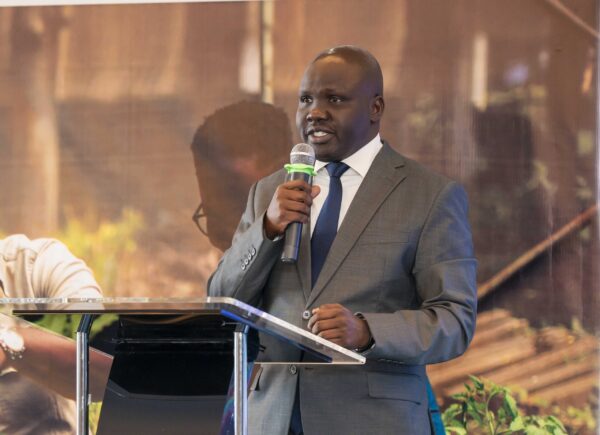
The 3-day Expo arrives at a pivotal moment for East Africa’s food economy as a part of a growing regional and continental momentum focused on placing young people at the center of food systems transformation.
Nairobi, Kenya With more than 70% of East Africans relying on agriculture for their livelihoods and food systems facing intensifying climate and market pressures, regional stakeholders have launched a major push to elevate youth-led innovation across the agri-food sector.
The region’s powerful demographic advantage, 60% of the population under 25, positions youth to shape the future of agriculture, especially as new financing models, modern technologies, and stronger market links open the door to meaningful participation and leadership.
A collective of partners steered by the East African Community (EAC) Secretariat in partnership with AGRA has convened the East African Youth in Agri-Food Systems Expo 2025 (EAYASE-25) drawing agripreneurs, policymakers, investors and development partners to Nairobi as a part of a growing regional and continental momentum focused on placing young people at the center of food systems transformation.
Stella Clara Massawe, Senior Specialist, Policy and State Capability Eastern and Southern Africa, AGRA said: “Across Africa, young people are already demonstrating that agriculture can be innovative, profitable and climate-resilient Through EAYASE-25, AGRA and its partners are strengthening youth-led agribusinesses, enabling access to finance and markets, supporting digital and climate-smart solutions, and shaping policies that allow young agri-preneurs not just to start, but to scale sustainable businesses.”
EAYASE-25 builds on wider continental efforts to advance youth empowerment across Africa’s agri-food systems. Working with governments, financial institutions, private sector players and development partners, AGRA supports youth entrepreneurship by strengthening access to finance, digital agriculture and fintech solutions, climate-smart practices, agro-processing and value addition.
Together, these initiatives are helping reposition agriculture from subsistence activity into a competitive, high-value engine of economic growth across the continent. In parallel, AGRA advocates for inclusive policies that expand opportunities for young people and women.
Fahari Marwa, Head of Agriculture and Food Security at the EAC Secretariat, noted: “The East African Community is committed to ensuring that youth are fully integrated into regional development and food security strategies. Platforms such as EAYASE-25 enable young people to directly engage policymakers and investors, align national and regional priorities, and contribute to policy and market solutions that support inclusive and sustainable agri-food systems across the Community. ”
He added, “Beyond the Nairobi convening, we aim to strengthen a sustainable regional network of youth agripreneurs that promotes ongoing collaboration, mentorship and knowledge exchange. The Expo aligns with the EAC Youth Strategy and the African Union’s Agenda 2063, both of which emphasize youth empowerment, economic inclusion and sustainable agriculture as cornerstones of long-term growth.”
Joyce Ng’ang’a, one of the young agripreneurs attending the forum, welcomed the initiative, noting that it comes at a pivotal moment for the region. She said, “this is the time for youth to step forward and lead the transformation of East Africa’s food systems – not only to secure the region’s future food supply, but also to build resilient, innovative and sustainable agri-food economies that can compete globally.”
She also urged the government and other organizations to consider inclusive agricultural practices and capacity building which encourages participation by people with disabilities.
Last week, Rwanda hosted the Youth Forward for Agrifood Systems Transformation Forum (Youth FAST Forum), organized by the Ministry of Agriculture and Animal Resources (MINAGRI) with support from development partners. The Kigali forum focused on accelerating the implementation of Rwanda’s National Strategy for Transformation (NST2) and the Strategic Plan for Agriculture Transformation (PSTA5), positioning youth as key actors in agrifood systems, job creation and investment mobilization.