

Adding two familiar fodder shrubs to dairy cow diets could help Kenyan smallholder farmers reduce methane emissions while improving feed efficiency and potentially lowering milk production costs, according to new research from the International Livestock Research Institute’s (ILRI) Mazingira Centre.
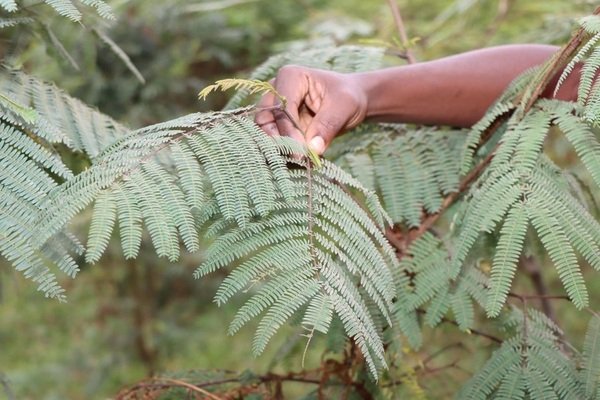
The study, published in JDS Communications, identified Calliandra calothyrsus and Leucaena leucocephala as promising additions to typical Kenyan dairy cattle diets. Laboratory experiments found that the shrubs reduced methane emissions by approximately 10–13 per cent per unit of feed without compromising digestibility or the estimated energy supplied by the diet.
Researchers replaced about 12 per cent of a standard dairy ration, measured on a dry-matter basis, with different fodder species to assess their effects. Calliandra and Leucaena produced the most promising results, suggesting that locally available plants could offer a practical way to make dairy production more climate-friendly.
However, the findings remain preliminary, as the experiments were conducted in laboratory conditions that simulate digestion rather than in live animals.
“These results are an important first step, but they now need to be validated in live animals under practical feeding conditions before recommendations can be made to farmers,” said Dr. Edward H. Cabezas Garcia, who led the study.
“The goal is to identify feeding strategies that help farmers produce more milk with a smaller environmental footprint, using resources that are already available locally.”
Methane is produced naturally when microbes break down fibrous feeds in the rumen, a specialised compartment of a cow’s stomach. The gas is released mainly through belching and contributes significantly to global warming. It also represents energy that animals could otherwise use for production.
The research is particularly relevant to Kenya’s smallholder dairy sector, where high feed costs and seasonal shortages continue to constrain productivity.
During dry periods, farmers often depend on Napier grass, maize stover, crop residues and natural pastures. Such roughages can support lower milk yields and higher methane emissions per litre of milk.
Introducing carefully managed quantities of shrub leaves could improve the quality of cattle diets, potentially helping farmers obtain more milk from the same animals while reducing emissions per litre. Better feed efficiency could also reduce reliance on expensive commercial concentrates.
“Many smallholder farmers are already familiar with these shrubs because they have long been used as livestock fodder and for soil conservation,” noted Dr. Cabezas Garcia.
“What this research shows is that integrating them as targeted ‘methane-smart’ feeds represents an enhancement of existing systems rather than the introduction of entirely new technologies.”
Beyond livestock feeding, the shrubs offer additional benefits. They can grow along farm boundaries, on terraces or in dedicated fodder banks, minimising competition with food crops. Their ability to produce green biomass during dry periods makes them valuable when other feeds become scarce.
As legumes, both species also fix atmospheric nitrogen, helping improve soil fertility. Their leaves and prunings can be used as mulch, while woody stems provide fuelwood.
The next phase will involve feeding trials with live cattle to determine whether the laboratory-observed methane reductions translate into real farm conditions without reducing milk yields.
If successful, wider adoption will require reliable supplies of quality seeds and seedlings, alongside practical advice on planting, pruning and appropriate feeding rates.
The findings suggest that familiar farm-grown shrubs could become part of a broader strategy to make Kenyan dairy farming more productive, affordable and environmentally sustainable.