



By Therese van Wyk: Research Communication
In a study published in Agriculture, researchers from the University of Johannesburg (UJ) propose a policy roadmap of an AI-driven precision farming approach to further improve indigenous and other livestock breeds’ abilities to withstand extreme conditions in farming operations of all sizes and types.
As the African continent braces for the peak of one of the strongest El Niño events ever observed, maintaining the production quantities and quality of eggs, milk, and meat from stressed animals will be even more challenging than in previous years.
But for most smallholder and small-scale farmers, using high-nutrition feeds, imported antibiotics and other veterinary drugs is out of reach and expensive.
Meanwhile, indigenous African livestock – mostly bred by smallholder farmers – can survive heat and drought that are lethal to adapted breeds from outside of Africa, says co-author Dr Keabetswe Tebogo Ncube. Dr Ncube is a researcher at the Research Centre for Plant Metabolomics, within the Department of Biochemistry, in the UJ Faculty of Science.
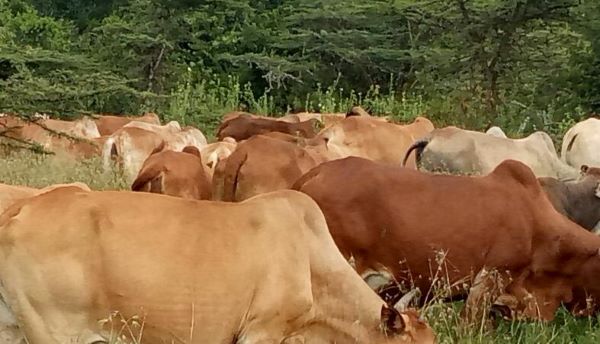
In southern Africa, indigenous breeds of cattle, goats, sheep and chickens are much more resilient than other breeds, requiring fewer medications. Their feed efficiency on meagre local forage on traditional communal land can be relatively high. While their survival rates under extreme conditions are higher, they gain weight more slowly than other breeds adapted to the region, which are usually bred specifically for high production of certain economically important traits like meat or milk.
Dr Ncube and Dr Fidele Tugizimana say that advising farmers about precision adjustments of locally available feeds and the daily management of animals could improve production and reduce diseases. Dr Tugizimana is the Director of the UJ Research Centre for Plant Metabolomics.
However, these adjustments must be based on local AI (Artificial Intelligence) data models, they argue. And the models must be built from data on livestock from typical African farms.
Livestock too tired to eat stressed plants
Even before reckoning with the additional El Niño heat and drought, many farmed animals in South Africa are stressed by their environments already as they are raised under extensive farming conditions, explains Dr Ncube.
In rural areas, subsistence farmers’ cows, sheep and goats walk for hours to communal grazing in the heat of each day. They are often too tired to eat much once they get to the grazing. They tend to rest instead of eating. Says Dr Ncube: “Such an animal is going to focus more on survival than producing meat or milk, because the priority is to survive.”
In addition, under heat or drought conditions, the grass and other grazing plants may be stressed also. The plants may produce less of the key nutrients – vitamins, minerals and protein – the animals need to produce milk or meat. To survive the heat, the plants may also produce different chemicals (metabolites) than usual, adds Dr Tugizimana.
Animal gut microbes as early warning system
When a heat-stressed animal eats a heat-stressed plant, several things happen. The bacteria in the animal’s gut recognise that ‘strange’ chemicals have been added to the plant material, adds Dr Tugizimana.
“Those gut microbes will communicate among themselves that the balance of the chemicals in the plants have changed. The microbes then send their own chemical signals (metabolites) to the animal they live in, that there is a problem,” he says.
“The signals the bacteria send can change how the animal produces proteins, vitamins and other essential nutrients. The animal may stop or reduce its ‘usual’ process to make milk, or start making other chemicals to survive,” he says.
Too confined to be healthy
On the other end of the livestock production spectrum, most commercial farming operations stress out animals in other ways. Here, animals don’t have to walk to grazing. They hardly move at all – which also affects their health, says Dr Ncube.
“The animals need a lot of space because they are reactive; they play; they move around. Now you take that extremely active animal and put it in a little square, so there’s no freedom of movement. They get very anxious; they get extremely stressed.”
“There will be a high expression of cortisol and other related stress hormones. And then the animal can get sick. Chickens are the worst example. They die in that little confined space; the mortality rate will be high.”
Locally developed AI models required
Many commercial farmers use technology that automatically cools down heat-stressed animals, without manual actions from the farmer, says Dr Ncube. These animals live inside barns managed by climate control systems, where decisions are based on AI (Artificial Intelligence) data models.
“The technology can scan the animal, know that this animal is stressed, and trigger fans to blow mist so that the animal can cool down,” she says.
However, AI data models that work for animals bred in the Global North, and living in climate-controlled barns, are unlikely to succeed in developing countries, argues Ncube.
“In Africa, most of the livestock on small farms are indigenous cows, sheep and goats. These animals do not stay in one place. They have to walk long distances to eat. Also, the animals, the climatic systems and the farming systems are different. What we need to do is collect lots of data and then train our own AI data models,” she says.
Hardy cattle and extreme heat
Once a local AI model is built from real-world data from African livestock, farmers could be guided in specific ways, says Dr Tugizimana. He gives the example where a farmer in southern Africa keeps hardy indigenous Nguni cattle. The weather forecast could predict extreme temperatures likely to put the cattle in heat stress.
“The Nguni breed is strong under heat stress. And we know the specific genetic markers that describe the gut microbes which make the breed more heat tolerant.”
If the full DNA of the cattle have been analysed, then precision nutrition, supplements and management become possible.
“If you generate more data, you can create a predictive model that can tell you that in this scenario, if you see this signal, it means this,” says Dr Tugizimana.
“We can tell this specific cow doesn’t have this marker. It may get too stressed under the heat. Rather, let’s start preparing it or do something different to support it before it gets too stressed,” he adds.
Building the data model will also require data from livestock gut microbes and the chemical signals (metabolites) they send, gathered from African livestock. The data will have to be from many scenarios, under a wide variety of conditions, including heat and drought.
“We need to generate a lot of data in Africa, with research studies that characterise those chemical languages (metabolites) that gut microbes use to communicate among themselves and also with the host animal,” adds Dr Tugizimana.
“The more information, the more understanding we get, the better the AI data models that we can generate. Such models can then predict that this animal is stressed, that animal is heading into that condition, that one needs this in a few weeks.”
Smallholder farms can benefit
While commercial farmers may be best placed to implement guidance from a well-built AI model, small operations can also benefit, says Dr Ncube. Management adjustments, such as getting livestock moving a few hours earlier to grazing areas and returning a few hours later to avoid walking in the worst heat of the day could make a difference.
If researchers collect data that leads to a deeper understanding of grazing patterns and the gut microbiome of indigenous breeds, economical feed supplements could be developed for local conditions.
Local AI models will be more robust if livestock data is gathered from a wide variety of smallholder farms, especially those on communal land, as these are relatively complicated systems that thrive on shared resources like grazing land and water sources.
A project could see researchers gathering data from a cluster of rural villages. Good relations between traditional authorities and state agriculture support officers would need to be in place. Apart from data gathered by researchers, all livestock farms can contribute significantly to the precision of local AI models, says Dr Ncube. On a daily basis, temperature and rain records would be helpful. Once a month, feed adjustments and the mass of smaller animals can be recorded. Births, deaths, purchases, and sales should also be recorded.
Scientific data gathering
To study heat stress, hormones and other stress responses, researchers would need to sample blood from the livestock for serum analysis. However, to determine if specific animals have the genetic markers for heat tolerance, whole blood is required for the DNA analyses, adds Dr Ncube.
Milk samples are excellent for indicating what effects changes in temperatures, water, feed, and management are having on the quality of the milk, specifically protein, butterfat and calcium percentages.
Rectal swabs can provide a lot of information on gut microbes and their metabolites. Swabs are far better than collecting dung, which requires more time per animal since researchers have to wait for the animal to defecate. Dung samples may also result in contaminated, incomplete information.
Meat samples would be the very last option and would need very good motivation to obtain ethical clearance for research. In addition, it is far more costly since the animals would need to be reared and slaughtered in controlled environments.
Livestock have been part of the human story for thousands of years. However, the ‘universe’ of microbes and chemical signals (metabolites) inside the guts of cows and other animals is still mostly unknown, says Dr Tugizimana. AI data models could assist Africa’s growing population in conserving its livestock under climatic uncertainty.
Written




I appreciate how thoroughly you covered “Improving heat” without unnecessary fluff. Focusing on Feature Agribusiness Livestock Research Smallholder Sustainability Facebook really clarifies the most common bottlenecks people face.