

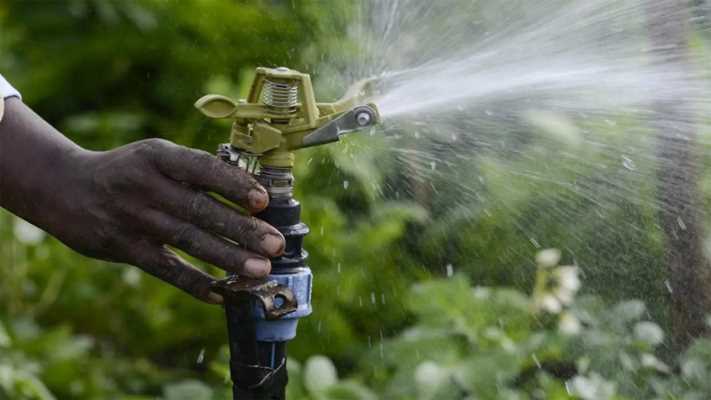
Agricultural irrigation is essential to farming, but farmers who rely on irrigation engines powered by bottled butane gas face significant challenges in managing operating costs and maintaining their equipment.
However, OPTYGAZ, a Moroccan multifunctional technology designed to transform how farmers manage, monitor and protect their irrigation engines is aiming to address these challenges.
Invented by Noureddine Ben Elouali, the technology combines fuel-consumption optimisation with intelligent monitoring, remote control, automatic fault detection and security features.
“Unlike solutions focused exclusively on reducing fuel consumption, OPTYGAZ takes a broader approach to agricultural energy management, providing farmers with greater control over their equipment and irrigation operations,” said Ben Elouali.
One of the most important developments in the project is that OPTYGAZ has already moved beyond the experimental stage. The technology has undergone practical field trials and has been used with agricultural irrigation engines powered by bottled butane.
“OPTYGAZ has passed the testing stage and we have carried out real field trials and practical applications on agricultural irrigation engines powered by bottled butane. The results we have observed demonstrate butane-consumption savings of more than 50%, depending on the operating conditions.
“These results are extremely important because they show that OPTYGAZ is not simply a concept presented on paper but a developed technology that has been tested under real agricultural operating conditions. We are now ready to move towards the next stage: expanding production capacity and making this innovation accessible to farmers,” Ben Elouali.
More than 50% savings in butane consumption
Reducing fuel expenses is one of OPTYGAZ’s central objectives. Field observations have demonstrated the system’s potential to significantly reduce butane consumption, with savings exceeding 50% under certain operating conditions.
In one documented example, an agricultural irrigation engine that previously consumed 17 butane cylinders over a given operating period consumed only seven cylinders after OPTYGAZ was installed.
This represents a saving of 10 cylinders, equivalent to approximately 58.8% less butane consumption compared with the previous level.
“For farmers, every butane cylinder represents an operating expense and when we can help reduce consumption from 17 cylinders to seven over a comparable operating period, we are addressing a real economic challenge. Our objective is to help farmers reduce their energy costs while giving them better control over how their irrigation engines operate,” said Ben Elouali.
Actual savings depend on engine type, operating conditions and usage patterns, but the field results provide an encouraging foundation for the project’s development.
Intelligent monitoring and remote control
OPTYGAZ goes beyond fuel optimisation by offering a range of monitoring and remote-management functions.
The system automatically records the number of butane cylinders consumed, eliminating the need for farmers to rely entirely on manual tracking. It also monitors engine operating hours and records start-and-stop times, providing useful information about equipment usage.
Depending on the installed configuration, farmers can also start and stop their irrigation engines remotely.
“We wanted to develop a system that gives farmers more information and greater control by enabling them to monitor butane-cylinder consumption, track engine operating hours and start-and-stop times, and remotely manage their irrigation installations without always being physically present beside the engine,” Ben Elouali said.
Automatic fault detection and engine protection
Another major feature is OPTYGAZ’s electronic fault-detection and warning system, designed to identify abnormal operating conditions and help protect irrigation equipment.
When a fault is detected, the system immediately alerts the user through dedicated indicator lights displaying symbols corresponding to the problem and sends an SMS notification to their mobile phone detailing the detected fault.
The system monitors conditions such as engine overheating, low oil levels, engine-component faults and battery-charging interruptions, and can automatically shut down the engine when specified critical faults are detected to help prevent further damage.
“Protecting farmers’ equipment is just as important as reducing fuel consumption, because undetected technical problems can result in costly repairs or prolonged irrigation interruptions, which is why we integrated an alert system that immediately notifies farmers of abnormal operating conditions and can automatically shut down the engine in certain critical situations,” Ben Elouali explained.
Security, surveillance and independent power
OPTYGAZ also incorporates security and practical field-service features, including 24-hour camera surveillance of the irrigation engine and the device, as well as integrated GPS positioning that enables farmers to locate their equipment and enhance protection against theft.
Two lighting units, each rated at 100 watts, provide nighttime illumination and can operate even when the irrigation engine is switched off.
The device also has an independent power supply and backup battery, separate from the engine’s battery. This ensures that its monitoring and protection functions do not depend on the engine battery.
Additional features include emergency assistance for starting an irrigation engine when its battery is weak or discharged, as well as a mobile-phone charging facility that remains available when the engine is not running.
From field validation to industrial production
With the testing stage completed, OPTYGAZ is now focusing on industrial development, production expansion and market accessibility.
Ben Elouali emphasised that the project’s immediate priority is to establish the partnerships and resources required to bring the technology to farmers at a larger scale.
“Our priority is no longer to begin testing, as that stage has been completed, but to expand production capacity and make OPTYGAZ accessible to farmers in Morocco, across Africa and, ultimately, worldwide,” Ben Elouali said.
“We are therefore seeking manufacturing and industrial partners, investment, institutional support, distribution networks and cooperation with media and agricultural organisations that can help us bring this field-tested innovation to farmers.
We believe OPTYGAZ can make a meaningful contribution to agricultural modernisation by combining energy savings, intelligent management, equipment protection and remote monitoring in a single solution, and we welcome collaboration with industrial companies, investors, agricultural institutions, distributors and international partners who share our ambition.”
Moroccan innovation with international ambitions
The OPTYGAZ invention was filed with the Moroccan Office of Industrial and Commercial Property (OMPIC), under deposit number 73152, dated 13 October 2025.
The project reflects an effort to translate practical agricultural challenges into a technology-driven solution developed in Morocco, with potential applications beyond the country’s borders.
For Noureddine Ben Elouali, the ambition is to ensure that the benefits of this innovation reach the farmers who need them most.
“OPTYGAZ is a Moroccan innovation developed to address the real challenges faced by farmers, and having progressed from an initial idea through development and field testing to practical results, we are now seeking the right industrial, financial and institutional partners to take the next step towards making this technology accessible not only in Morocco but also across Africa and international markets,” Ben Elouali concluded.
As agricultural producers increasingly seek ways to improve energy efficiency, reduce operating expenses and protect essential equipment, OPTYGAZ positions itself as a multifunctional Moroccan innovation with the ambition to contribute to smarter, more efficient and better-managed agricultural irrigation.