


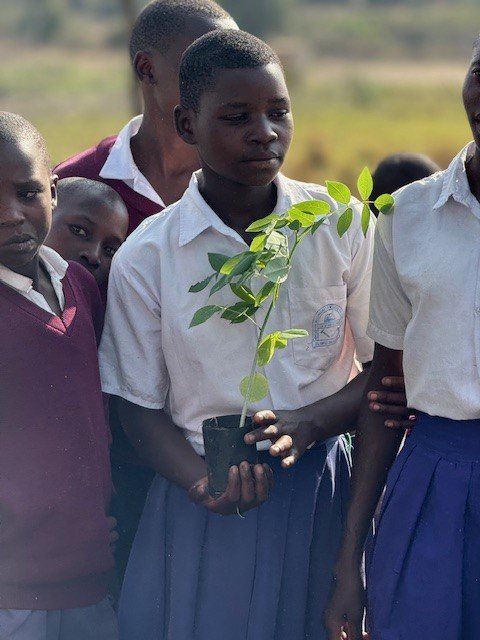
While this generation’s policymakers and others have taken steps to address climate change and its effects, it’s younger generations that appear to take the environmental change seriously and want to do something about it.
One place to learn and implement practical actions that can make a real and lasting difference is schools.
For example, environmental clubs in many schools in Kenya learn about what drives climate change, including actions taken by members of their own communities. In many rural areas, the main environmental harm is harvesting wood for fuel from established forests. The result is deforestation that reduces CO2 absorption capacity. Nearly as important in the near term, deforestation removes protection from wind damage. Unimpeded wind can cause serious damage to homes, livestock enclosures, schools and other structures. The costs of rebuilding these structures can keep many families in poverty.
To counter this, students in school environmental clubs plant hundreds of tree seedlings near their schools. These are specially bred fast-growing trees. When fully grown, they produce shade to help keep schools cooler and provide protection from wind.
Their branches are harvested and sold as fuel in local markets. Students generate income for their clubs and learn entrepreneurial skills. Crucially, this source of fuel reduces pressure on families to harvest wood from established forests.
Students also bring their knowledge and experience home to their families, which also plant, harvest and sell branches from fast-growing trees. These trees provide shade and protect from wind and provide crucial extra income.
Some families have also taken the next step to plant vegetables within their “forests.” This agroforestry can provide critical sources of nutrition and enhance food security. Surplus can be sold in local markets, further improving incomes.
A similar program is underway in Tanzania. The eight school environmental clubs there are linked to the Rorya District Department of the Environment. This will help ensure their continued activities once World Neighbors, the international development organization that helped set them up, ends its involvement.
School environmental clubs help make real change—the kind younger generations say are needed and in which they would like to participate.