

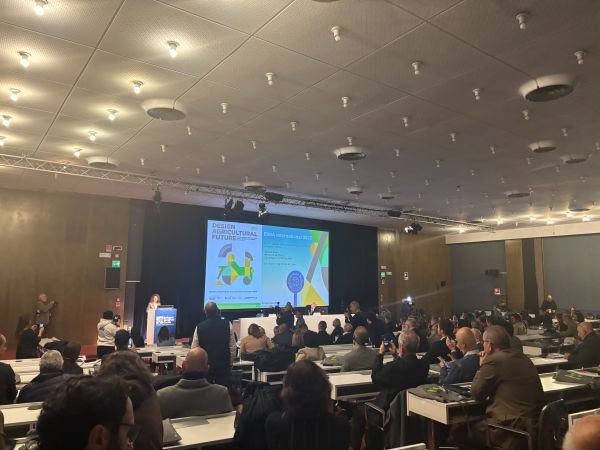
They are knowledgeable, the vast majority use agricultural machinery, and they almost always decide independently which investments to make in mechanisation. They use digital technologies and keep themselves informed. These are Italy’s female agricultural entrepreneurs, as portrayed in a survey conducted by FederUnacoma, the agricultural machinery manufacturers’ federation, and the three main farming organisations: Cia, Coldiretti and Confagricoltura. The survey, involving 600 women, was presented at EIMA, the international exhibition of agricultural machinery taking place at BolognaFiere.
Of those surveyed, 70% are over 40, and almost 40% have worked in agriculture for more than twenty years. Educational attainment is relatively high: 42.8% hold an upper secondary school diploma as their minimum qualification, 24.6% have a master’s degree and 9.1% have a bachelor’s degree. The overwhelming majority (84.8%) own the farms where they work. These businesses tend to be relatively small and generate modest incomes, yet they are strongly committed to mechanisation, with 91.5% owning agricultural machinery.
Indeed, 77.3% of respondents use agricultural machinery. Among the machines used, tractors lead the way (87.8%), followed by tillage equipment (54.9%) and harvesting equipment (21.6%). Advances in agricultural machinery have substantially narrowed the gap between men and women associated with differences in physical strength. However, the weight of some tractor-mounted implements remains a difficulty for 59.2% of the women surveyed.
Digital devices are widely used, particularly for administration and marketing, and 77.8% see new technologies as a means of facilitating the use of agricultural machinery. Costs remain a concern, identified by 78.9% of respondents. Nevertheless, most (77.8%) agree that a deeper understanding of technology can help women enter the agricultural sector.
The presentation, moderated by journalist Michela Lugli, featured contributions from Lorenzo Iuliano (FederUnacoma), Monia Rebecchi (Coldiretti), Cristina Chirico (Cia) and Diana Bortoli (Confagricoltura). Chirico highlighted the importance that female agricultural entrepreneurs attach to technology and digitalisation in supporting their businesses. Monia Rebecchi stressed the need for training in legal and tax matters, which is essential for accessing credit. Diana Bortoli also emphasised training, highlighting the importance of being able to communicate the value of one’s business. Discussing training pathways for women in farming, Iuliano underlined the need for continuous learning to keep pace with technological developments.