

A Danish biotechnology company, Traitomic, which developes next-generation plant and microbial traits without genetic engineering has secured €20 million (approximately) in Series A funding to accelerate innovation in crop improvement, food production and industrial biotechnology.
The funding round was led by Sofinnova Partners, with participation from the Export and Investment Fund of Denmark (EIFO), Footprint Firm, Nordic Foodtech VC, PSV Hafnium and SVG Ventures.
This marks the company’s first external investment since it spun out of Carlsberg and will support its international expansion, alongside the development of its scientific and commercial capabilities.
The investment comes at a time when agriculture and food production are under increasing pressure to improve productivity, strengthen resilience and use natural resources more efficiently. Developing improved crop characteristics, including higher yields, better resilience and enhanced quality, is becoming increasingly important in addressing food security and sustainability challenges.
At the centre of the company’s operations is its proprietary FIND-IT platform, which identifies specific genetic variants in conventionally bred populations without using gene editing. The technology enables the development of new biological traits while maintaining non-GE and non-GM approaches, offering potential applications across agriculture, food production and industrial biotechnology.
Unlike conventional trait-development approaches that are often designed for specific types of organisms, the platform can be applied across both plants and microorganisms. This allows the company to support a broader range of customers seeking improved biological performance and commercially viable innovations.
To date, the company has delivered 116 traits to 47 customers across 32 organisms. Its work spans plant breeding and seed development, food supply chains, precision nutrition, biosolutions and industrial biotechnology.
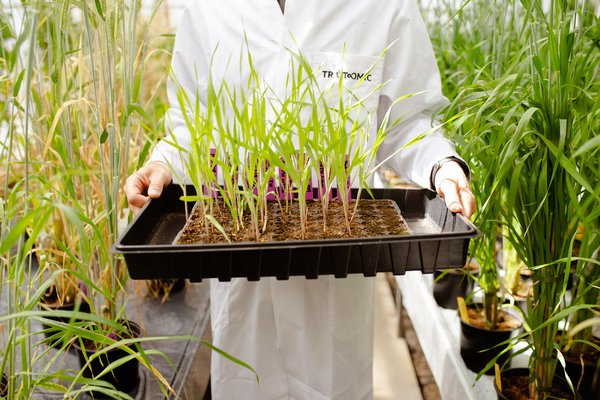
In agriculture, the technology is being applied to develop crop traits that improve robustness and yield, potentially supporting breeding programmes seeking varieties better suited to changing growing conditions and production demands.
Beyond crop production, its applications include developing food products with improved flavour, nutritional value and shelf life, as well as optimising enzymes and microbial strains used in industrial processes.
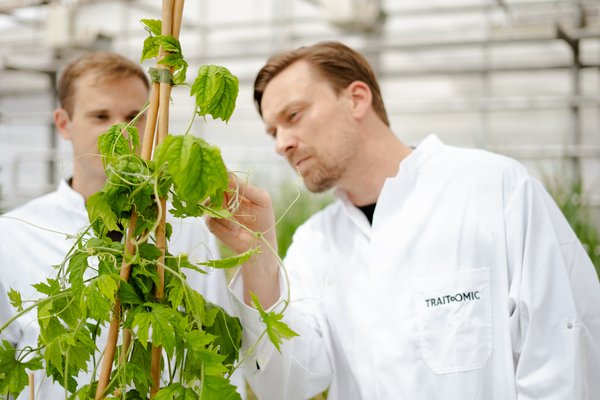
 L-R: Toni Wendt, Technology Lead, Jan Gottlieb, Commercial Lead, Gustav Hambraeus, Managing Director.
According to the company, the new investment will help expand its presence in international markets and strengthen its integrated approach to trait development. This involves working closely with customers, from identifying initial biological or commercial challenges to developing and delivering market-ready traits.
Gustav Hambraeus, CEO and co-founder of Traitomic, said the investment marked a new chapter for the company, following growing demand from customers across the food value chain for faster routes from biological research to commercial applications.
He said the funding would enable the company to expand internationally, deepen customer collaboration and apply its integrated trait-development approach to a wider range of innovation challenges.
Michael Krel, Partner at Sofinnova Partners, said the company’s ability to develop commercially relevant traits across different organisms and applications, combined with its growing customer base, provided a strong foundation for future growth.
He added that the company was well positioned to become a leading partner in trait development across agriculture, food and industrial biotechnology.
Anders Røed, Executive Vice President, Group Strategy and Commercial at Carlsberg, noted that the technology originated at Carlsberg Research Laboratory, where it was initially developed to improve barley, before expanding into applications across agriculture, food production and industrial biotechnology.
The latest funding is expected to strengthen the company’s ability to bring biological innovations to market, with potential implications for crop breeding, agricultural productivity and the wider bioeconomy.