

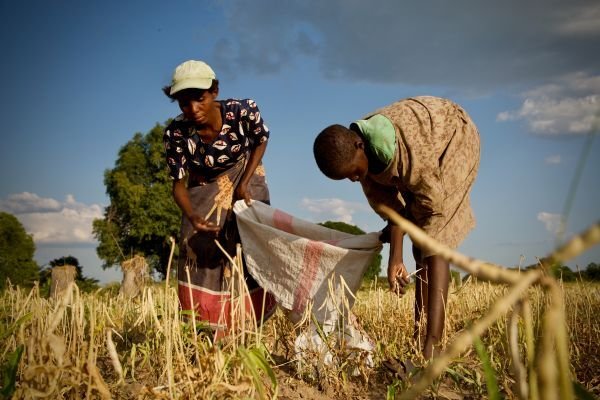
Farmers harvest climate-resilient crops as part of Action Against Hunger’s “Seeds of Hope” program in Zambia. Photo courtesy of Action Against Hunger.
Zambia is heading into its next food-security assessment with an unusual mix of good news and growing concern, as a new Integrated Food Security Phase Classification (IPC) analysis is expected to show a broadly stable national food-security picture following the country’s highest-ever maize harvest while also highlighting risks created by anticipated impacts of El Niño in drought-prone areas amid El Niño conditions emergence.
According to Mary Khozi, Country Director for Action Against Hunger in Zambia, El Niño could hamper the benefits of the strong harvest.
“A record harvest is good news, but it doesn’t cancel out the warning signs,” she says, pointing to the possibility that some districts could move from Stressed or Crisis conditions into Emergency.
She explains that the contrast is important because food security extends well beyond maize availability, with drought potentially triggering a chain reaction that affects water supplies, livestock, electricity generation, commodity prices and household incomes.
“Food security in Zambia is never just about the harvest,” Khozi says adding that when rainfall fails, dry riverbeds can reduce hydropower output, while rising commodity prices and livestock losses place additional pressure on already vulnerable families.
The previous IPC analysis illustrated how quickly conditions can deteriorate. Acute food insecurity increased by 41%, from 1.2 million people between April and September 2025 to 1.7 million between October 2025 and March 2026, while Mitete, Shang’ombo and Sikongo districts reached Emergency, or Phase 4, levels of hunger.
Crisis concerns in agriculture
According to Khozi, the coming season could again see districts move rapidly from Minimal or Stressed classifications into Crisis and Emergency, particularly in western and southern Zambia, where drought exposure is highest.
The northern part of the country, which has more water bodies and borders the Democratic Republic of Congo, is comparatively less exposed to the same pattern.
The warning is grounded in recent experience given the last major El Niño all 116 districts were affected, 84 of them severely, while national grain production fell by roughly 53% and a SMART survey found that 48% of households in Western Province were experiencing severe hunger.
Western, Southern and Eastern provinces, which form much of Zambia’s agricultural breadbasket, remain among the areas most vulnerable to another prolonged dry spell.
El Niño’s effects would extend beyond the farm, as reduced rainfall can push up the prices of maize and other commodities by lowering production and increasing costs for agricultural households.
“Livestock owners can be hit particularly hard as water and grazing become scarce, forcing families to sell animals at depressed prices to survive, which represents not only an immediate loss of income but also a longer-term setback to household livelihoods,” Khozi says.
Crisis concerns in energy sector
The energy sector is another potential pressure point, as Zambia’s heavy reliance on hydropower means falling water levels can reduce electricity generation, disrupt industry and contribute to higher commodity prices, adding another layer to the food-security challenge.
Water access could also become increasingly difficult, as drought lowers river and groundwater levels, requiring efforts to identify new sites for boreholes and maintain water supplies for household and productive needs.
In this, Action Against Hunger is focusing on water, sanitation and hygiene, particularly access to water and hand hygiene as supplies become scarcer.
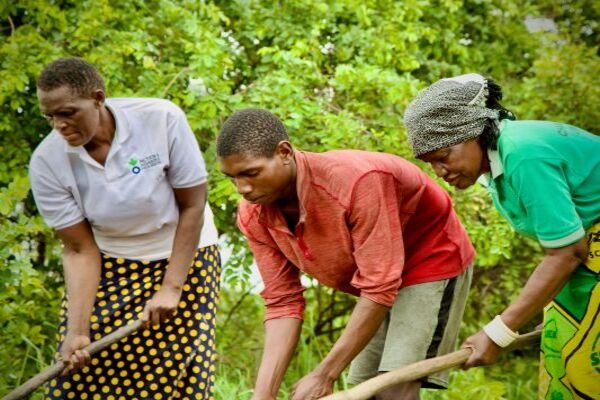 Action Against Hunger’s training in Zambia equips farmers with drought-resistant crop farming techniques to strengthen household diets and livelihoods. Photo courtesy of Action Against Hunger.
Anticipatory action
Rather than waiting for communities to reach emergency levels of hunger, Action Against Hunger and its partners are pursuing anticipatory action.
“Organisations are working with government and other NGOs to develop contingency plans and mobilise resources before conditions deteriorate,” Khozi says.
The approach includes promoting drought-resistant crops such as cowpeas and sorghum so farmers are less dependent on maize alone.
Through the “Seeds of Hope” programme in Western Province, farmers are being encouraged to diversify production with cowpeas and sorghum while building climate-resilient agrifood systems that can support both household nutrition and income.
Boosting primary healthcare systems
Action Against Hunger is also strengthening primary healthcare systems, including support for additional health workers and supplies of Ready-to-Use Therapeutic Food for children with severe acute malnutrition.
Its work includes WASH infrastructure and cash transfers for households whose children have been discharged after treatment for severe acute malnutrition.
“For us, the central lesson is that preparation must begin before a crisis becomes visible in the food-security figures. Government ministries, disaster-management authorities and technical partners need to share information quickly, including data on river levels, nutrition and other early-warning indicators,” Khozi says.
Action Against Hunger is advocating for the funding, equipment and technical capacity needed to make that response possible, including a crisis-modifier system based on pre-agreed drought, flood and disease triggers.
“Zambia’s record maize harvest may provide an important buffer, but it cannot by itself shield vulnerable households from the wider effects of El Niño,” Khozi says.
The coming IPC figures will show where the pressure is already building; the bigger test will be whether anticipatory action can move faster than the next drought.