



South Africa’s current foot-and-mouth disease (FMD) situation has rightly pushed biosecurity into the national agricultural debate. Yet amid movement controls, zoning, and vaccination responses, one of the most important transmission vectors remains under-addressed: water. It is time to recognise that water isn’t just a resource — it can be a vehicle for pathogen persistence and spread.
International research demonstrates that the foot-and-mouth disease virus (FMDV) can survive outside the host for significant periods, contributing to indirect transmission pathways. Environmental studies show that contaminated surfaces, secretions, and faecal matter can maintain viable virus particles capable of infecting susceptible animals long after infectious individuals are removed. Indirect (environmental) transmission can account for a significant proportion of overall spread in cattle groups under controlled conditions.
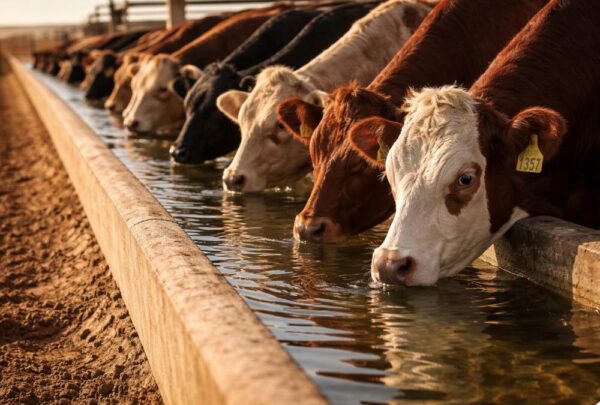
In field settings, livestock share water troughs, dams, canals, and surface water — making these points of congregation potential amplification nodes for disease. While direct contact remains the dominant transmission route, livestock consume far more water than they physically interact with each other. Water contaminated by a single infected animal can expose entire herds.
This principle is not unique to FMD. International biosecurity frameworks in poultry production explicitly recognise water as a critical vector for avian pathogens, noting that contaminated surface water — particularly where wild waterfowl intersect with domestic flocks — presents a tangible risk of transmission. Avian influenza viruses, for instance, can persist in surface water under a range of environmental conditions, maintaining infectivity long enough to serve as a source of infection for birds and potentially other species.
African swine fever (ASF) virus has also been the focus of recent research into water-dispersible antiviral agents that could be integrated into livestock drinking systems. These studies highlight the priority livestock scientists place on mitigants that can be used in water matrices to reduce pathogen loads without harming animal health.
The scientific logic is clear: pathogens shed into shared water — whether via saliva, faeces, or secretions — can remain viable long enough to pose a risk. Traditional biosecurity measures such as fencing, movement controls, and vaccination are vital, but they do not inherently protect the water dimension of pathogen transmission.
In South Africa, where communal grazing and shared water points are common, this gap represents a blind spot in disease control strategy. If water hygiene is not treated as a biosecurity priority, we risk leaving intact the very channels through which viruses may move silently across herds and regions.
At a practical level, any mitigation approach must preserve water safety and palatability for animals. This is where innovation matters: Peroxsil (H₂O₂ stabilised with ions) has been tested by the ARC against FMDV in contaminated water while maintaining drinkability for livestock. To our knowledge, it is currently the only chemistry in South Africa capable of mitigating FMDV in water without compromising ruminant health and potability.
If we are serious about strengthening national biosecurity, we must start with the water our animals drink.




 situation has rightly pushed biosecurity into the national agricultural debate.)