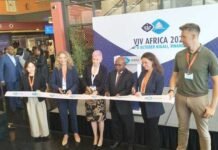


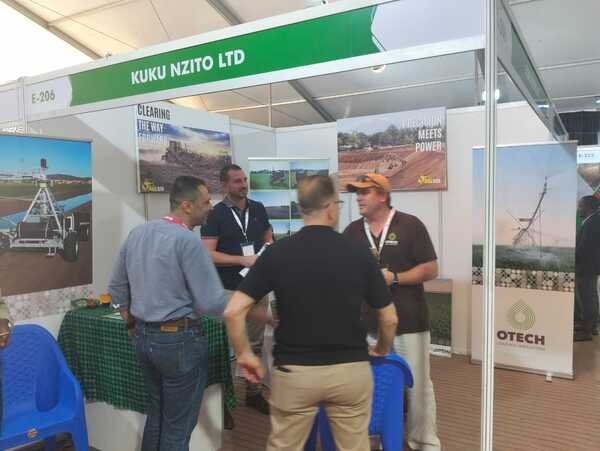
DAR ES SALAAM, Tanzania — The Africa Agri Expo (AAE) 2026 and Future Food Livestock and Poultry Expo (FLIP) 2026 ends today at the SabaSaba International Trade Fair Grounds in Dar es Salaam, bringing together agricultural businesses, investors, technology providers, policymakers and producers to explore opportunities to accelerate food production and agribusiness across Africa.
Organised by TAB Group, the two-day exhibitions have focused on investment, technology transfer, value addition, livestock, poultry and stronger connections across agricultural value chains, with exhibitors from more than 35 countries participating.
According to Tahir A. Bari, CEO and Managing Director of TAB Group, bringing the 10th edition of the event to Tanzania reflects the country’s position as an important gateway to business in East Africa.
“This is the 10th edition of the event. We are doing it in different countries, and Tanzania has always been on the torch for us, and we decided to put the 10th special edition here in Tanzania,” Bari said.
He said Tanzania offers opportunities beyond agricultural production, including technology, investment and industrial development, while local authorities and business associations can help international companies understand the market and establish partnerships.
“One of the biggest opportunities is technical know-how. It’s the knowledge transfer, it’s the transfer of the technology,” Bari said.
The expo is also intended to bridge the gap between international companies, local businesses and policymakers, creating opportunities for companies seeking to establish factories, form partnerships or invest in Tanzania.
“We are playing our role in making sure that we are trying to open up the market for international companies, bridging the gap between them and the local policy makers and the companies,” he said.
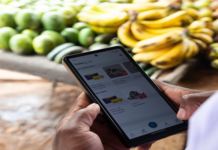
Discussions at the event also highlighted the importance of making technology accessible to Africa’s smallholder farmers. Bari pointed to digital tools such as SMS-based services that can provide weather and climate information without requiring smartphones or internet connectivity.
“There are definitely technologies that are specifically designed for small-scale farmers. And I’m very sure that with those, we will definitely see an increase in the yield, increase in the productivity,” he said.
Exhibitors highlight practical solutions
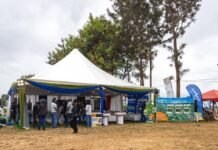
The technology focus was reflected on the exhibition floor, where companies showcased agricultural equipment, veterinary products, crop technologies and other solutions targeting different segments of the farming economy.
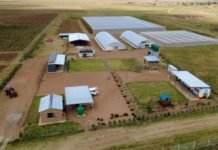
Philip, an engineer with Kuku Nzito Ltd highlighted the potential of tissue culture to accelerate the production of planting material. The company operates a tissue-culture laboratory in Moshi and three seedling nurseries, including two in Tanzania and one in Kenya.
He said that tissue culture involves taking plant material and multiplying it under laboratory conditions. For bananas, the process can rapidly produce large quantities of planting material, allowing large orders to be fulfilled much faster than through conventional propagation.
The technology could be particularly valuable to farmers and commercial producers seeking uniform, high-quality planting material at scale.
According to him, technology alone will not transform agricultural production without appropriate financing. Farmers and aggregators, the speaker said, need partnerships involving equipment providers, buyers and development-oriented funders.
“The second biggest partner one needs is a funder,” he said, stressing the need for financing that enables farmers to remain profitable rather than consuming their margins through high interest costs.
The exhibitor said partnerships had helped provide machinery covering activities from land preparation through to bean delivery, but additional support was needed because existing machinery and resources remained insufficient to serve smallholder farmers effectively.
The speaker also called for more “patient funding” that recognises uncertainties farmers face, including delayed rains and changing seasons.
“We are in plea on behalf of our farmers for more very patient funding to be available for our farmers because seasons can be different,” said Philip.
The speaker further called for bold investment to reduce farmers’ production costs and strengthen long-term sustainability.
Building Africa’s agricultural ecosystem
For Bari, the value of exhibitions such as AAE and FLIP extends beyond the days spent on the exhibition floor.
“Platforms like these, we have the power to bring different stakeholders together, we can bring the ecosystem together,” he said. “We can try to learn, try to network, try to get into business partnerships.”
He said strong participation by young people was another encouraging sign, particularly as digitalisation and technological advancement make agriculture increasingly attractive as a business.
“We have tremendous opportunities, tremendous resources,” Bari said.
He added that TAB Group’s work does not end when an exhibition closes, noting that connections made during events can develop into longer-term commercial projects.
“The part of the business for us as events, it does not stop at just the event,” he said. “Our work is continuing towards the event as well; we will be connecting more and we will be getting more and more news.”
AAE and FLIP 2026 have therefore highlighted a clear message from organisers and exhibitors alike: Africa’s agricultural potential will require not only land and production, but also technology, financing, partnerships, knowledge transfer and stronger links between farmers and markets.