

Fertilizer subsidies have delivered short-term gains to Tanzania’s agricultural sector, but new research suggests that continued reliance on the policy without complementary investments could undermine long-term agricultural growth.
A study by the University of Dodoma (UDOM) published in the Journal of Agricultural Economics and Policy by researchers Noah G. Sikwese, Lutengano Mwinuka and Joel J. Mmasa examined the impact of fertilizer subsidy expenditure on Tanzania’s agricultural growth between 1995 and 2024.
Using an Autoregressive Distributed Lag (ARDL) model to analyse nearly three decades of time-series data, the researchers assessed both the short-run and long-run effects of government spending on fertilizer subsidies.
The findings reveal a striking contrast between the short- and long-term impacts of subsidy spending. In the short run, increased expenditure on fertilizer subsidies significantly boosts agricultural growth, measured by agricultural Gross Domestic Product (GDP), at the five per cent level of significance. However, the long-run results paint a different picture.
According to the study, a one per cent increase in fertilizer subsidy expenditure reduces agricultural growth by 4.25 per cent over the long term.
The researchers attribute this negative relationship to persistent inefficiencies in the subsidy programme, including poor allocation of resources, weak implementation mechanisms and the crowding out of other productive agricultural investments such as irrigation infrastructure.
The findings raise important questions about the sustainability of Tanzania’s agricultural support policies. While fertilizer subsidies remain an important tool for improving farmers’ access to agricultural inputs, the study argues that subsidies alone cannot guarantee sustained productivity growth if other constraints within the sector remain unresolved.
The researchers note that inefficient distribution systems often delay fertilizer delivery, reducing its effectiveness during critical planting seasons. In addition, excessive public spending on subsidies may divert resources away from strategic investments that could deliver broader and longer-lasting benefits, including irrigation schemes, improved seed development, agricultural research and extension services.
Agriculture continues to play a central role in Tanzania’s economy, employing a significant proportion of the population while contributing substantially to national income and food security. Successive governments have invested heavily in fertilizer subsidy programmes to increase crop yields and improve farmers’ livelihoods.
However, the study suggests that the effectiveness of these programmes depends on how well they are integrated with broader agricultural development strategies. Rather than expanding subsidy budgets in isolation, policymakers are encouraged to strengthen complementary investments that enhance overall farm productivity.
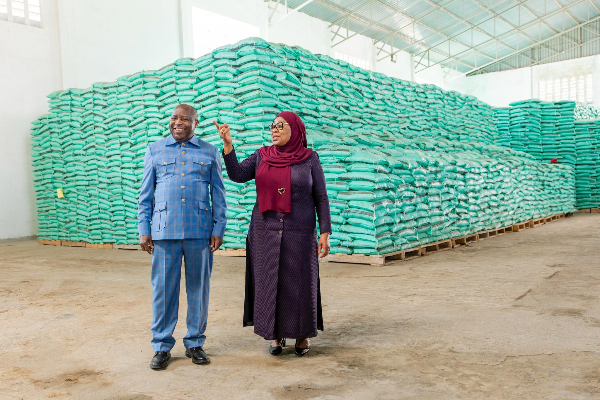
Among the key recommendations is linking fertilizer subsidy financing with modern agricultural technologies, high-quality improved seeds, strengthened research and development, and more effective coordination among agro-dealers to ensure timely fertilizer distribution.
Such integrated interventions, the authors argue, would maximise the benefits of subsidy programmes while reducing inefficiencies that limit long-term economic returns.
The study also highlights the importance of evidence-based policymaking, particularly as governments across Africa continue to invest billions of shillings in agricultural input subsidies aimed at improving food production and reducing rural poverty.
The researchers conclude that fertilizer subsidies should be viewed as one component of a broader agricultural transformation agenda rather than a standalone solution.
Without parallel investments in irrigation, research, technology and efficient delivery systems, the long-term contribution of subsidy expenditure to agricultural growth may remain limited despite its positive short-term impact.