


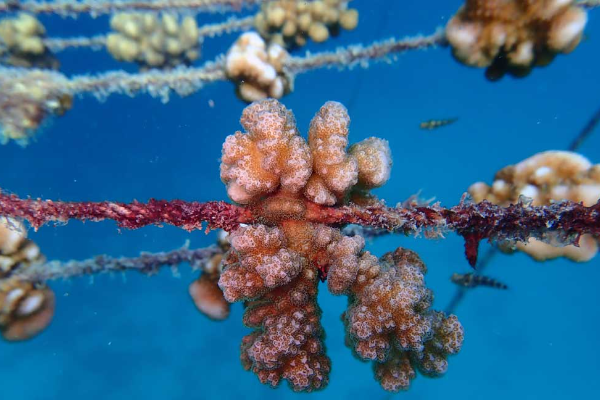
At least 9.5 per cent of the world’s hard corals have disappeared following a succession of marine heatwaves over the past three decades, raising fresh concerns about the future of coral reef ecosystems and the millions of people who depend on them.
According to the Global Coral Reef Monitoring Network’s (GCRMN) Status of Coral Reefs of the World 2025 report, the decline was recorded after researchers examined nearly 37,000 coral sites across more than 120 countries.
The study compared coral coverage between 2020 and 2024 with the historical average recorded from 1980 to 2009, finding that at least 9.5 per cent of hard coral cover had been lost.
Researchers cautioned that the figure is conservative and the actual decline could be greater.
The report links much of the decline to increasingly frequent marine heatwaves driven by human-induced climate change.
Since 1998, four major ocean heatwaves have caused coral bleaching on a global scale, leaving reefs with less time to recover between successive episodes of extreme heat.
Coral bleaching occurs when unusually warm ocean temperatures stress corals and cause them to expel tiny plant-like organisms known as zooxanthellae, which live inside their tissues and provide essential nutrients.
The loss of these organisms also strips corals of their characteristic colour. While bleaching does not immediately kill corals, prolonged stress can leave them vulnerable to disease and starvation.
The latest findings suggest that the growing frequency of bleaching events is becoming one of the biggest threats to reef recovery. The report says that if major bleaching events occur about once every 10 years, most coral reefs could have sufficient time to recover.
However, if the events occur every five years or so, coral cover is expected to continue declining.
Coral reefs are critical to marine ecosystems despite covering less than one per cent of the ocean floor. They support about 25 per cent of marine species and provide habitats for thousands of fish and other organisms.
Their continued decline could therefore have serious consequences for biodiversity and the health of the oceans.
The impacts would also extend to human communities. United Nations Environment Programme (UNEP)estimates that more than one billion people rely on coral reefs for food, employment, recreation and protection from storm surges.
The destruction of reefs could therefore threaten livelihoods, food security and coastal protection in many parts of the world.
However, the report also offers some evidence of resilience. Coral coverage has rebounded in parts of South Asia and the western Indian Ocean, showing that reefs can recover when environmental pressures are reduced and adequate protection and restoration measures are put in place.
Scientists and environmental experts are calling for stronger action to address climate change while reducing local pressures such as pollution, overfishing and damaging coastal development.
Cutting greenhouse gas emissions remains critical because much of the excess heat generated by global warming is absorbed by the oceans, contributing to marine heatwaves.
The report warns that without urgent action, coral reefs could face an increasingly uncertain future. UNEP says protecting these ecosystems will require both global efforts to limit warming and local measures that give damaged reefs the opportunity to recover.