


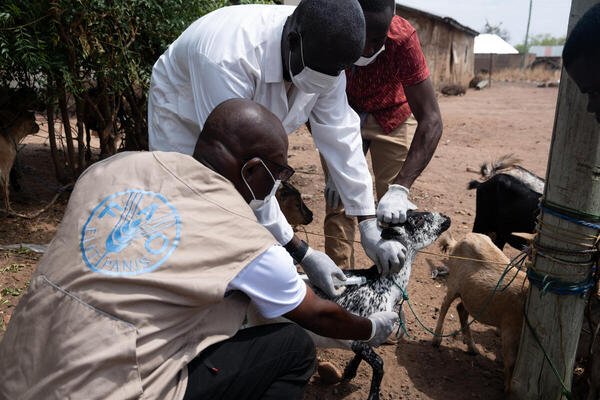
Photo credit: ©FAO / George Koranteng
Eastern African countries are facing an increased risk of Rift Valley fever (RVF) outbreaks as strengthening El Niño conditions are expected to bring above-average rainfall and widespread flooding across the region, raising concerns over livestock production, public health and rural livelihoods.
In this, the Food and Agriculture Organization of the United Nations (FAO) and the Intergovernmental Authority on Development (IGAD) urge governments to strengthen disease surveillance, early warning and preparedness to contain the potential spread of the mosquito-borne viral disease.
In the latest alert, the two organizations warned that El Niño is expected to strengthen through the end of the year, with a 97 per cent probability of persisting into early 2027.
The October–December 2026 period is expected to experience potentially strong to very strong El Niño conditions, influencing rainfall patterns across Eastern Africa.
Countries identified as particularly vulnerable include Burundi, Ethiopia, Kenya, Rwanda, Somalia, South Sudan, Uganda and Tanzania. Above-average rainfall and flooding could create favourable breeding conditions for Aedes and Culex mosquitoes, which are among the principal vectors responsible for transmitting the Rift Valley fever virus.
The alert cautions that stagnant water following heavy rains can accelerate mosquito breeding, while increased livestock movement, seasonal migration and congregation around grazing and watering points could facilitate the rapid spread of the virus across communities and national borders.
Rift Valley fever is a zoonotic disease that affects both animals and humans. It primarily affects cattle, sheep, goats, buffaloes and camels, causing severe economic losses through animal deaths, abortions and neonatal mortality.
Humans can become infected through mosquito bites or contact with blood, organs and other tissues from infected animals.
Beyond its health implications, outbreaks can undermine household incomes, threaten food security, disrupt livestock trade and limit vulnerable families’ ability to access essential services, including healthcare and education.
To address the growing threat, FAO and IGAD are calling for stronger coordination between veterinary services, public health institutions, environmental agencies and meteorological authorities under a One Health approach.
The recommended interventions include strengthening early-warning systems, increasing surveillance in high-risk areas, improving laboratory diagnostic capacity and ensuring that emergency response supplies are available before outbreaks occur.
Countries are also encouraged to consider targeted livestock vaccination, strengthen animal movement controls where necessary, improve mosquito surveillance and eliminate breeding sites where feasible.
The organizations further urge farmers, livestock keepers and community members to report unusual animal deaths, abortions and unexplained illnesses promptly. Communities are advised to practise safe animal handling, particularly when dealing with sick or dead livestock, and take precautions against mosquito bites.
Cross-border cooperation will also be essential, particularly along livestock trade routes, pastoral migration corridors and shared grazing areas, where infected animals and mosquito vectors could facilitate transmission between neighbouring countries.
FAO’s Rift Valley Fever Early Warning Decision Support Tool uses environmental, rainfall and vegetation data, alongside expert assessments, to identify areas at increased risk and support timely preventive action.
The organizations emphasize that strengthening preparedness before outbreaks occur will be critical to protecting animal and human health, safeguarding pastoral livelihoods and preventing the disease from developing into a wider regional crisis.