


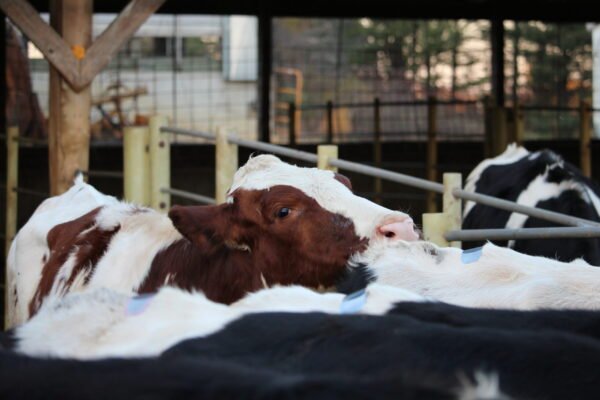
Look beyond heat detection when valuable heifers and genetics are on the line.
By the time a heifer reaches breeding age, you may have invested $2,400 or more in her care and development. Each breeding opportunity is a reproductive and economic decision that can influence when she enters the milking herd and how efficiently you meet replacement needs.
“Every additional day a heifer remains open delays when she begins returning value to the dairy. Once she is ready to breed, evaluating how strongly she expressed estrus provides more information than a simple yes-or-no heat,” says Dr. Odile Polanco, technical services and global programs manager at ESTROTECT. “That insight can support more intentional breeding decisions and help keep her moving toward the production herd.”
Your breeding strategy should reflect the number of replacements you need, the value of beef-on-dairy calves and your genetic priorities. Depending on those priorities, you may use sexed, conventional or beef semen or select a heifer as an embryo recipient.
Move beyond a yes-or-no heat
Not all heats are equal. Estrus expression can vary in intensity, with some heifers displaying stronger mounting activity than others.
Rather than asking only, “Did she show heat?” consider also asking, “How strongly did she express it?” Even when a heifer is enrolled in a reproduction protocol and bred on a scheduled date, observing her estrus expression can offer insight into how she responded.
“Gauging estrus intensity provides more detail than simply knowing whether she is in heat or not,” says Dr. Polanco. “It can help you better understand the strength of her estrus expression and make a more informed decision based on her reproductive potential and your herd goals.”
ESTROTECT™ Breeding Indicators provide a standardized visual measure of mounting activity and estrus intensity. As mounting activity rubs away the surface coating, the patented indicator reveals a bright color. The amount rubbed off indicates estrus intensity.
Use estrus intensity as a decision point
Research shows estrus expression and intensity can provide useful information about reproductive outcomes. In a study of lactating dairy cows used as embryo recipients, cows displaying stronger estrus expression had higher pregnancy rates per embryo transfer than cows with weaker or no estrus expression.[1]
Estrus intensity does not guarantee pregnancy, but it can add useful context to breeding decisions. Consider intensity alongside a heifer’s age and development, synchronization protocol, genetic value and semen type.
Another study by Dr. Ky Pohler, associate professor and animal reproductive biotechnology administrator at Texas A&M University, found that greater activation of the indicator patch was associated with increased circulating pregnancy-associated glycoproteins, or PAGs. These proteins are biological markers associated with pregnancy establishment and embryo survival in ruminants.[2]
“Estrus intensity can help provide additional information when evaluating a heifer’s breeding opportunity,” says Dr. Polanco. “This information may be especially useful when making decisions about sexed semen and other valuable genetics.”
Estrus intensity can complement heat detection and synchronization programs. In a timed-AI program, the protocol establishes when breeding should occur, while observed estrus expression provides another piece of information about the heifer’s response.
Put better information behind valuable inputs
Ultimately, a heifer represents thousands of dollars in development costs before breeding. Knowing estrus intensity adds context to decisions about breeding timing and the use of premium semen, embryos or other high-value genetics. Weigh those choices against your replacement needs, beef-on-dairy calf goals and overall herd priorities.
Estrus intensity does not replace sound heifer development, nutrition, health management or synchronization practices. It adds another layer of information to help you identify when heifers are ready to breed and make the most of each opportunity. Incorporating that information into your existing program can help you breed more eligible heifers at the optimal time, improve conception rates and support stronger pregnancy outcomes, so heifers enter the milking herd on schedule.
“Estrus intensity is part of a complete heifer reproductive program,” says Dr. Polanco. “It provides another piece of information to help make decisions that fit your herd goals and support timely movement into the production herd.”
Use estrus intensity to inform breeding decisions and align choices with your herd goals.
For more information on using breeding indicator patches to support heifer breeding decisions, visit ESTROTECT.com.
The ESTROTECT Breeding Indicator is the industry standard for optimizing cattle breeding efficiency and economics. With millions and millions of units sold around the world, ESTROTECT is the only breeding management tool tested in a multitude of university studies by researchers.