Dawie Maree, Head of FNB Agriculture Marketing and Information
As global competition intensifies and environmental pressures mount, farmers who fail to adopt modern technology risk falling behind competitors who leverage advanced tools to maximise efficiency and profitability.
From precision agriculture in grain production to smart irrigation systems in horticulture, staying abreast of technological advancement has become essential for maintaining profitability and sustainability in modern farming operations.
The fundamental shift in agricultural technology lies in the development of judicious tools that collect, analyse, and respond to data to optimise input application and increase profitability.
Grain
In grain production, precision agriculture encompasses variable seed planting technology to sophisticated systems that integrate soil analysis, GPS guidance, and real-time data collection. These systems enable farmers to plant at optimal densities based on soil conditions, apply fertiliser selectively according to specific nutrient deficiencies, and monitor yields directly through cloud-connected harvesters that feed data back into the next growing cycle.
Irrigation
Smart irrigation technology exemplifies this integrated approach, calculating water requirements for individual plants based on external temperature, plant variety, humidity levels, and time of day. Livestock operations benefit equally from technological advancement.
Horticulture
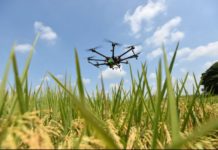
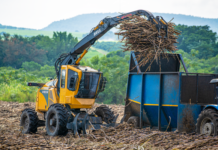
The benefits of this technological integration extend across all agricultural sectors. In horticultural operations, applications range from tree-level monitoring using drones for pest and disease detection to mechanical harvesting systems.
The precision approach delivers more efficient operations, reduced input costs through targeted application and environmental protection through minimised chemical usage. However, technology adoption requires careful consideration of cost-benefit analysis, particularly given the substantial investment required for advanced equipment. Farmers must evaluate their operational scale, management capacity, and specific challenges before investing in expensive technology.
The equipment’s applicability across multiple commodities or neighbouring operations can help justify costs, but farmers must develop comprehensive utilisation plans before making any long-term decisions.
Employment
A consideration for any agricultural business, but one that is particularly acute in developing nations, is the impact of technological adoption on employment. Some technologies have the potential to displace manual labour, but many also creates demand for more educated and skilled workers.
The shift opens employment opportunities across a broader spectrum, requiring expertise in data analysis, equipment operation, and technical maintenance.
Markets
Another consideration relates to the markets in which one competes. South Africa is a net exporter within several agricultural categories, and the international playing field is unequal in several respects. Advanced agricultural technology typically becomes available first in the United States and Europe before filtering to other markets, often at higher costs due to unfavourable exchange rates during importation.
While South Africa has adopted relatively progressive policies regarding international standards compliance, the incentive structure requires further development. Unlike European counterparts who benefit from government subsidies for technology adoption, South African farmers receive limited support, primarily through a modest diesel-rebate programme.
For farmers looking to enhance their use of technology, the good news is that a range of sophisticated financing options exist to support this growth. Sustainability-focused loans with preferential interest rates are available for investments in water-efficient technologies, solar-power systems, and protective infrastructure such as shade netting, amongst others.
Many banks will augment their financing structures with manufacturer and supplier relationships that help farmers identify appropriate equipment and receive expert analysis before making investment decisions.
Whether operating a small holding or managing extensive commercial operations, embracing appropriate technology will determine competitiveness in both local and global markets. The path forward requires farmers to assess their specific circumstances, operational scale, and primary challenges before selecting appropriate technology.
Farmers who recognise this reality and act accordingly will find themselves better positioned to navigate the challenges of water scarcity, global competition, and market volatility. Those who delay risk being left behind as agriculture continues its inexorable march towards greater efficiency, sustainability, and technological sophistication.