

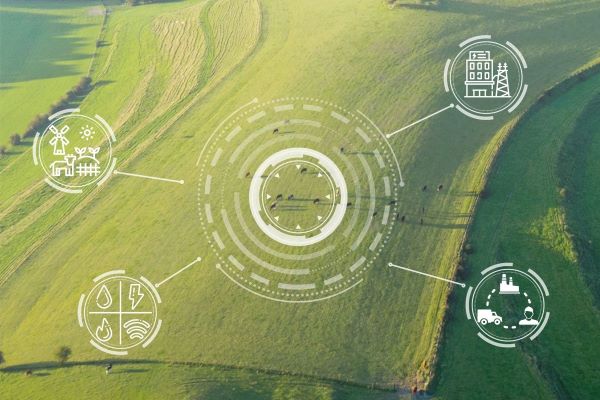
Rwanda is accelerating its transition to data-driven farming through the adoption of satellite imagery and machine learning, aiming to boost productivity, attract youth to agriculture, and move away from labour-intensive methods, Agriculture Minister Mark Cyubahiro Bagabe said.
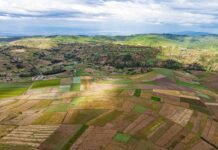
Speaking at a session titled “Cultivating Change: Youth, Tech and the Future of Agriculture” held on Tuesday, October 7, during the 2025 ISO Annual Meeting in Kigali, Bagabe gave insight into the government’s vision to modernize the sector. He told journalists afterwards that Rwanda is now poised “to monitor farming by use of satellite imagery and machine learning.”
Until now, Rwanda’s agricultural monitoring has relied heavily on labour-intensive field sampling carried out by the National Institute of Statistics. But Bagabe said that with remote sensing, “we are able to estimate the crop area and the crop growth condition, and therefore to be able to estimate the yield using technology.” He added, “Starting with this season, we are going to start with maize, Irish potatoes, and rice.”
Bagabe acknowledged challenges for some crop types: “We still face challenges with some crops — like beans, which are often intercropped and harder to detect by satellites — but … crops like cassava are next on the list.”
He described the broader shift underway in Rwanda’s agriculture sector: a move from smallholder, subsistence farming toward commercial, technology-driven systems. To him, modern agriculture should not only be smart and efficient but also attractive to youth.
“You cannot create profit, you cannot make it a business, unless you standardise. That is why, for example, in irrigation, I can sit here and make sure that my system for irrigation is providing water as needed by the crops. That’s precision, that’s standardisation,” Bagabe explained.
He emphasised that such standardisation depends on sensor-based systems providing real-time data to guide decisions on water, fertiliser, and other inputs.
Some Rwandan farmers are already experimenting with these technologies. Bagabe cited automated irrigation systems that tailor water supply to plant needs, helping cut labour costs and improve profitability.
He noted that controlled-environment greenhouses—with regulation of temperature, humidity, irrigation, and nutrition—are also part of Rwanda’s precision agriculture roadmap.
Drones and sensor technologies are being used to monitor crop health and detect diseases, and some youth-led agribusinesses are exporting drone-based services beyond Rwanda.
To support this transformation, Rwanda plans to grow its irrigated land area from over 70,000 hectares currently to 130,000 hectares by 2029, as part of a national drive to build resilient, sustainable agri-food systems.
“Technology has come to make agriculture much easier for us, and therefore we are not going to see ourselves going backward,” said Bagabe.
At the same session, Cynthia Umutoniwabo, CEO of Loopa (a Rwandan firm converting organic waste into fertiliser), addressed youth entrepreneurs. She urged them to focus on real challenges: “When you’re building solutions, think of who you want to serve. Build solutions that address real challenges, and then it’s not going to be a hustle since you have the right clients.”
Rwanda’s new emphasis on precision agriculture, underpinned by satellite imaging and machine learning, reflects a strategic alignment of technology and agribusiness.
If scaled successfully, this shift could enhance productivity, reduce resource waste, and make farming a more appealing, viable business for the next generation of Rwandan farmers.