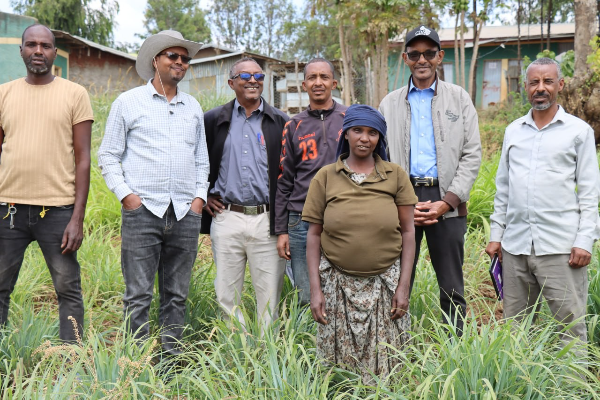
Researchers at Haramaya University have successfully developed a drought‑resistant fodder grass variety that promises to improve livestock productivity and resilience in Ethiopia’s dryland and semi‑arid areas.
The innovation, known as Lyme Grass and locally referred to as “Dandemeta” meaning “all‑resistant,” is being scaled up among farmers to help tackle chronic animal feed shortages that have long constrained the nation’s livestock sector.
The new fodder variety was developed by experts from the university’s Department of Natural Resource Management and Environmental Science following extensive research into grasses that can thrive under climatic stress. Unlike many traditional fodder crops that need substantial moisture and land, Lyme Grass exhibits strong tolerance to drought, frost and rainfall variability, and thrives on small land plots, making it well suited to the challenging agro‑ecological conditions of eastern and southeastern Ethiopia.
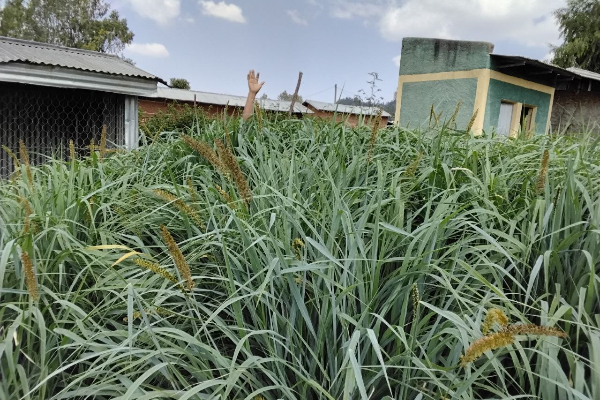
Lyme Grass reaches maturity in just one to one‑and‑a‑half months, allowing farmers to harvest multiple cuts per season — reports indicate up to five harvests in a growing cycle.
This rapid growth rate is particularly valuable given the persistent shortage of quality animal feed across semi‑arid regions, where livestock performances such as milk production and weight gain have been historically hindered by forage scarcity.
Field trials spearheaded by the research team have shown that this grass not only withstands stressors like low rainfall and poor soils but also boosts the nutritional intake of livestock.
Farmers participating in the trials reported improved cattle weight gains and enhanced milk yields, highlighting its potential to significantly strengthen smallholder dairy and beef production systems.
The new grass is currently being introduced in several districts within the East Hararghe Zone and the Dire Dawa City Administration, where implementation efforts include collaborations with farmer training centres and support for local households. To date, the initiative has reached around 1,000 farmer households, marking a notable achievement for agricultural extension in the region.
Beyond its primary use as livestock feed, Lyme Grass offers additional environmental benefits. When planted in terraced rows, it serves as a natural soil erosion control measure, enhances water infiltration, and helps conserve soil fertility for companion crops.
Its adaptability allows it to be intercropped with other crops without suppressing them, enabling farmers to make more efficient use of land.
Farmers who have adopted the grass express strong enthusiasm for expanding its cultivation in coming seasons.
Reports from the field describe Lyme Grass as a game‑changer for rural livelihoods — improving household food security, reducing labor burdens associated with fodder shortages, and contributing to increased incomes through better livestock performance.
Haramaya University researchers are also exploring commercial seed production opportunities, which could help establish localized fodder seed markets and reduce dependency on imported forage seeds — a significant step considering existing constraints in forage seed availability across Eastern Africa.
As climate variability continues to influence agricultural outcomes in Ethiopia, innovations such as Lyme Grass demonstrate the potential of research‑driven solutions to strengthen resilience, enhance livestock productivity, and support sustainable rural development.