

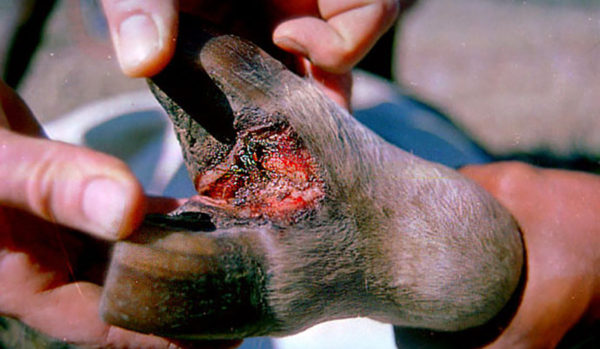
Foot-and-mouth disease must be declared a national disaster. To save the livestock industry, regulations must be amended to shift pressure away from the state which has failed dismally in its responsibilities to the private sector and to farmers themselves.
Since Minister Steenhuisen’s announcement in November 2025 that all cattle (approximately 14 million) would be vaccinated, pigs and calves have begun dying from the disease. The dairy, red meat and stud livestock industries have been plunged into an existential crisis, and the Department of Agriculture, which is legally mandated to control and manage the disease, has largely lost the trust of farmers.
Thousands of farmers are under severe financial pressure because livestock cannot be sold or moved, and dairy operations are being forced out of business. In the absence of understanding, will or action on the part of the state, agricultural structures are now exploring the development of a financing mechanism to help farmers bridge their temporary cash-flow crises.
According to a statement by the Department of Agriculture, the minister’s announcement that all cattle will be vaccinated will place an additional financial burden on farmers, raising more questions than answers within the sector.
The R300 per head that farmers are expected to pay for foot-and-mouth disease vaccines, according to the Department of Agriculture, is excessive. The disastrous spread of this state-controlled disease can be attributed to the incompetence of senior officials within the department itself, and farmers who have already suffered losses of R5.6 billion cannot also be expected to foot the bill for state failure.
The most recent vaccine purchases by Red Meat Industry Services (RMIS) cost R60 per dose. More efficient, modern vaccines from Brazil and Turkey are even cheaper. Farmers find it reprehensible that the state and tenderpreneurs are attempting to extract excessive profits from a national disaster that has already financially ruined hundreds of farmers. The state should bear the full cost of its own incapacity.
In South America, foot-and-mouth disease was eradicated by acknowledging the real problems and addressing them through strong political leadership, an inclusive and transparent strategy, and broad participation across the entire value chain, including farmers. In South Africa, only 12 to 14 million cattle need to be vaccinated, compared to 800 million cattle in Brazil.
As in Brazil, the department must allow farmers to vaccinate their own cattle to save capacity, cost and time. If farmers have for years been trusted to vaccinate against lumpy skin disease and brucellosis, they can certainly be trusted to vaccinate their own cattle against foot-and-mouth disease.
After the disgraceful debacle during Covid restrictions, when state assistance to tourism businesses was limited to black entrepreneurs, farmers are sceptical of the Department of Agriculture’s offer to pay for the vaccination of small-scale farmers. Race must play no role in the state’s vaccination strategy. Both Saai and Sakeliga have repeatedly clashed with the department and Minister Steenhuisen over discriminatory, race-based export regulations, and they will closely monitor the implementation of this offer.
Farmers’ scepticism and criticism of the department’s handling of state-controlled diseases, and their outrage at the excessive costs being shifted onto farmers, have nothing to do with racism, resistance to transformation, apartheid, or any of the usual accusations the department uses to mask its failures. If the real problems are not acknowledged, they cannot be solved.
The department does not have the capacity to manage the crisis, and there is no alternative but to enter into a partnership with the private sector. It is essential that such a partnership be led by the private sector, free from outdated ideological considerations, corruption, nepotism, and party-political interests. It must make business sense, bring foot-and-mouth disease under control, save the red meat industry, and restore cattle farming to profitability and sustainability. All other agendas must now be subordinate to this goal.
The private sector can assist in developing digital tools to monitor progress, identify gaps, and collect reliable data to support the management of the vaccination process.
Although the department and the ministry have a poor reputation for inaccessibility and for excluding stakeholders who are critical of them, the foot-and-mouth disease crisis requires that all contributions and inputs be accommodated. Where communities, farmers, organisations, veterinarians, animal health companies, or researchers are excluded from communication or participation for petty political reasons, it creates gaps in the national control campaign and breeds mistrust.
The severity of the uncontrolled spread of foot-and-mouth disease leaves no room for BEE or ideological considerations at this time. Political interests must be set aside, and the survival of the livestock industry must be the sole consideration in an inclusive, transparent, and effective national strategy against the disease.