


A study by a team of scientists drawn from various institutions has found that using local concentrate feeds and feedlotting can significantly boost beef production while cutting methane emissions in Tanzania.
The research — involving the International Livestock Research Institute (ILRI), Tanzania’s Ministry of Livestock and Fisheries, Sokoine University of Agriculture, and Aarhus University — offers a promising roadmap for climate-smart livestock production.
The Animal Performance and Methane Emissions in Feedlot vs. Traditional Pastoral Systems with Concentrate Supplementation for Tanzanian Short Horn Zebu and Boran cattle study examined how different feeding systems affected growth performance and enteric methane emissions in two widely used cattle breeds — the indigenous Tanzanian Short Horn Zebu (TSHZ) and the more widely built Boran cattle.
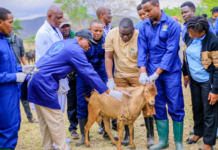
The experiment, conducted at Kongwa Ranch in central Tanzania, assigned 60 Boran and 60 TSHZ steers to one of five dietary regimes for 100 days: grazing only; grazing plus 50% concentrate; and three ad libitum hay-based diets supplemented with 60%, 80%, or 100% concentrate.
Methane emissions were estimated using the 2019 revision of the guidelines from Intergovernmental Panel on Climate Change (IPCC) and used to calculate emission intensity — grams of methane per kilogram of weight gain.
The findings were striking. Concentrate supplementation raised average daily weight gain (ADG) by roughly 6% to 33% depending on diet and breed, while daily methane production fell by 3% to 35% compared to grazing-only cattle.
Among the treatments, the highest concentrate diet (100% concentrate, no grazing) produced the lowest emission intensity: methane emissions per kg of weight gained dropped from about 396 g CH₄/kg for grazing-only animals to just 87 g CH₄/kg under full concentrate feedlot conditions.
On a per-animal per-day basis, there were modest differences between breeds — Boran cattle emitted slightly more methane per day than TSHZ, likely because of their larger size and higher feed intake (127 vs. 114 g CH₄/day). But Boran animals also gained weight faster (738 vs. 626 g/day), so in terms of methane per meat produced the differences leveled out.
Overall, switching from traditional grazing to feedlot systems supplemented with locally-sourced concentrates reduced total methane emissions per day by 28–65%, and cut methane intensity (per kg of meat) by nearly 80%.
The practical implications are significant. Tanzania has one of Africa’s largest cattle populations, but traditional pastoral systems — heavily dependent on seasonal, low-quality forage — tend to produce livestock slowly and emit more greenhouse gas per kilogram of meat. With rising domestic demand for beef driven by population growth and increasing incomes, there is growing pressure to produce more meat from existing land while keeping emissions in check.
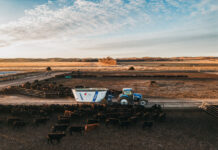
By showing that feedlotting with affordable, locally available feeds (such as maize meal, cottonseed cake, molasses, mineral mix, salt and urea) can deliver faster growth and drastically lower methane intensity, the study outlines a feasible “low-hanging fruit” option for producers and policymakers alike.
According to the authors, improved feeding systems are not just about increasing weight gain — they are “powerful levers for both productivity and climate goals.” Rapid weight gain means that animals spend fewer days emitting methane before reaching market weight, resulting in more beef per unit of emissions.
However, the researchers caution that scaling up feedlot interventions will require reliable access to feed inputs — particularly crop by-products — and attention to costs and supply chains.
Looking ahead, researchers plan to validate these findings under real-world farming conditions. Future work will involve direct measurement of methane emissions — using individual-animal methane sensors and drone-based group-level emission monitoring developed at ILRI — to check whether the IPCC-based estimates hold true in practice.