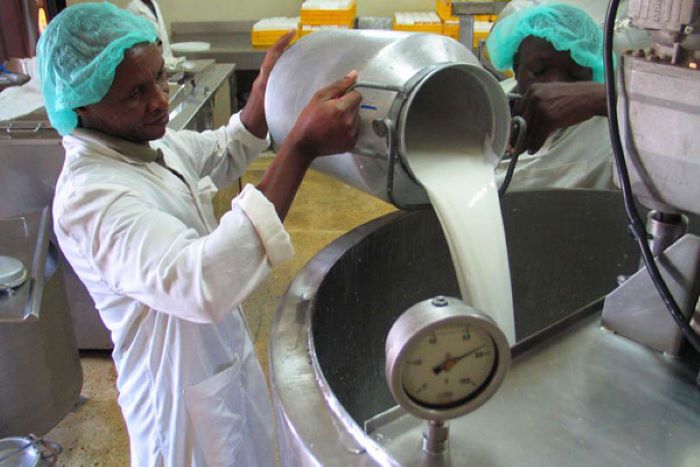
Milk prices are facing renewed upward pressure in Kenya after formal-sector milk intake fell by 5 per cent to 84.44 million litres in June 2026, down from 88.89 million litres in May, according to data cited by the Consumers Federation of Kenya (COFEK).
The decline, highlighted in a COFEK press release dated August 31, represents a drop of about 4.45 million litres in one month. The federation says the June intake was also 6.4 per cent lower than the 90.24 million litres recorded during the same month in 2025.
COFEK has warned that the weakening supply is already putting pressure on consumers, particularly in Nairobi, where retailers have started rationing milk purchases and some prices have increased.
At outlets such as Waithaka Dairy Centre, fresh milk prices have risen from Sh70 to Sh80 per litre, while branded packaged milk has become intermittently unavailable on supermarket shelves, the federation said.
COFEK attributed the supply problems partly to worsening conditions for smallholder dairy farmers, who account for roughly 80 per cent of Kenya’s milk production. Farmers are reporting declines in milk yields from between seven and nine litres to four and five litres per cow per day.
The federation linked the falling output to poor pasture following delayed rains and a sharp increase in the cost of commercial animal feed. Feed costs have risen by about 45 per cent, according to COFEK, increasing the financial pressure on farmers and raising the risk that some could leave dairy production altogether.
“Resultant strain on retail milk prices” is already being felt by consumers, COFEK said, as it called on the Ministry of Agriculture, the Kenya Dairy Board (KDB) and the National Treasury to take urgent measures to restore milk supplies and stabilise prices.
The federation has also questioned how the milk surplus produced in 2025 was handled. It says New KCC and the KDB did not adequately absorb the surplus, while milk powder from the surplus was not incorporated into the country’s strategic food reserves as anticipated. COFEK argues that such reserves could have helped cushion the current supply shortage.
The organisation is calling for a transparent recovery plan, emergency fodder and feed subsidies for affected dairy counties, and measures to reduce the cost of key feed ingredients. It has also urged the National Treasury to waive import duty and VAT on yellow maize, soya and other dairy-meal inputs.
COFEK further wants active monitoring of retail milk prices and fortnightly public updates on milk intake, prices and reserves until the crisis is resolved.
With supply already below last year’s level and production costs weighing on farmers, consumers could face further milk-price increases unless supply improves and measures to support dairy producers take effect.