

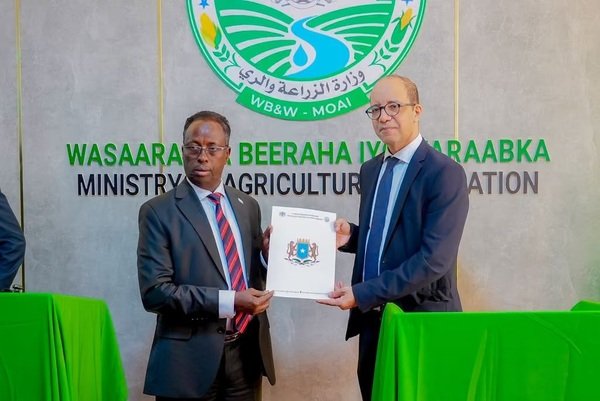
Somalia and the International Fund for Agricultural Development (IFAD) are deepening cooperation on agriculture, livestock, food security and climate resilience following the launch of a $31.22 million Rural Livelihoods Resilience Programme (RLRP).
The programme, launched in Mogadishu on August 29, is designed to strengthen agricultural production, improve food security and build the resilience of rural communities across Somalia.
IFAD says the initiative will support more than 125,000 rural households and help mobilise more than $100 million in investment for the country’s agricultural sector and rural economy.
The launch coincided with talks between Somali Deputy Prime Minister Salah Ahmed Jama and Naoufel Telahigue, IFAD’s Regional Director for the Near East, North Africa, Europe and Central Asia.
According to Somalia’s official news agency SONNA, the discussions centred on expanding cooperation in agriculture and livestock development, food security, climate resilience and support for farmers, pastoralists and vulnerable communities.
The sides also examined IFAD-funded projects already operating in Somalia, while discussing ways to strengthen government institutions and increase investment in agriculture, water and markets.
Such investments are intended to create greater economic opportunities, particularly for pastoral communities.
The renewed partnership reflects a significant change in Somalia’s relationship with IFAD. Dawan Africa reported that IFAD financing for Somalia has increased from about $10 million to more than $100 million in recent years, following the country’s resolution of outstanding arrears.
Telahigue highlighted that progress, saying, “We are very proud that less than three years ago Somalia was dealing with” arrears. He also noted Somalia’s contribution to IFAD’s latest replenishment.
Somalia is also committing resources to the partnership. Agriculture and Irrigation Minister Mohamed Khair Maareeye said the government would provide an annual financial contribution to IFAD over the next three years, with resources supporting countries in need.
The RLRP comes as Somalia seeks to reduce the vulnerability of rural communities to drought, floods and other climate-related shocks.
Agriculture and livestock remain central to rural livelihoods, while limited water infrastructure, market access and exposure to climate variability continue to constrain production.
FTL Somalia reported that the government and IFAD also discussed expanding development projects and strengthening institutional capacity, alongside increased investment in water, agriculture and markets.
The talks are part of broader efforts to increase domestic production and reduce communities’ vulnerability to climate change and other economic challenges.
IFAD’s new Country Strategic Opportunities Programme, which runs through 2030, will guide future cooperation and is aligned with Somalia’s National Transformation Plan and Vision 2060.
The expanded partnership therefore combines immediate investment in rural livelihoods with longer-term efforts to make Somalia’s agricultural economy more productive, resilient and capable of supporting farmers, pastoralists and rural households.