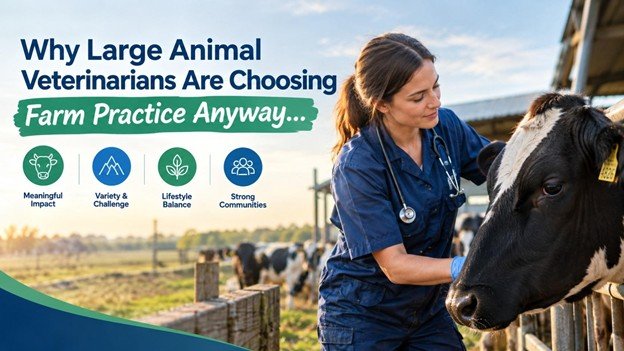
Farm veterinary medicine looks very different from a typical day in a small animal clinic. Instead of seeing one patient at a time, farm animal veterinarians may work with entire herds, travel between farms, handle emergencies, and help producers prevent health problems before they spread.
It is demanding work, and fewer new graduates are choosing this path. Still, some students see the challenges as part of the appeal. They value the variety, the hands-on work, and the chance to make a difference beyond an individual patient. Their reasons reveal why large animal practice still has a place in modern veterinary medicine.
Where Large Animal Vets Are Needed Most
In 2025, the American Veterinary Medical Association reported the following breakdown of U.S. veterinary practice areas:
- 1% worked mainly in food animal practice.
- 6% worked in mixed animal practice.
- 5% worked in companion animal medicine.
The shift toward companion animal medicine has been building for decades. It became the leading career path as early as the 1960s and continued to grow through the 2010s.
Meanwhile, less than 3-4% of new veterinarians annually selected large animal or food animal production-related jobs. That has not been sufficient to make up for the vacancies created by the retirement of experienced veterinarians.
What started as a gradual shift has now become an ongoing problem for rural communities.
More than 100 regions across dozens of states have received federal designation as veterinary shortage areas. Many positions remain open year after year.
Farmers and ranchers face the scarcity in practical ways. A typical herd health appointment may require a lengthy travel, whereas an emergency during calving season may necessitate waiting for a veterinarian who is already covering multiple counties. In rural places, locating a large animal vet is not always as easy as finding the nearby clinic.
Why Some Vets Choose Farm Practice
With so many graduates heading toward companion animal practice, it is fair to ask what keeps some veterinarians choosing farm animal work. For many, the appeal has less to do with salary and more to do with the kind of work, relationships, and purpose the job offers.
Here are some reasons why some large animal practitioners prefer farm practice.
More variety in the work
Large animal vets rarely have two identical days. Their work can range from herd health and emergency obstetrics to treating lameness and helping farms with biosecurity. For livestock veterinarians who enjoy using a broad set of skills, that variety can be a big part of the appeal.
Greater independence
Farm veterinarians frequently make choices in the field. They may visit a farm, analyze the issue, and decide how to handle a case based on the animals, the farm’s history, and the resources available.
Long-term relationships
Farm vets often see the same producers and herds year after year. Over time they learn about the history of the farm and its working methods and get to know the animals. That relationship can create a different kind of bond than the frenetic pace of a busy small and mix animal practice.
A direct connection to agriculture and animal welfare
The work reaches beyond individual animals. Farm veterinarians care for livestock while working across animal welfare, agriculture, and public health. In some rural areas, they may also be the only vets available to serve producers across a wide field.
Financial support for rural service
Money can play a role too. The USDA Veterinary Medicine Loan Repayment Program offers up to $40,000 a year toward student loan debt for veterinarians who commit to at least three years of service in a designated veterinary shortage area. Over the award period, that can mean up to $120,000 toward eligible debt.
The program is competitive, with roughly 60% of applications accepted each year. Still, loan repayment support can make rural and food animal practice more financially realistic for graduates who might otherwise choose a city-based practice.
The Real Tradeoffs
The benefits of large animal practice do not erase the downsides. Vets who choose this path usually know what they are signing up for.
Income is one consideration. Large animal vets often earn less than small animal vets. For graduates carrying $200,000 or more in veterinary school debt, that difference can be difficult to overlook. With an average salary of $165,527 a year, or $79.58 an hour, farm practice may still mean a lower earning potential while paying off student loans.
The lifestyle can also be demanding:
- Emergency calls may come in the middle of the night or during bad weather.
- Working with animals that weigh hundreds or thousands of pounds comes with physical risks.
- Rural practices can involve long drives between farms and ranches.
- A single call can take up most of the day, with hours spent on the road or working in barns and fields.
Then there is the isolation. A vet serving a rural area may be the only veterinarian for miles. That can be rewarding, but it also means fewer colleagues nearby to turn to for advice, mentorship, or support after a difficult case.
For someone coming from a busy clinic with several other vets, adjusting to that kind of independence can take some time.
The Role of Vet Techs and Support Staff in Farm Practice
Large animal practice also depends heavily on trained support staff, something that often gets overlooked when people talk about the veterinary workforce shortage. A farm vet cannot handle every part of a cattle or horse visit alone. Restraint, sedation, monitoring, treatment, and equipment setup often take a team.
For vet techs, the work looks quite different from what they might see in a small animal clinic. Their responsibilities can include:
- Restraining animals during exams and procedures
- Assisting with herd health work, including pregnancy checks and vaccination programs
- Preparing and managing mobile supplies and equipment
- Helping with on-farm treatments
- Staying in contact with producers between veterinary visits
The job also calls for comfort with outdoor work, large animals, long travel, and conditions that can change quickly. At the same time, techs can take on a high level of hands-on responsibility and play a direct role in patient and herd care.
In rural areas where only a small number of vets serve large geographic regions, skilled techs can help a veterinarian serve more farms and herds. That makes large animal practice a career path worth considering for vet techs interested in production medicine, even though emergency and speciality roles tend to get more attention.
What’s Changing in Large Animal Veterinary Care
The rural veterinarian shortage has not gone unnoticed at the federal or state level. Beyond the USDA’s loan repayment program, several states run their own rural veterinary loan programs aimed at the same problem from a more local angle, often targeting specific shortage counties or species.
Recruitment efforts have also started earlier in the pipeline. Programs that connect students from rural and agricultural backgrounds to veterinary school, often through 4H and similar youth agriculture programs, are built on a fairly consistent finding: vets who grew up in rural communities are statistically more likely to return to and serve those communities after graduation. That insight is shaping how veterinary schools recruit and how outreach programs target their efforts, even if the results take years to show up in workforce numbers.
For vets and techs exploring options in this space, large animal veterinary jobs are one way to see where shortage area openings exist across the country. Platforms like Pago have also emerged specifically to connect veterinary talent with practices in these underserved regions.
Farm practice is not the easiest path in veterinary medicine, and it is getting harder to justify on financial terms alone. But for the vets and techs who choose it, the reasons are specific: autonomy, long-term relationships with producers, a direct connection to food security, and the particular kind of purpose that comes from being essential to a community with few other options. It is not the most common choice a new graduate makes, but for the ones who make it, and for the shortage areas hoping to fill it, it remains one of the more consequential.
FAQs
What does a large animal veterinarian do?
Large animal veterinary practice involves care for livestock and production animals, including cattle, horses, pigs, sheep, and goats. The vets’ work can include:
- Herd health and disease prevention
- Vaccinations
- Reproductive services
- Emergency treatment
- On-farm examinations and procedures
- Food safety-related work
Unlike small animal vets, they often travel directly to farms and ranches to treat animals where they are kept.
Why is there a shortage of large animal veterinarians?
The shortage is linked to lower average pay, high veterinary school debt, and the demands of rural practice. Long drives, emergency calls, physical work, and fewer nearby colleagues can also make these positions harder to fill. Only about 3% to 4% of new veterinary graduates enter large animal or food animal practice each year.
Do large animal vets make less than small animal vets?
Yes, on average. Large animal and food animal veterinarians generally earn less than vets in companion animal practice. For graduates with high student loan debt, the income difference can make farm practice less appealing.
Are there loan repayment programs for large animal veterinarians?
Yes. The USDA Veterinary Medicine Loan Repayment Program offers up to $40,000 a year toward eligible student loan debt for vets who commit to at least three years in a designated veterinary shortage area. That can add up to $120,000 over three years. Some states also offer loan repayment programmes for vets who work in rural or underserved areas.
Where do large animal vets make the most money?
Income varies based on location, species, practice type, and whether the veterinarian owns a practice. Food animal practices in areas with large cattle, dairy, or swine industries can offer steady demand for veterinary services. Practising ownership can also affect earning potential.
What career opportunities are there for vet techs in large animal practice?
Large animal vet techs take on hands-on roles that can include:
- Restraining cattle, horses, and other large animals
- Assisting with vaccinations and pregnancy checks
- Preparing mobile equipment and supplies
- Supporting on-farm treatments
- Communicating with producers between veterinary visits
For techs interested in production medicine, rural practice offers a different work environment from small animal clinics and can involve a high level of hands-on responsibility.