



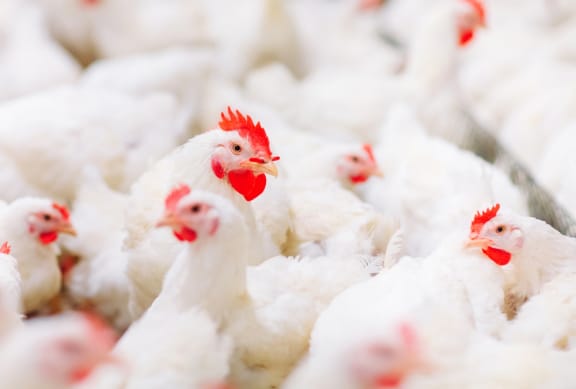
Tanzania has unveiled a Sh3.5 trillion strategy aimed at transforming the poultry industry and reducing the high cost of animal feed, which currently accounts for about 70 per cent of total production expenses.
According to the National Poultry Development Strategy (NPDS) 2026–2036, the country targets reducing feed costs to 50 per cent of production expenses while strengthening domestic production of key raw materials, particularly maize and soybeans.
Under the strategy, the government plans to increase soybean production from the current 25,000 tonnes to 300,000 tonnes by 2036, with 20 percent of local output earmarked for poultry feed processing.
A Sh33 billion de-risking fund will also be established to encourage financial institutions to provide credit for soybean inputs and storage.
Maize production for animal feed is similarly targeted to double, from 750,000 tonnes to 1.5 million tonnes. The government plans to promote specialised varieties, including high-yielding yellow maize, quality protein maize and drought-tolerant varieties.
“Central to this is the promotion of specialised maize varieties tailored for livestock, such as high-yielding yellow maize, quality protein maize (QPM), and drought-tolerant varieties,” the strategy document states.
The government also plans to promote contract farming and modernise feed-processing facilities, with a target of achieving 80 percent utilisation of feed mills. The measures are intended to improve the reliability of local feed supplies while reducing dependence on imports.
Poultry farmer Solomon Kajula welcomed the initiative, saying feed prices remain the sector’s biggest challenge.
“If the government has taken this step, we believe things will improve significantly for us because feed costs remain our biggest challenge,” he said.
Kajula, however, called for stronger oversight of veterinary medicines and vaccines, warning that farmers sometimes purchase products that are expired or ineffective.
Deputy Minister for Livestock and Fisheries Ng’wasi Kamani said increasing domestic soybean production and improving maize storage would help lower feed prices while reducing Tanzania’s dependence on imports.
“Increasing local Soybean yields will curb import dependency and ease foreign exchange pressure,” she said.
Kamani also said the government would encourage the use of maize varieties specifically intended for animal feed to minimise competition between poultry producers and consumers for food maize.
“We want clear distinction in maize varieties so poultry producers do not compete with human food supplies,” she said.
The strategy places the private sector at the centre of implementation, with investors expected to provide 60 percent of the Sh3.5 trillion financing. The government will focus on creating an enabling environment, while private investors drive production, feed processing, chick rearing and vaccine supply.
“The private sector will play a major role because government’s responsibility is creating an enabling environment, while investors drive production, feed processing, chick rearing, and vaccine supply,” Kamani said.
The government aims to increase poultry’s contribution to Tanzania’s GDP from 1.8 percent to at least three percent by 2036, with the sector’s total value projected to reach Sh9.03 trillion.





[…] has unveiled a Sh3.5 trillion strategy aimed at transforming the poultry industry and reducing the high cost of animal feed, which currently accounts for about 70 per cent of total […]
[…] has unveiled a Sh3.5 trillion strategy aimed at transforming the poultry industry and reducing the high cost of animal feed, which currently accounts for about 70 per cent of […]
Comments are closed.