

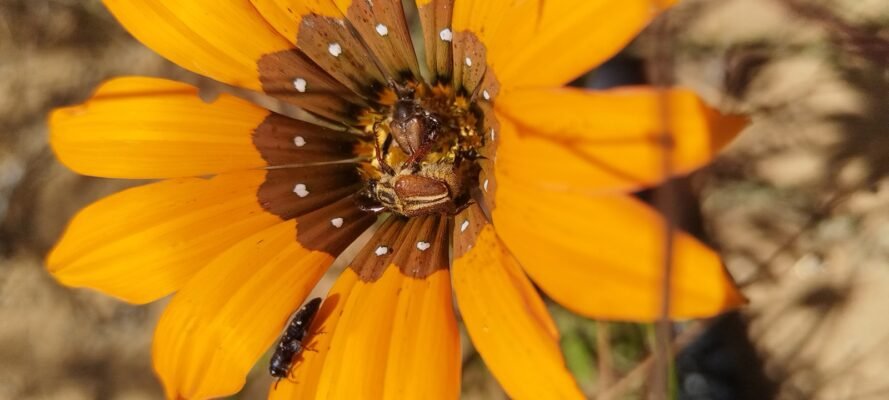
Last year’s Great Southern Bioblitz recorded 128 000 observations, 11 500 species and more than 600 South African plants and animals of conservation concern in four days.
For four days at the end of November, people across southern Africa will be invited to do something simple: go outside, photograph the wild plants and animals they find, and upload their observations to the free iNaturalist platform. The Great Southern Bioblitz [GSB] is a community science event in the Southern Hemisphere that brings people together to document biodiversity. More than 47 regions across 14 African countries have registered so far, with new districts joining every week.
The event is open to anyone with a smartphone; no expertise is needed. Participants can photograph and upload their photos to the iNaturalist app, where the community helps identify and verify species. Observations that meet the platform’s verification criteria flow into the databases used by the South African National Biodiversity Institute [SANBI] and its partners for Red List assessments, invasive species tracking and conservation planning.
What last year’s count revealed
The 2025 event was the largest Great Southern Bioblitz held in Africa to date. Participants across 14 African countries recorded 127 983 observations of 11 582 species, with 2 239 observers and 1 850 identifiers taking part. South Africa contributed 52 387 observations of 6 138 species recorded by 1 468 observers.
Among the findings that matter most to conservation, more than 600 South African plant and animal taxa of conservation concern were recorded over the four days along with over 400 observations of invasive species (and numbers still rising as the iNaturalist community continues to identify what was photographed). The single most photographed species on the continent was Black Wattle, Acacia mearnsii, one of South Africa’s most damaging invasive trees.
| GSB 2025 | Observations | Species | Observers |
| Africa | 127 983 | 11 582 | 2 239 |
| South Africa | 52 387 | 6 138 | 1 468 |
| Western Cape | 26 803 | 3 133 | 699 |
| KwaZulu-Natal | 9 092 | 2 051 | 473 |
| Eastern Cape | 8 131 | 1 553 | 202 |
| Gauteng | 3 549 | 920 | 142 |
Selected results, GSB 2025. Full tallies at the link under Notes to editors.
The Western Cape, home to the Cape Floristic Region, the world’s smallest and richest biodiversity hotspot, recorded the highest number of observations and species in the country. KwaZulu-Natal had the highest number of observers of any province, with 473 people taking part. Kenya, Namibia and Zimbabwe were the strongest contributors outside South Africa, each recording more than 1 400 observations.
“Every one of those records was made by someone who decided to stop and look,” said Suvarna Parbhoo Mohan, Citizen Science Programme Manager at SANBI. “Six hundred threatened species in a long weekend is more than our field teams could cover in a year. And the count is still climbing, because identifications carry on long after the event ends.”
Why it matters
South Africa is home to about six percent of the world’s plant species, yet most of the country has never been systematically surveyed. Plant records made by the public on iNaturalist now outnumber two centuries of collections in the National Herbarium. A bioblitz brings these observations together over four days giving scientists a picture of the biodiversity found in places ranging from city parks to protected areas and places that may one day be protected.
“A region with few observations is not a region with little to find. It is a region where nobody has looked yet,” said Parbhoo Mohan. “That is the invitation. You don’t need to be an expert. You need a phone, a spare hour (or three!) and some curiosity.”
How to take part
- Observe: between 27 and 30 November, photograph any wild plant, animal or fungus and upload it to the free iNaturalist app. Observations made anywhere in a registered region count automatically.
- Identify: anyone can help identify and confirm observations made by other participants, from anywhere and at any time.
- Champion your region: if your area is not yet on the map, you can take the initiative to register it. Setting up the project, spreading the word and getting a few people out recording is most of the work. Registration is open until the event starts.
“Every photograph tells a story. Every observation adds a piece to the puzzle of our natural world. You don’t need to be a scientist to contribute to conservation – you just need curiosity, a camera and a willingness to look a little closer. By taking part in the Great Southern BioBlitz, you become part of something bigger: building the knowledge we need to understand, appreciate and protect our indigenous biodiversity,” said Wild Rescue founder and director Gill Simpson, organising this year’s Great Southern BioBlitz for the Garden Route district.
Registered regions, the full list of participating projects and the champion registrati form are available at inaturalist.org/projects/great-southern-bioblitz-2026-southern-africa-umbrella.