

The collapse of the Antalya climate talks has exposed a crisis of leadership, a broken financing bargain, failures of diplomacy and the growing influence of fossil-fuel interests. Does the world need more negotiations?
There was something particularly dispiriting about the conclusion of COP31 in Antalya, Türkiye. After more than two weeks of negotiations, almost 200 countries, upwards of 92,000 registered participants and two days of overtime, the world’s most important climate conference ended without agreement on its central political declaration.
The proposed Antalya Pact had become so diluted that it could not even mention fossil fuels, the principal driver of global warming. Yet even that proved insufficient to secure consensus. Turkey’s conference president, Murat Kurum, eventually conceded defeat. Australia’s climate minister and president of negotiations, Chris Bowen, described the disagreements as having unbridgeable red lines.
The summit was variously labelled a diplomatic disaster, a “COP flop” and a “ghost COP”. It was the first time since Copenhagen in 2009 that a UN climate conference had failed to secure an overarching agreement. The most concerning aspect of Antalya is not that negotiations collapsed; it is what their collapse reveals about the international system responsible for addressing the climate crisis.
COP31 did not simply fail because countries could not agree. It exposed a structural problem in the way the world attempts to govern climate change and its causes. A system designed around diplomatic consensus is increasingly being asked to confront interests that evidently have no intention of reaching consensus.
The failure to adopt the overarching Antalya Pact does not mean that everything at COP31 failed. Separate decisions were adopted, and some initiatives continued – but the collapse of the central political agreement was a serious setback that will lead to real world repercussions.
A system increasingly unable to govern
The United Nations climate process was established on the principle that countries with vastly different economic circumstances, political systems, energy requirements and historical responsibilities must find common ground. Climate change is a global problem that cannot be addressed through isolated national initiatives. Greenhouse gases do not respect borders, and the consequences of inadequate action extend far beyond the countries responsible for producing the emissions.
The difficulty is that the consensus-based negotiating system has increasingly become an instrument of obstruction. Under the existing arrangements, almost 200 countries must reach agreement on major decisions. In practice, a relatively small number of determined opponents can prevent progress, even when the overwhelming majority supports stronger action.
At COP31, oil-producing countries, including Saudi Arabia and Russia, resisted any explicit reference to transitioning away from fossil fuels. The final draft removed the language, but the European Union, Panama, the Marshall Islands and other countries refused to endorse an agreement that avoided identifying the principal source of the problem.
There is a legitimate argument for protecting the voices of smaller and more vulnerable countries, however there is something fundamentally wrong with a system in which the interests of a handful of powerful states can repeatedly frustrate the collective ambitions of the international community.
Former US vice-president Al Gore called for significant reform, arguing that the process must better reflect the will of the majority. Replacing consensus with majority voting is one possible solution, although it is neither straightforward nor necessarily sufficient. A decision imposed on countries that subsequently refuse to implement it is merely a hollow victory.
There is also a danger that changing consensus to majority voting could simply create another problem: countries that repeatedly lose votes might withdraw from the process or ignore decisions. A recent academic assessment published in Nature Climate Change identifies two more achievable reform priorities; namely stronger transparency and accountability and a fundamental shift towards implementation of existing commitments. It also identifies restrictions on fossil-fuel industry influence and greater opportunities for observer participation as important possibilities.
A more practical starting point would be to distinguish between decisions requiring universal agreement and initiatives that countries should be able to pursue collectively without objection or political baggage. Stronger transparency, accountability, implementation deadlines and independent monitoring would also help shift the emphasis from negotiating promises to delivering them.
Cynicism toward multilateralism has grown significantly in recent years, driven by institutional gridlock, rising nationalism, and perceived double standards in global governance. While international bodies were built to solve shared problems, several structural friction points have eroded public and political trust. Veto powers within the UN Security Council often paralyse action during major crises, making the body appear ineffective at maintaining global peace. Critics frequently point out that international laws and norms are applied inconsistently, depending on the geopolitical influence of the nations involved. Many governments increasingly prioritise domestic interests and bilateral deals over collective agreements, viewing global institutions as infringements on national sovereignty. Traditional diplomatic frameworks struggle to keep pace with fast-moving challenges like climate change, artificial intelligence regulation, and cyber warfare.
Former UN Secretary-General Kofi Annan famously mocked major powers for treating international cooperation like a buffet – picking only the rules and interventions that suit their immediate self-interest while ignoring the rest. Author Eduvie Donald defines international diplomacy simply as “a manufactured friendship between strangers,” echoing French statesman Charles de Gaulle’s famous quip that “treaties are like roses and young girls: they last while they last.” Former Mexican President Ernesto Zedillo warned that the multilateral trading system easily degenerates into “the battleground for unsettled geopolitical disputes,” which are now plain to see.
For all the acrimony, disillusionment and wry wit – the objective should not be to abandon multilateralism, it should be to make it functional.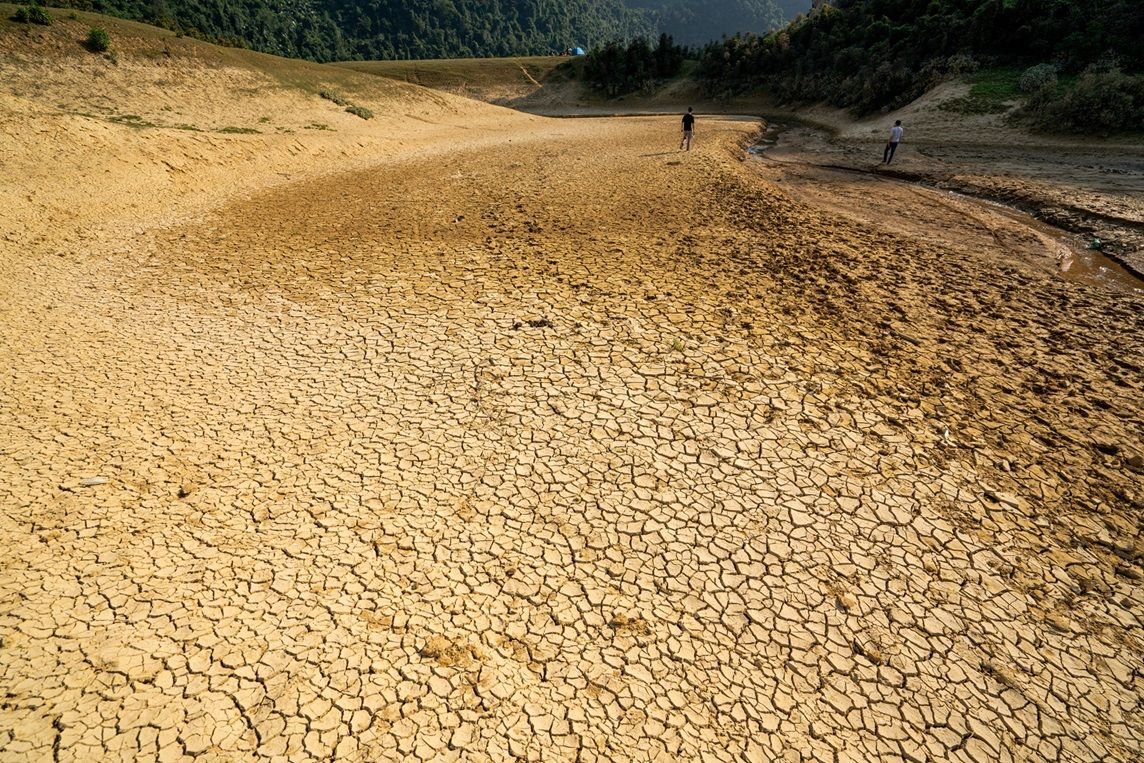
The uncomfortable economics of climate justice
The other major fault line at COP31 was climate finance.
For developing countries, this was never simply a question of generosity. It is a question of historical responsibility and the financial capacity to respond to a crisis they did relatively little to create. Article 9 of the Paris Agreement explicitly recognises the obligation of developed countries to provide financial resources to assist developing countries with both emissions reduction and adaptation.
Yet the distance between that obligation and its implementation remains considerable. African countries arrived in Antalya seeking a clear commitment to increase adaptation finance to at least USD 120 billion annually by 2035. The proposed agreement retained a general reference to tripling adaptation finance, but removed the specific financial baseline and a credible mechanism for delivering it. The figures illustrate the problem. UNEP’s 2026 Adaptation Gap Report worryingly titled “Ready? Not” finds that global climate adaptation is falling far short of what is needed as warming is set to exceed 1.5 degrees Celsius. It estimates that developing countries will require approximately USD 305 billion annually by 2035 to meet their adaptation needs. International public adaptation finance reached only USD 28.2 billion to USD 31.7-billion in 2024. Even tripling current contributions would leave a substantial shortfall.
There is also a key difference between providing finance and providing loans. Countries already struggling with debt, inadequate infrastructure and food insecurity cannot reasonably be expected to borrow their way out of a crisis they did not create. Private investment and development finance institutions have important roles, but they cannot replace public funding, particularly where adaptation projects have limited commercial returns.
Consider the implications. A coastal community needs protection against rising sea levels and storm surges. A farming region needs more resilient water infrastructure. A municipality needs flood defences, improved drainage and emergency services. These are not necessarily attractive investment opportunities for private capital, but they are essential public responsibilities.
The African Group of Negotiators was particularly critical of the proposed agreement’s failure to establish measurable commitments on adaptation, loss and damage and a functioning just transition mechanism. As Ghana’s environment minister, Zanetor Agyeman-Rawlings, observed, a commitment without a financial baseline cannot meaningfully be called finance.
There is a risk that the climate financing bargain is quietly being renegotiated: developing countries are expected to increase their ambition while developed countries become increasingly reluctant to meet their obligations. If that becomes the status quo, then international climate cooperation will become extraordinarily difficult to sustain.
Fossil fuels: the navel-gazing behind the negotiations
Perhaps the most revealing feature of COP31 was the inability to agree on the words ‘fossil fuels’.
Three years after countries agreed at COP28 in Dubai to transition away from fossil fuels in energy systems, the international community could not even reaffirm that commitment. This was not a disagreement about scientific uncertainty, it was a disagreement about the economic power of hydrocarbons.
Oil and gas remain enormously influential industries, supported by national revenues, employment, investment interests and geopolitical relationships. For some governments, fossil fuel exports are central to economic survival and political influence. The result is an uncomfortable contradiction: governments participate in climate negotiations while simultaneously defending the industries responsible for much of the problem.
The growing influence of fossil-fuel stakeholders within international climate discussions also raises questions about lobbying, conflicts of interest and the representation of corporations in a process intended to serve the public and environmental good.
Carbon capture and storage became another contentious issue in Antalya. The technology has legitimate potential in certain industrial applications, but its inclusion in climate agreements must not become a convenient justification or excuse for extending fossil fuel production indefinitely. Carbon removal is not a substitute for reducing emissions at source
However, the economics of energy are changing. Solar and wind power have become increasingly competitive, battery technology is advancing and electrification is reducing dependence on imported fossil fuels. The geopolitical consequences are significant. Countries that rely heavily on imported oil and gas are increasingly recognising that renewable energy is also an energy security strategy.
China, despite its enormous emissions, has become a dominant manufacturer and exporter of solar panels, batteries and other clean-energy technologies. Its exports are helping other countries reduce their dependence on fossil fuels. The energy transition is no longer exclusively an environmental argument – it is an industrial, economic and national security imperative.
Governments that recognise this may increasingly move ahead regardless of what happens in international negotiating rooms.
El Niño will not wait for another COP
The timing of the diplomatic failure could hardly be worse.
The world has entered a period in which the 1.5 degrees Celsius warming threshold is expected to be exceeded, even though limiting the magnitude and duration of that overshoot remains critically important.
The developing El Niño event adds another layer of urgency. The November 2026 NOAA outlook indicates that a strong to very strong El Niño is likely to persist through January to March 2027. The World Meteorological Organization has similarly warned of exceptionally warm Pacific conditions and the potential for significant disruption to global rainfall and temperature patterns.
For Southern Africa, the implications deserve particular attention. The South African Weather Service has identified below-normal rainfall and above-normal temperatures as the most likely conditions across much of the country during the 2026/27 summer season. The Southern African Development Community has also warned of increased drought risk across substantial parts of the region.
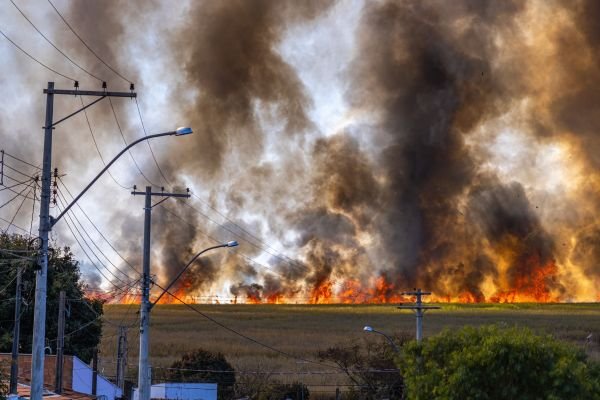
El Niño does not automatically produce drought everywhere, and regional impacts vary, but the combination of elevated temperatures, possible rainfall deficits and an already warming climate creates serious risks for agriculture, water security, ecosystems and food production.
The consequences extend beyond the weather. Drought affects agricultural employment, food prices, electricity generation, household water supplies and the livelihoods of rural communities. Climate adaptation is therefore about whether countries have the resources and institutional capacity to prepare for foreseeable risks. The failure to establish meaningful adaptation finance at COP31 is particularly difficult to defend against this backdrop.
Looking out for number one
The question now confronting international climate diplomacy is whether developed countries will increasingly pursue their own interests at the expense of collective action and global consequences.
The withdrawal of the United States from the Paris Agreement and its absence from COP31 have weakened international leadership. China has expanded its influence in clean-energy manufacturing but remains cautious about assuming a more prominent diplomatic role. European countries are struggling to reconcile their climate commitments with domestic economic and political pressures. Meanwhile, developing countries are being asked to manage escalating climate risks without the financial support repeatedly promised to them.
An every-country-for-itself approach would be particularly damaging for Africa and other climate-vulnerable regions. Their ability to adapt depends not only on domestic governance but also on international financing, technology transfer and cooperation.
Waiting for universal agreement is not a viable strategy either.
A more sensible way forward would involve a two-track approach:
First, the UN climate process must be reformed, with greater transparency, more effective decision-making and a stronger emphasis on implementation. The presidency of each COP should be judged not by the size of its conference or the number of declarations produced, but by measurable progress on emissions, adaptation and finance. It’s about outcomes, not oratory.
Second, countries prepared to move faster should be encouraged to establish practical coalitions outside the consensus process. Initiatives addressing fossil-fuel transitions, methane emissions, renewable electricity grids and climate finance can deliver results without waiting for every government to agree.
Such cooperation is already emerging through initiatives including the Beyond Oil and Gas Alliance, the Global Methane Pledge and the international conference on transitioning away from fossil fuels.
These arrangements should complement the UN process, not replace it.
The next priority must be to put credible financing behind adaptation and loss and damage, particularly in developing countries. Climate finance needs transparent accounting, predictable delivery and a substantially greater proportion of grants rather than additional debt. The fossil-fuel industry must be held to a far higher standard of accountability. Governments cannot continue subsidising fossil-fuel expansion while simultaneously claiming to be committed to a safe climate future.
The leadership question
COP31 may eventually be remembered as the moment when the limitations of the existing climate governance system became impossible to ignore. It would be a mistake, however, to conclude that international cooperation has become irrelevant. The Paris Agreement remains in force. Previous commitments have not disappeared, and the transition towards cleaner energy continues in many parts of the world.
Unfortunately, the distance between international promises and practical delivery is becoming increasingly difficult to justify. The next summit, COP32 in Addis Ababa, Ethiopia, will take place on a continent that is particularly exposed to climate impacts despite contributing a relatively small proportion of historical global emissions. It presents an opportunity to put African climate priorities, adaptation finance and the just transition at the centre of negotiations.
Climate change is no longer a problem that can be managed through carefully worded declarations, diplomatic compromises and promises deferred to another year. The physical consequences are accumulating, economic pressures are intensifying and the window for limiting further damage is narrowing. The question is not whether the world can afford to reform its climate institutions, it is whether it can afford not to.
The planet does not negotiate. Atmospheric concentrations of greenhouse gases do not recognise diplomatic sensitivities, and the climate system will not wait for 200 governments to find common ground and complete unanimity.
While a single, official total event cost for COP31 has not been publicly released as one combined figure, Australia – which served as President of Negotiations while Türkiye physically hosted – allocated USD 147.8 million over three years in its 2026–27 budget for its COP31 role, Pacific delegate travel, climate envoys, staff, and related events. At least USD 2.26 million was disclosed in contracts tied to Australia’s 192-person delegation in Antalya, including USD 872,683 for accommodation and meeting facilities and over USD 1 million for pavilion and event costs. The Australian government disclosed USD 34.6 million in contracted commitments for Pre-COP31 events in Fiji and Tuvalu, including roughly USD 20 million for event management, USD 8.4 million for accommodation and venues, and USD 2 million for host broadcasting. Türkiye has not published a final total hosting bill for the Antalya Expo Center summit, though pre-summit estimates for a full COP hosting bid had previously ranged from USD 1 billion to USD 2 billion.
If you’re keeping count, the estimated total financial cost of COP31 then is at approximately USD 1.65 billion, with a plausible working range of USD 1.15 billion to USD 2.15 billion. That represents approximately ZAR 28 billion – a lavish price-tag for such a notorious boondoggle.
If the midpoint estimate is anywhere near correct, COP31 was an extraordinarily expensive diplomatic exercise that failed to produce its principal political agreement. That does not mean the entire expenditure was wasted. International conferences have substantial logistical, diplomatic and economic functions, and many important discussions and initiatives continued independently of the failed Antalya Pact.
But just imagine what USD 1.65 billion could accomplish if directed towards climate adaptation, ecosystem restoration, drought resilience, water security and vulnerable communities in developing countries. For perspective, that is money that could potentially support thousands of practical climate-resilience projects rather than another cycle of diplomatic negotiations. At a time when developing countries are struggling to secure billions for climate adaptation, the disparity between the resources devoted to climate diplomacy and those reaching communities on the climate frontline deserves scrutiny. In the final analyses, the value and results of these conferences need to genuinely outweigh the value of otherwise directly investing their costs into climate change initiatives and mitigation projects.
What is needed now is leadership prepared to confront vested interests, honour financial obligations and translate scientific evidence into policy and action. Otherwise, the next COP may simply become another extravagant gathering at which governments explain why they could not agree to do what they already know must be done.
Says Gill Simpson, founder and director of Wild Rescue, “Climate change is already affecting people, wildlife and the natural landscapes on which communities depend. We cannot keep treating it as a problem that can be solved through diplomatic declarations while the resources needed for practical action remain out of reach. South Africa cannot afford to regard climate change as a distant political debate or something that will be resolved at the next international summit. We are already facing the consequences through increasing pressure on water resources, changing rainfall patterns, droughts, floods, heat and growing risks to agriculture, biodiversity and rural livelihoods. Communities on the ground need practical support to become more resilient. We also need to recognise that conservation is part of the solution: healthy, functioning ecosystems are essential to the resilience of our country. Climate leadership must ultimately be measured by what changes on the ground, not by the promises made in conference halls.”