


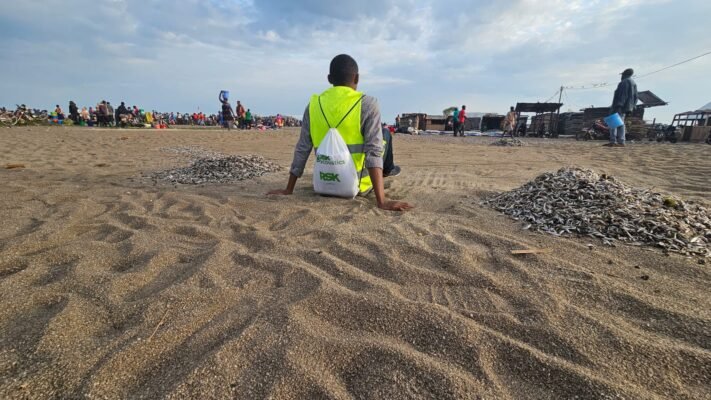
COP31 climate discussions have officially collapsed on the eve of World Fisheries Day (21 November). Participating nations could not agree on the climate financing terms – needed to help developing countries adapt to the changing climate and to be better prepared to deal with the impacts – and no clear plan to operationalise the just transition has been agreed. “This is bad news for South Africans, especially the country’s small-scale fishers and coastal communities, who are already vulnerable to potential threats from offshore oil and gas, while also bracing for a potentially severe El Niño,” says The Green Connection’s Outreach Ambassador, Neville van Rooy.
El Niño is a naturally occurring climate pattern in which surface waters in the central and eastern Pacific Ocean become unusually warm, disrupting weather patterns around the world. In South Africa, El Niño is often associated with hotter and drier weather conditions.
“There are many of us who clearly remember the Western Cape’s near-brush with Day Zero, during a “weak” El Niño, in 2018. It was here that we saw first-hand how quickly water security can become a major socioeconomic and political crisis. And now, with Cape Town’s dam levels falling again and restrictions already returning (from 1 December), water security is once again under threat – this time during what is expected to be a super-El Niño. But what concerns us most is that South Africa’s coastal communities could be among the hardest hit,” says van Rooy.
“For many fishers, El Niño is not an abstract climate event. It could directly affect their ability to put food on the table and earn an income. El Niño can bring warmer-than-normal waters to parts of our coast. If marine ecosystems shift as a result, fish may move away from traditional fishing grounds, beyond the reach of small-scale fishers who lack the resources to follow them. This could mean declining catches, growing financial pressure and increased food insecurity in communities that are already vulnerable. Coupled with rougher and less predictable sea conditions, El Niño could create a double burden for fishers who must navigate both economic uncertainty and heightened safety risks,” he says.
He adds that many other rural communities, such as those in the Karoo, also continue to face recurring drought and water scarcity. And with even more severe weather expected, communities need to know what measures are being put in place to respond. What tangible, actionable plans exist to address climate change and what should communities be doing to prepare? Are schools, hospitals and businesses prepared to deal with the heat? How will municipalities ensure that their communities stay safe during heatwaves? And who will pay the additional costs of these measures, or of lost productivity?
According to the World Meteorological Organization, “the warming effect of El Niño has been intensifying since August and is expected to be the strongest on record, by December.” The South African Weather Service has warned that below-normal rainfall and above-normal temperatures are the most likely outcome over most of the country in the coming months.
The Green Connection’s Advocacy Lead, Lisa Makaula adds, “Climate resilience is not just about the environment, it is also about governance, development and social justice issue. El Niño is not itself the crisis but rather another clear warning that exposes our vulnerability to climate shocks and the growing risks facing our water systems, food security, livelihoods, infrastructure and economy. More importantly, it forces us to question whether our current development trajectory and energy choices are building resilience or deepening these vulnerabilities. Ultimately, this El Niño will test South Africa’s readiness for a future shaped by climate change and increasingly extreme weather.”
“We should be asking ourselves a far bigger question than how severe this El Niño might be. We should be asking whether South Africa is prepared for a future in which climate-related impacts become increasingly difficult and costly to manage. El Niño may come and go, but climate change is steadily raising the stakes. If we fail to confront that reality – through decisive action and better planning – we will continue lurching from one crisis to the next rather than building the resilience our communities, economy and environment urgently need,” says Makaula.
Climate change is intensifying droughts, floods and heatwaves – placing growing pressure on communities, economies and essential resources. South Africa must, therefore, build an energy system that is both affordable and reliable, while reducing emissions and climate risks. The Green Connection advocates prioritising socially owned renewable energy, particularly solar and wind, supported by battery storage. These use less water and are not as vulnerable to volatile fuel prices. Government’s expansion of oil and gas exploration risks deepening climate challenges rather than addressing them.
According to Makaula, every major energy decision should be measured against reality and should be shaped by those communities affected most. She says, “Because we know greenhouse gas emissions contribute to global warming, and that global warming increases climate risks, we must ask whether today’s decisions will cut emissions and build resilience or lock in deeper vulnerability. Climate science cannot sit on the sidelines of energy planning. It must be at the centre.”
The current El Niño will eventually pass, but the warming of the planet will not. Now that another COP conference has concluded, the real question is whether South Africa is prepared to take the necessary steps to address the causes of climate change, strengthen community resilience and build an energy future that reflects the realities of a rapidly changing climate. If climate resilience and a just transition are truly national priorities, then the time to turn commitments into meaningful action is now.