

PGP Warns Market Structures Are Keeping Black Producers Locked Out
Phahama Grain Phakama NPC (PGP) says it is deeply disappointed after Grain SA’s urgent application against the Johannesburg Stock Exchange’s new soybean pricing method was struck from the roll for lack of urgency.
PGP says the decision leaves small and emerging black soybean farmers exposed to pricing practices that cut into their income and make it harder to build sustainable black-owned farming businesses.
The case will now move into a long legal process, opposed by powerful players, while small farmers continue to carry the heaviest burden. They still have to plant, find finance, harvest and market their crops, only to face a pricing system they say is rigid and unfair when they try to sell.
Small farmers have the least power in the market and the least ability to absorb price cuts. PGP is concerned that deductions published in the futures market are being used as standard deductions in the physical market, even when they do not reflect real transport costs or local supply and demand.
Many smaller producers cannot access hedging tools in the futures market, yet their selling price is still shaped by its structures.
Many black grain farmers work in remote rural areas, including the former homeland areas of the Eastern Cape, KwaZulu-Natal, Mpumalanga and other developing regions. They are far from major commercial centres, with fewer buyers, limited storage and little bargaining power.
PGP argues that local supply shortages could justify premiums for farmers in some of these areas. Instead, farmers face the full area differential calculated against a single reference point in Gauteng, even when their crop is bought and processed locally. This is where the single reference point hits hardest.
A large commercial player can manage a bad market signal through scale, storage, logistics, financial tools or other buyers.
A small commercial farmer hundreds of kilometres from other markets often has none of those options. PGP is concerned that the full soybean transport differential to Driefontein may be deducted from the price offered to that farmer, even if the crop is processed much closer to where it was grown.
The farmer has almost no power to push back against the standard deduction published by the JSE.
Grain SA and PGP estimate producer income exposure of about R800 million per season from the disputed method, with producers in outlying areas facing some of the worst effects. For a developing commercial farmer, a drop in income can decide whether a production loan is repaid, whether finance is available for next season, and whether that farmer stays in commercial agriculture. This is happening while margins are already under pressure from sharp increases in input costs.
PGP puts significant effort into helping black farmers move toward sustainable commercial production. This work is part of South Africa’s wider agricultural transformation agenda. But PGP says land, training, finance and production support are not enough if farmers then enter markets where they cannot negotiate a fair price. Using published JSE deductions as an industry standard, without properly accounting for physical market conditions, risks undermining the same businesses that farmer development programmes are trying to build. Fair market access must be central to transformation.
PGP says neither the JSE’s approach nor the urgent court outcome has given meaningful interim protection to small and emerging producers, who have the least market power and the least capacity to absorb the financial impact.
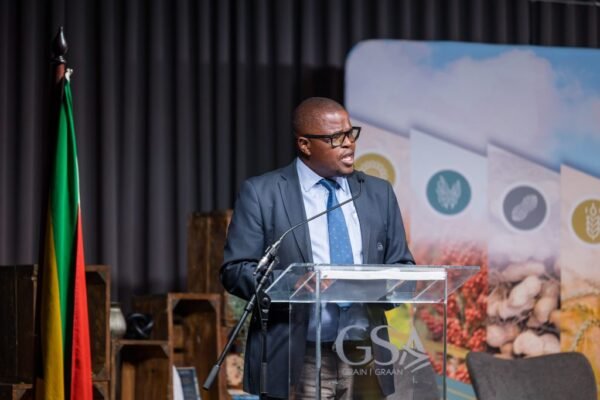
“Our farmers feel powerless. They do not have the balance sheets, logistics networks, storage capacity or negotiating strength to counter the inefficiencies in these market structures. Yet they are expected to carry the consequences while institutions with considerably greater resources defend the system,” said PGP Chairperson Jeremia Mathebula.”
I am particularly disappointed that the urgency of this situation, as experienced by the small farmer, has not resulted in interim protection. We respect the independence of our judicial institutions, but the practical plight of vulnerable producers has not been given sufficient weight. Production loans must be repaid, and the next season must be financed while this dispute continues.
“Farmers’ voices must shape market decisions PGP says South Africa must face a wider problem: when a small farmer challenges a powerful institution like the JSE, the contest is unequal from the start.
Large institutions have specialist advisers, sophisticated market information, legal resources and the money to endure long disputes. An individual emerging farmer generally has far fewer resources. This is why PGP represents black grain farmers collectively and works with Grain SA to ensure their voices are heard and their experiences inform decisions that affect their livelihoods.
“PGP will not walk away from this fight,” Mathebula said. “We will continue standing up for the small farmer, the emerging farmer and the established black commercial farmer. These producers are working to build businesses, create jobs and contribute to South Africa’s food security. We believe the JSE’s approach is unfair and places a particularly heavy burden on farmers who are already vulnerable. They deserve transparent, fair and effective markets that reflect the realities of the physical market and give them a genuine opportunity to compete.”
“We are not asking for preferential treatment. We are asking for fair market access and a system that recognises the realities under which smaller producers operate.”
PGP is calling on the JSE, government, competition authorities, the agricultural value chain and other responsible institutions to look beyond whether market rules are technically defensible, and to ask who ultimately bears the economic cost, and what that means for the livelihoods and long-term survival of small rural farming businesses.
For PGP, supporting black farmers means helping them produce successfully and making sure they have a fair chance to earn a sustainable income from what they grow.