

The Government of Rwanda has secured $78.5 million, equivalent to more than Rwf110 billion, in financing from the International Fund for Agricultural Development (IFAD) to strengthen the agricultural sector, with a major focus on Kayonza district.
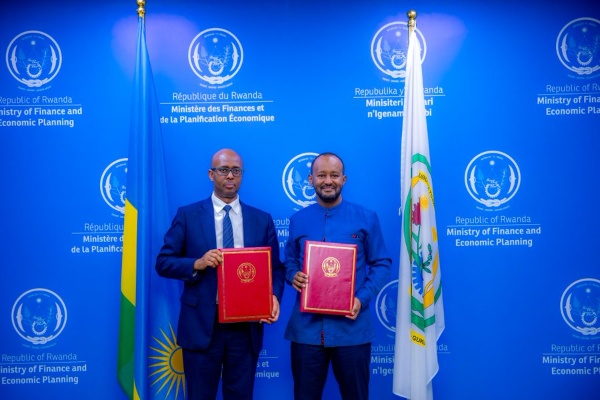
The agreement was signed on February 24, 2026, by Minister of Finance Yusuf Murangwa on behalf of the government and IFAD Country Director Dagmawi Habte-Selassie representing the institution.
The funding will support the second phase of the Kayonza Irrigation and Integrated Watershed Management Project (KIIWP2), which aims to expand irrigation infrastructure and reinforce watershed management systems.
For farmers in Kayonza, the investment is expected to translate into more reliable access to water and improved natural resource management, both considered critical in reducing vulnerability to climate variability.
The programme will also strengthen small livestock value chains, providing additional income opportunities and helping rural households diversify their livelihoods.
Beyond infrastructure development, the financing is intended to reduce poverty, improve food security, strengthen climate resilience, and increase incomes for rural communities.
Agriculture remains central to Rwanda’s economy, but the sector continues to face structural pressures. Erratic weather patterns have affected harvests, while domestic production has struggled to meet growing demand.
According to the United Nations Conference on Trade and Development, Rwanda’s average annual agricultural imports reached $655 million between 2019 and 2021, compared with $352.4 million between 2012 and 2014.
To complement the IFAD-supported initiative, the government has allocated 75 billion Rwandan francs to the national agricultural input subsidy programme for the 2025–2026 farming season, representing a 38.8 percent increase compared to the previous season.
IFAD has partnered with Rwanda since 1981. By 2024, it had co-financed 21 rural development programmes in the country, committing $791 million and benefiting more than 1.5 million households, with a continued focus on poverty reduction and resilience building in rural areas.
The initiative aligns with Rwanda’s Fifth Strategic Plan for Agriculture Transformation, known as PSTA 5, whose implementation runs from 2024 to 2029. The strategy focuses on building resilient and sustainable agri-food systems to address climate change, enhance food security, and boost economic growth.