


Kenya has called for urgent global action to eliminate hazardous agricultural chemicals that pose serious health and environmental risks, urging the international community to end what it describes as a double standard that exposes farmers in developing countries to products banned elsewhere.
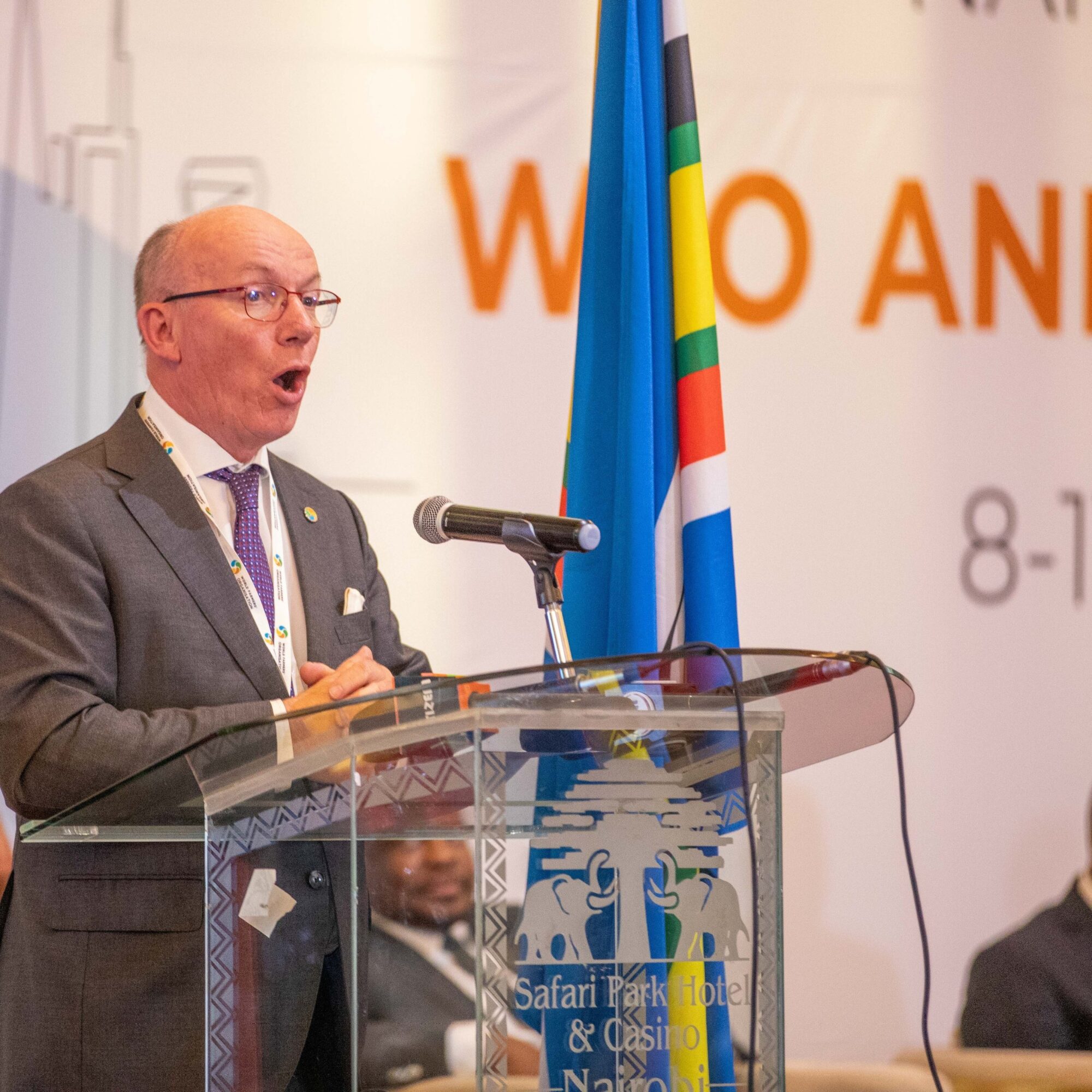
According to a message posted on the Kenya’s Ministry of Agriculture and Livestock Development’s X platform, Cabinet Secretary (CS) for Agriculture and Livestock Development Sen. Mutahi Kagwe made the call during the opening of the 2026 World Farmers’ Organisation (WFO) General Assembly in Nairobi.
Addressing delegates from around the world, including farmers’ organisations, agribusiness leaders, policymakers and development partners, Kagwe urged governments, regulators, manufacturers and international organisations to harmonise global standards governing agricultural chemicals.
“The world cannot continue operating under a double standard when it comes to agricultural chemicals,” Kagwe said. “Products deemed unsafe in one country should not be sold in another simply because regulations are weaker.”
He stressed that the health and lives of farmers in developing countries should be valued equally and called for stronger international safeguards to protect agricultural communities from harmful substances.
Kagwe warned that unsafe agrochemicals, counterfeit farm inputs and the illegal trafficking of agricultural products continue to threaten food safety, public health, environmental sustainability and access to export markets.
He called for enhanced collaboration among governments and stakeholders to combat the counterfeiting, misuse and illegal trade of agricultural inputs.
“Protecting farmers must go beyond increasing productivity and market access. It must also include safeguarding their health and wellbeing,” he said.
The Cabinet Secretary also urged the international community to place farmers at the centre of global agricultural policy discussions, arguing that their welfare, dignity and prosperity have often received insufficient attention despite their critical role in feeding the world.
Kagwe challenged long-standing inequalities in global agriculture and called for greater investment in farmers, describing such investments as essential for economic growth, food security and national stability.
He further advocated reforms in agricultural financing and highlighted Kenya’s efforts to modernise the sector through technology and data-driven systems. Among the initiatives he cited was the Kenya Integrated Agricultural Management Information System (KIAMIS), which is designed to improve agricultural planning and service delivery.
As discussions continue at the WFO General Assembly, Kagwe urged delegates to ensure that outcomes from the gathering remain focused on farmers’ interests.
“Every policy, investment and recommendation emerging from this conference should be guided by one principle: putting farmers first,” he said.
The World Farmers’ Organisation General Assembly has brought together stakeholders from across the globe to discuss key issues affecting agriculture, food systems and the future of farming.