Kenya and Tanzania have reaffirmed their commitment to strengthening cross-border cooperation on animal health, livestock production, breeding and trade to protect pastoral livelihoods, improve food security and support sustainable economic development.
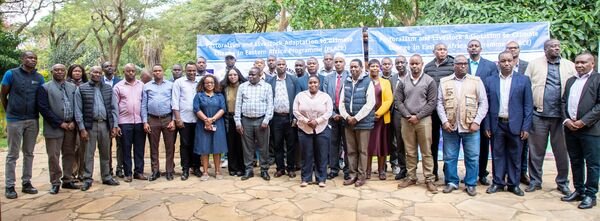
The commitment was reached during a three-day bilateral meeting held in Namanga from September 8 to 10, 2026, under the European Union-funded Pastoralism and Livestock Adaptation to Climate Change in Eastern Africa (PLACE) Programme. The programme is implemented by the Food and Agriculture Organization of the United Nations (FAO) in Kenya and Tanzania.
The meeting brought together livestock experts and stakeholders from the two countries to strengthen cooperation on animal disease surveillance, prevention and control, while promoting safe and regulated livestock movement and trade across the Mara-Serengeti ecosystem.
The meeting also received technical support from the East African Community (EAC) Secretariat, represented by Dr. David Balikowa.
Coordinated action
During the official opening, Kenya’s Director of Livestock Production, Bishar Elmi, highlighted the importance of livestock to livelihoods, employment and economic growth.
Elmi noted that transboundary animal diseases cannot be effectively controlled by one country alone because animals, animal products, people and disease vectors regularly cross national borders.
Kenya and Tanzania share interconnected livestock production systems, markets and pastoral communities. Cross-border mobility allows herders to access pasture and water, improve breeding opportunities and participate in livestock markets, but uncoordinated movement can also increase the risk of spreading transboundary animal diseases and zoonotic infections.
Tanzania’s Director of Veterinary Services, Dr. Daniel Mdetele, emphasized the importance of livestock mobility within the Maasai pastoral production system and the wider cross-border economy.
He noted that livestock movement between Kenya’s Narok and Kajiado counties and neighbouring areas of Tanzania remains important for trade, social networks and household livelihoods.
“The objective should not be to stop cross-border livestock movement, but rather to facilitate movement that is safe, regulated, traceable and mutually beneficial,” said Dr Mdetele.
He called for stronger collaboration among veterinary services, local authorities and national governments to balance livestock mobility with effective disease prevention and control.
Longido District Commissioner Salum Kalli also stressed the need for continued communication and cooperation between the two countries in addressing shared livestock production and animal health challenges.
New framework proposed
Participants reviewed progress under the existing bilateral framework for animal disease prevention and control and discussed plans to develop a new Memorandum of Understanding covering 2027 to 2031.
The countries agreed to strengthen disease surveillance, improve information sharing, support lawful livestock movement and trade, mobilize resources and increase community participation in animal health interventions.
Tanzania will host the next joint planning meeting in May 2027, providing an opportunity for the two countries to assess progress and advance coordinated action on livestock health, production and trade.