



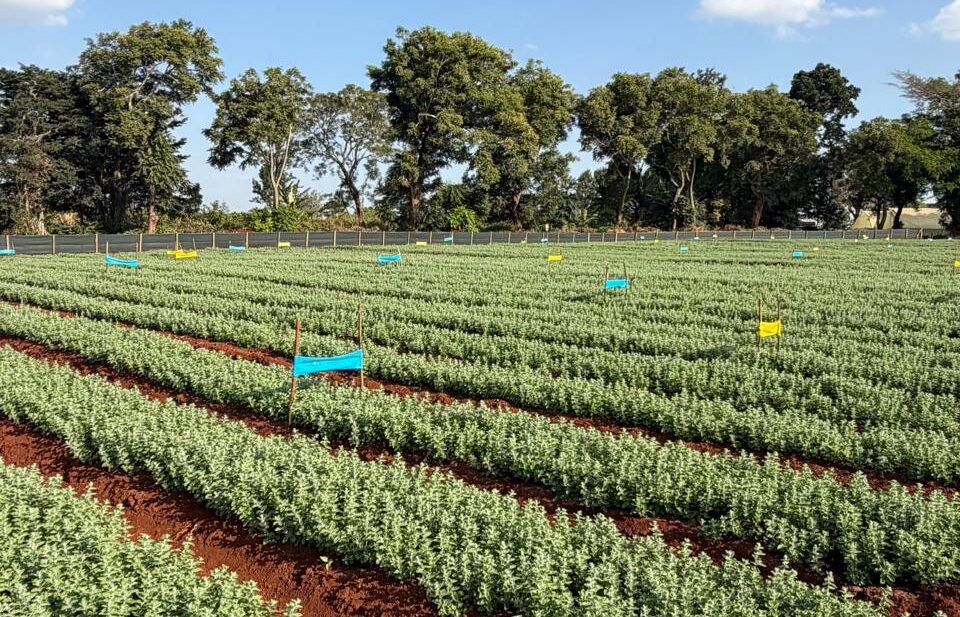
- Indian AI-native biosolutions company begins commercialisation of six biological products in Kenya
- Plans wider expansion across the US & Southeast Asia through 2026 and 2027
Absolute, an AI BioSolutions company, has begun commercial operations in Kenya for INERA, its agricultural biologicals arm. This marks the company’s entry into Africa as part of its global plan to deploy regenerative agricultural solutions at scale across key farming regions.
INERA has partnered with an established Kenyan agricultural company with experience across floriculture, exotic herbs and horticulture to distribute and scale its products locally. INERA’s commercialised initial portfolio comprises six biological products across two areas — Biological Nutrition Management and Plant Physiology & Climate Resilience. The portfolio is designed to work at the plant–soil interface, improving how crops access and utilise nutrients while supporting plant performance under environmental stress.
Kenya will also serve as a base for INERA’s wider African expansion. The company is evaluating additional markets across East and West Africa for launches through the remainder of 2026 and 2027, alongside growing its commercial presence in the US and Southeast Asia.
The move comes as Africa emerges as one of the world’s most consequential agricultural growth markets. The continent holds close to two-thirds of the world’s remaining uncultivated arable land, according to the African Development Bank, but agricultural productivity remains well below global averages. African cereal yields averaged about 1.68 tonnes per hectare in 2024, compared with a global average of around 4.2 tonnes per hectare. The gap is creating demand for technologies that can raise farm productivity without simply increasing input intensity.
Why Kenya
Kenya combines a large smallholder farming economy with a sophisticated export-oriented horticulture industry. Agriculture directly contributes about 24% of the country’s GDP, while roughly 72% of the population derives its livelihood directly or indirectly from the sector, according to the Kenya National Bureau of Statistics.
High-value horticulture is particularly important. Kenya exported horticultural produce worth KSh136.6 billion in 2024, according to the Agriculture and Food Authority. Flowers contributed KSh72.1 billion, or about 53% of horticultural export value, while fruit exports generated another KSh41 billion. Roses alone accounted for roughly 70% of the value of flower exports.
For growers serving demanding export markets, productivity is not only about tonnes per hectare. Nutrient availability, root health, flowering, uniformity, crop quality, resilience to heat and water stress, residue compliance and post-harvest performance can all affect commercial outcomes. These are areas where biological inputs can complement conventional agronomy by improving nutrient mobilisation, plant physiology and the soil-root interface.
Kenyan agriculture is also contending with declining soil fertility, nutrient depletion and greater climate variability. At the same time, Kenya’s crop-protection market is undergoing a broader regulatory transition, including the withdrawal and review of a number of conventional pesticide products. INERA said this creates a longer-term opportunity for its pipeline of biological crop-protection technologies, including microbial, peptide and RNAi-based biocontrols, as these products complete local regulatory and commercialisation pathways. These future crop-protection products are separate from the six products in the initial Kenya launch.
Biology discovered in nature, designed with AI
At the core of INERA’s product-development engine are two proprietary Absolute platforms built to discover and design new biology.
The Nature Intelligence Platform (NIP™) is Absolute’s proprietary repository of thousands of novel microbes, biomolecules, enzymes and other biological diversity sourced and characterised from natural ecosystems, including extreme environments such as glaciers, volcanic sites, mangroves, oceans, forests and deserts. The underlying premise is that organisms that have evolved under unusual heat, salinity, nutrient scarcity, disease pressure and other stresses can contain biological functions with applications in agriculture and other industries.
Alongside NIP™, Absolute uses Nature+™, its AI-based protein and biomolecule design, discovery and validation platform. Nature+ interrogates biological datasets, predicts function and interactions, identifies promising molecules and proteins, and helps design candidates against defined problems. Candidates are then experimentally validated before progressing through product development and field trials.
Together, the platforms allow Absolute to move from discovering useful biology in nature to computationally identifying and designing biological solutions for specific applications. In agriculture, the resulting pipeline spans microbials, peptides, secondary metabolites, proteins and RNAi, which can be developed into crop nutrition, biostimulant, seed-coating and biocontrol products.
“Africa will be one of the world’s most important agricultural regions over the coming decades, but its productivity gains cannot come from simply replicating input-intensive models built elsewhere. The opportunity is to help farmers produce more from every acre while using nutrients and water more intelligently and rebuilding soil biology. Kenya is our first step towards taking Absolute’s AI and biology platform to farmers across Africa and, ultimately, globally.”
— Agam Khare, Founder and Group CEO, Absolute
From India to a global regenerative agriculture platform
INERA’s Kenya entry is being built as a local commercial operation rather than an export-only model. Its Kenyan partner brings local grower relationships, market knowledge and distribution capabilities, while INERA brings biological discovery, product development and field-validation capabilities. The company plans to work with local growers and agronomists to validate products across crops, soils and climatic conditions as it expands deployment.
INERA has built a field-validation network spanning more than 100 acres across 10+ agro-climatic zones and says it has conducted more than 50,000 field trials and farmer demonstrations to date. The company also works with agriculture, food and life-sciences companies including Olam, ADAMA, ITC, CropNxt and Jubilant, among others.


[…] Absolute, an Indian AI-native bio-solutions company, is using its agricultural biologicals arm INERA to enter Africa through Kenya. The move is part of a global plan to deploy regenerative agricultural technologies at scale across major farming regions, including the US and Southeast Asia over 2026 and 2027. As a result, Kenya becomes both a commercial test-bed and a regional hub for AI-driven biological inputs. […]
Comments are closed.