

The International Crops Research Institute for the Semi-Arid Tropics (ICRISAT) has taken a leading role in the global fight against the destructive red palm weevil by launching Workstream 3 – Digital Innovations under the Consortium for Red Palm Weevil Control (C4RPWC). The move marks a strategic shift toward predictive, technology-driven pest management designed to protect date palms and livelihoods around the world.
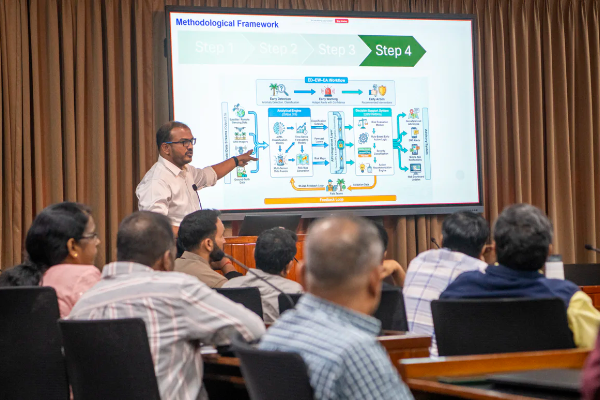
The initiative was unveiled at ICRISAT’s headquarters in Hyderabad, where scientists and partners gathered to kick off the digital workstream of the three-year global program supported by The Presidential Court of the United Arab Emirates and the Bill & Melinda Gates Foundation.
The consortium brings together a network of leading research institutions to strengthen early detection, early warning systems and address persistent gaps in Red Palm Weevil (RPW) control.
At the launch, Dr. Stanford Blade, Deputy Director General for Research and Innovation at ICRISAT, emphasized the cultural and economic significance of date palms in many communities — particularly in the Middle East — and stressed the urgency of practical solutions to stem the pest’s devastation.
Workstream 3 focuses on harnessing cutting-edge digital tools and data to detect RPW infestations before they cause irreversible damage.
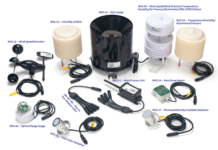
Under the leadership of Dr. Srikanth Rupavatharam, Senior Scientist in Digital Agriculture at ICRISAT, the workstream will integrate remote sensing, internet-connected sensors, drones, satellite imagery and climate data into unified early-warning platforms. The aim is to make prediction and monitoring affordable and usable in the field.
“By bridging science with digital innovation and strengthening partnerships, we will ensure the outcomes remain affordable, operationally feasible, and ready for use in the field,” Dr. Rupavatharam said at the event.
Experts from CGIAR’s Digital Transformation Accelerator, ICARDA (the program lead), and collaborators from the University of California, Davis and Spectral Analytix are working alongside ICRISAT to reshape how RPW infestations are managed globally. A key objective is identifying risk before visible symptoms appear — a concept referred to by partners as detecting “Stage minus two.”
Over the next three years (2026–2028), the consortium plans to move from developing algorithms and pilot tools to field trials and scalable applications that link real-time sensing with actionable alerts for farmers and pest managers.
The ultimate goal is to create a field-usable digital package that helps prevent RPW outbreaks, safeguarding palms, local economies and ecosystems across affected regions.
The digital workstream forms one of five major components of the C4RPWC program, alongside bio-based solutions, biotechnological innovations, good agricultural practices and efforts to drive adoption and scale-up of effective control strategies.
As global palm producers and communities confront increasingly complex pest pressures, ICRISAT’s digital push represents a promising step toward smarter, technology-enabled pest management and more resilient agricultural systems.