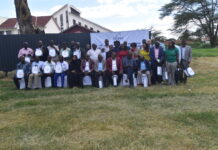


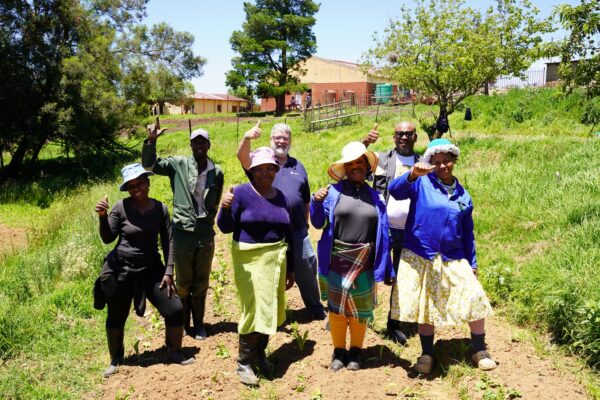
Community members of the Batlokoa Ba Mota cultural community of Tsheseng in Phuthaditjhaba in the Free State yesterday received vegetable production training from Saai and AfriForum which focused on regenerative agricultural methods that is tailored to communities that have access to limited resources. The training involved soil health improvement and preparation, mulching for better water retention, temperature stabilisation and weed control, planting, general care and management as well as life skills. This is the next step in the process of supporting the community to strengthen their self-sufficiency and self-reliance undertaken by the historic partnership that was forged under the leadership of the Executive of the National House of Traditional and Khoi-San Leaders (NHTKL) with Saai, AfriForum and the office of Morena e Moholo (Principal Traditional Leader) Montoeli Mota of the Batlokoa Ba Mota as the other partners.
This comes after the partnership announced the successful implementation of a solar-driven water supply system that reliably provides water to the local vegetable garden that will supply vegetables to the local feeding scheme, which currently faces vegetable supply shortages. The historic partnership was established as part of the inaugural annual Lenaka Memorial Lecture held at Manthatisi Secondary School in Sedibeng by the end of 2024.
“It is encouraging to see the next positive impact of the partnership on our community. Willingness, commitment, knowledge and skills are key to ensure the success of any project. We are grateful to the partners for equipping our community members with the knowledge and skills required to produce vegetables within our low resource reality. I am looking forward to the first harvest that will be produced,” says Morena e Moholo Montoeli Mota, Morena e Moholo of the Batlokoa Ba Mota cultural community.
“The annual Lenaka Memorial Lecture serves as a platform to celebrate our heritage and cultural identity while promoting socio-economic development within traditional communities. The NHTKL follows an approach of strengthening partnerships, enhancing institutional capacity and unlocking opportunities for sustainable growth. We are encouraged by the fact that this initiative led to training and skills transfer for this rural community which will contribute towards leaving a lasting positive legacy,” says Kgosi Thabo Seatlholo, Chairperson of the NHTKL.
“The training is about more than just the transfer of practical and technical knowledge and skills relating to the sustainable and profitable production of vegetables. It is also about equipping community members with life skills that will positively impact their everyday lives. The Cultural Communities Network, built between grassroots cultural communities based on mutual recognition and respect, is growing stronger and is paving the way for a prosperous future for the children of all communities in the country,” says Nantes Kelder, National Project Coordinator of Intercultural Relations and Cooperation at AfriForum.
“We are grateful for this opportunity to empower community members in a deep rural, communal area with the knowledge and skills that will strengthen their ability to curb malnutrition and make a life through agriculture,” says Dr Theo de Jager, Board Chairman of the family farmer network Saai.