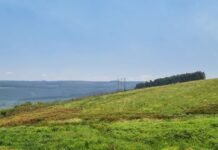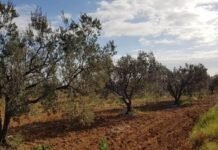


In the rolling landscapes of Kenya’s Kiambu and Makueni counties, fruit trees are doing far more than producing harvests. They are restoring degraded landscapes, strengthening household incomes, empowering women and youth, and offering farmers new opportunities to adapt to climate change.
These are the lasting outcomes of the Fruit Trees for Climate Adaptation and Mitigation in East Africa project, supported by the Australian Centre for International Agricultural Research (ACIAR) and implemented through a partnership led by the Center for International Forestry Research and World Agroforestry (CIFOR-ICRAF), Jomo Kenyatta University of Agriculture and Technology (JKUAT), government agencies and farming communities.
According to Prof Catherine Muthuri, Project Leader for the Fruit Trees for Climate Adaptation and Mitigation in East Africa, the initiative was designed to build on lessons from an earlier regional investment while addressing emerging challenges.
“The project came about following a successful Trees for Food Security project investment by ACIAR across four countries in the region. We wanted to take the learnings into Kenya and also fill in the gaps identified during the study in Rwanda,” she says. “Our goal was to enhance on-farm tree growing, build climate change adaptation, and improve food security and nutrition by increasing fruit trees on farms.”
Partnerships and collaboration
Central to the project’s success was collaboration.
“Right from the start, we needed the right partne
rs,” Prof Muthuri explains. “CIFOR-ICRAF provided scientific leadership, while JKUAT strengthened the project’s capacity-building component. Our mantra has always been the right trees for the right place, supported by quality seedlings from nursery to farm.”
Government support ensured that scientific innovations translated into long-term impact.
Former Kiambu County government representative Rachel Mwangi says avocado and macadamia quickly emerged as priority crops because they matched farmers’ land sizes and offered strong economic returns.
“The government was a key partner at both national and county levels. This ensured the project addressed government priorities while guaranteeing sustainability beyond the project’s lifetime,” she says.
The partnership also helped strengthen farmer organizations. County officials supported the formation of cooperatives, developed governance structures and trained leaders to improve management.
One of the project’s most visible legacies is the formation of the Avocado and Macadamia Cooperative (AVOMAC).
Chairman Patrick Gichia recalls that the idea emerged after participating in a training workshop in October 2022.
“After being taught by the experts, I realized you can’t sell when you are alone. But when you have a group of farmers, you can market your produce much better. That is how AVOMAC was born,” he says.
Today, the cooperative has become more than a marketing platform.
“As a cooperative, it’s easy to reach every farmer, organize pruning, coordinate harvesting and bring young people together during picking. AVOMAC is very good for marketing and farmer training,” Gichia says, noting that farmers now receive about five shillings more per kilogram of produce—an increase of more than 70 percent.
Addressing gender inequalities
Beyond improving markets, the project deliberately addressed gender inequalities that limited women’s participation in tree farming.
Socio-Economist and Gender Officer Dennis Wakaba explains that early assessments revealed that men dominated both decision-making and control of farm income.
“We realized there were gender inequalities in tree growing. Men controlled the decisions and the income generated from the farm,” he says.
Farmer and AVOMAC member Jean Vera Wambui says the cooperative has helped change that reality.
“AVOMAC has enabled women to grow economically because men are encouraged to share their trees with women. I now train other women on good farming practices,” she says.
The project also attracted a new generation of agri-entrepreneurs.
According to Dr Leah Ndungu, Regional Manager for Eastern and Southern Africa at ACIAR, the investment aligned perfectly with the organization’s regional priorities.
“It had a strong climate focus and, importantly, involved young people. Contrary to what has often been observed, this project successfully brought many youth into agriculture,” she says.
One of those young farmers is Mary Kunene, who sees climate-smart agriculture as both a business opportunity and a pathway to environmental stewardship.
“In the next two to three years, I believe I will have reached thousands of people through farming for profitability and sustainability. I also believe we will have entered the carbon market, which will benefit young people and our communities,” she says.
Scientific innovation
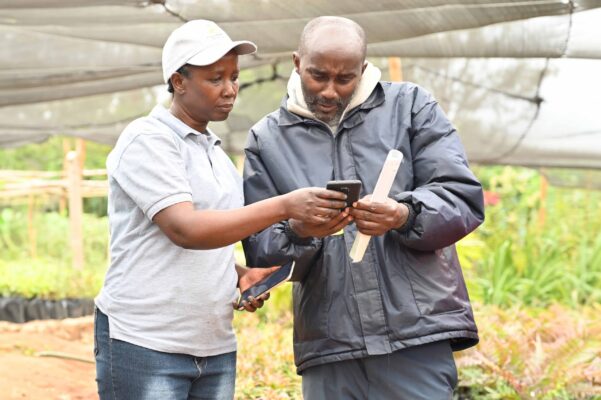
Scientific innovation has been another hallmark of the project. Researchers developed biomass equations for mango and avocado trees, simplified carbon measurement guidelines and the Kuza Matunda mobile application, which helps farmers identify the most suitable fruit tree species for their local conditions.
Transdisciplinary Research Scientist Anne Kuria says the digital platform was designed around farmers’ needs.
“We co-created an interactive tree species selection tool that captures past, present and future climate conditions. The Kuza Matunda app contains information on 59 fruit tree species and is available in Kiswahili and local languages,” she explains.
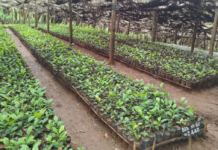
The project also strengthened Kenya’s supply of quality planting material.
Nursery owner Mary Mwanza says access to certified seedlings has transformed farmer confidence.
“When farmers come to the nursery, we recommend tree species based on where they live and advise them on proper planting, including the use of biochar to retain moisture. The Kuza Matunda Hub has helped us know where different seedlings are needed across Kenya,” she says.
For farmer Gideon Murai, participation in the research itself has been life-changing.
“I volunteered five mature avocado trees for biomass studies and received 50 replacement trees. Those trees are doing very well, and the knowledge I gained has helped me train other farmers and young people on carbon measurement,” he says.
From cutting-edge science to farmer-led innovation, the Fruit Trees for Climate Adaptation and Mitigation in East Africa project demonstrates that climate resilience grows strongest when research, government, communities and farmers work together.
As fruit trees continue to take root across East Africa, they are producing not only healthier landscapes, but also more resilient livelihoods and a more sustainable agricultural future.