

Chipamuriwo Village Business Unit (VBU) remains the centre of attraction and a place of hope for Chipamuriwo, Mandendera and the surrounding villages in Ward 2 and 7 in Rushinga District, Zimbabwe.
The garden, which measures one hectare, is benefiting a total of 107 families, transforming what was once a struggle for food and income into a thriving agribusiness hub.
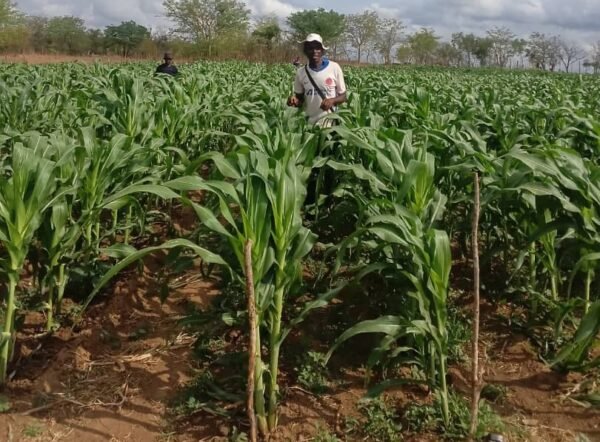
A visit to the scheme reveals a lush, green maize crop standing tall and healthy, a clear testimony that with water, unity and hard work, communal farmers can defeat drought and hunger.
The maize variety is ZAP 31, which is performing well under irrigation, well fed with Compound D and GEEORGANIC Boost foliar fertilizers, all happening in the midst of the El Niño induced heat waves.
Previously, the farmers produced tomatoes during a window when tomato prices were very high on the market, earning good income and proving that timing and market awareness are key to profitability in horticulture.
Water for irrigation is drawn from a borehole at the site, which has sustained the garden through dry spells.
However, the major constraint is water rationing. The farmers are facing challenges in rationing water with livestock and domestic users, as the same borehole serves multiple needs for the community.
During an interview, the garden chair Mr Chaitika Chirema alluded to the drilling of another borehole, stand-alone for domestic and livestock use, to relieve pressure on irrigation.
“If we get another borehole for domestic and livestock, our irrigation borehole will serve only the garden. Then production will increase,” said Mr Chirema.
He also advised farmers who are capacitated to drill their own boreholes, and urged them to form cooperatives to drill more boreholes.
He went on to discuss how they planted their garden: “We staggered our crop for market. We did not plant everything at once so that we can supply the market continuously and avoid losses.”
In a statement, some beneficiaries made it clear that having more of these gardens in their communities will drive change in their lives for good.
For many families in Ward 2, the VBU is more than a garden. It is a source of food, income, and dignity. Farmers who once depended on rain-fed farming now grow crops throughout the year, sell surplus produce, and send their children to school.
The project continues to attract farmers and visitors from neighbouring villages who come to learn, to copy, and to be inspired.
In a district often affected by El Niño and dry spells, Chipamuriwo VBU stands as proof that embracing modern agricultural technologies is key to ensuring sustainable farming systems.