

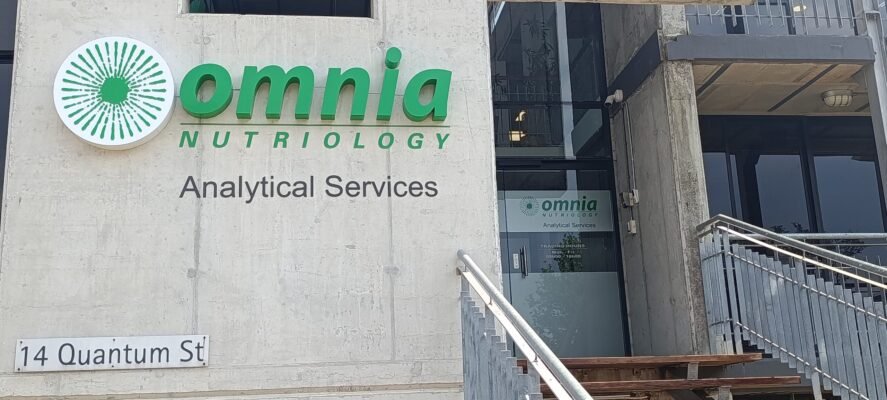
Omnia expands Analytical Services into the Western Cape
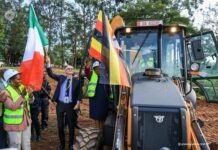
Marking World Science Day for Peace and Development on 10 November, Omnia is demonstrating the practical value of agricultural science with the expansion of its Analytical Services capability into the Western Cape. The recent opening of its new facility in Stellenbosch brings advanced, AI-enabled analytical technology closer to producers in the region, giving them faster access to the accurate data and insights needed to make informed production decisions.
Every input decision has a direct bearing on the performance and efficiency of a production system. Understanding what is happening within the soil, water and crops is essential to identifying potential risks, recognising opportunities and determining where intervention can have the greatest impact.
The new facility represents a significant step in Omnia’s commitment to science-led agriculture, combining advanced analytical technology with agronomic expertise to help producers optimise inputs, improve resource efficiency and make more informed decisions that support productivity and return on investment.
“Our launch of Analytical Services in the Western Cape reflects our dedication to supporting producers with the insight they need to make informed decisions. By bringing accurate analysis closer to the farm, we are helping producers strengthen productivity, use resources more efficiently and build a more resilient future for agriculture,” says Stephan Serfontein, Executive Director of Omnia Nutriology.
A new approach to agricultural analysis
The Stellenbosch facility is not a traditional wet chemistry laboratory. Omnia has taken proven analytical technology from its existing capability and IP build over 70 years in Sasolburg and implemented it in the Western Cape, creating a fully technology-driven and AI-enabled analytical offering. The technology significantly reduces turnaround times, with processes that traditionally took days to complete, while still maintaining the same accuracy and precision of analysis. The quality of analysis is one of the most important key components to ensure agronomists supporting the producers can make the best-informed decisions. This gives producers and agronomists earlier access to insightful information creating opportunities to impact seasonal production decisions.
Quick turnaround is only valuable when it comes with credible results. The technology enables Omnia to provide the quality and accuracy needed for agricultural decision-making, while supporting a more environmentally focused and sustainable approach to analysis. For producers, this means access to reliable information sooner, giving them and their agronomists a greater opportunity to use that information when it matters.
Locating this capability in Stellenbosch also brings analytical services closer to the Western Cape’s diverse production environment. Producers can access high-quality information sooner which forms the basis to use alongside local knowledge and agronomic expertise to make informed decisions suited to their crops, soils, water sources and production conditions.
Omnia Analytical Services offers soil, sap, water, plant tissue and biological DNA analysis, providing insight across the chemical, physical and biological aspects of the production system.
Each form of analysis provides a different perspective. Considered together, they create a more complete understanding of the production system– producing more with less and driving increased returns for producers.
Soil analysis helps build an understanding of the foundation the producer is working with. Water analysis adds another important layer and can identify factors that may influence soil conditions, nutrient availability and crop performance. Sap analysis takes the producer and agronomist closer to what is happening within the plant, while DNA and biological analysis provide insight into the living components of the production system that may not otherwise be visible.
For Edna Laubscher, Analytical Services lead at Omnia, this ability to have access to insightful information is fundamental to managing production risk. “Testing is knowing,” says Laubscher. “The more we know about what is happening within a production system, the better equipped we are to make informed decisions. That knowledge helps producers identify potential risks, understand where the opportunities lie and make decisions that can ultimately support optimum yield performance.”
The objective is not simply to generate more data; it is to turn data into useful knowledge that can guide impactful actions.
Every input represents an investment. Fertilizer, biologicals, crop nutrition products and other interventions should have a clear reason for being used. More input does not automatically mean more yield. The focus should be on applying the right input, for the right reason and for the right production need, at the right time and in the right quantities. That requires evidence and a more complete understanding of the production system. Viewed separately, analytical findings provide individual results. When interpreted together and considered alongside the producer’s observations and the agronomist’s expertise a profound impact that matters can be made.
Understanding the chemistry, physical and biology characteristics of the production system gives producers a stronger basis from which to manage risk, optimise inputs and pursue sustainable yield performance.
The remarkable reduction in turnaround time, with the same accuracy and precision as a wet chemistry lab offered by this technology in Omnia’s Stellenbosch facility adds another important advantage. Agriculture does not stand still while a producer waits for an answer. A crop continues to develop and grow. Conditions change. Nutrient requirements shift. A developing limitation can become a larger problem.
Fast, accurate analysis gives producers and agronomists timely insight to investigate challenges, respond to changing conditions and adjust to practices while there is still time to make a difference.
As Laubscher explains, “The value of testing is not in receiving a detailed report. It is in understanding what that result is telling you and having the opportunity to use that knowledge that will impact the returns for the farmers. The faster we can provide accurate insight, the sooner that conversation can happen.”
An analytical result on its own is not the end goal. It is the starting point for an informed conversation. By combining analytical results with the producer’s knowledge and the agronomist’s expertise, Omnia partners with the farmer to identify risks and opportunities more accurately and guide more precise production decisions.
The focus shifts from “What product should I use?” to “What does my production system need, and what is the appropriate response?” This is where analytical insight step into action.
The Omnia Stellenbosch facility strengthens the connection between high-quality expertise, analytical science and practical agronomy, giving producers a clearer understanding of what is happening within their production systems and how best to respond. By combining fast accurate analysis with agronomic expertise, producers can identify risks and opportunities earlier, make more informed input decisions and take targeted action to optimise yield performance and increase returns.
The real value of analysis lies not in the volume of data generated, but in the quality of the data that is accurate, timeous and insightful. This enables decision making as the production cycle is happening. By turning scientific information into practical agronomic insight, Omnia assists producers move from informed understanding to acting with greater confidence. That is where insight delivers meaningful impact.