

“The conservation of animals and plants is more important to human beings than we are to them. These forms of life are vital for our survival.” – Laurens van der Post, University of Cape Town, 1982 lecture
Earth Day 2026 takes place on Wednesday April 22. This year’s campaign is centered on the theme “Our Power, Our Planet” which focuses on individual and community actions to drive positive ecological solutions – highlighting the power of people to effect change through advocacy, volunteering, civic participation, sustainable choices, and strengthening the public demand for environmental protections. From its 1970 origins to a global movement, Earth Day now works with more than 150,000 partners in over 192 countries, celebrating our planet and calling attention to the need for environmental stewardship and accountability.
Earth Day aims to unite over one billion people annually for activities like neighborhood cleanups, tree planting, and educational workshops. This year’s rubric of cultivating a sense of shared responsibility emphasises that change requires action from all levels of society; that all people can make a difference and that we cannot purely rely on government interventions, regulatory changes or in a technological magic bullet to conveniently resolve our environmental woes. Our Power, Our Planet is about understanding the role of each individual worldwide in participating in shaping environmental outcomes that affect all the pillars of sustainability: the cost of living, economic resilience, public health, water availability, clean air, infrastructure, energy, climate change, land use, waste management, agriculture and food systems.
Environmental systems are globally interconnected. Air pollution crosses borders. Water systems span nations and regions. Food production and supply chains depend on shared ecosystems. Disruptions in one location can affect livelihoods elsewhere. In a tumultuous world with unpredictable conflicts, local environmental action contributes to local resilience. Community-based initiatives such as cleanups, recycling, responsible water consumption, protections for parks and green public spaces, vigilance regarding wild species and minimising carbon footprints all contribute to immediate local stability and flourishing.
Biodiversity, the variability among living organisms, underpins all life on Earth. This includes diversity within species, between species and across ecosystems. People depend on biodiversity in many ways. Healthy communities are sustained by well-functioning ecosystems, which provide clean air, fresh water and food security. For example, forests absorb over 2.8 billion tonnes of carbon dioxide annually, contributing to climate regulation. However, biodiversity loss is accelerating at an unprecedented rate, with approximately 1 million species at risk of extinction, exacerbating public health risks. Between 1970 and 2020 the size of animal populations – for which data is available – have on average declined by 73 percent, according to the most recent Living Planet Report, which measures the average change in population sizes of more than 5,000 vertebrate species. Healthy ecosystems provide 75 percent of global freshwater resources, with wetlands playing a key role in water purification. However, since 1970, 35 percent of wetlands have been lost. At least 680 vertebrate species had been driven to extinction since the 16th century and the average abundance of native species in most major land-based habitats has fallen by at least 20 percent since 1900. According to the International Union for Conservation of Nature (IUCN) Red List of Threatened Species more than 48,600 animals worldwide are threatened with extinction, including 41 percent of amphibians, 26 percent of the world’s mammals, 11 percent of the world’s birds and 21 percent of reptiles. The Aichi biodiversity targets, established by the UN Convention of Biological Diversity in 2011 – which aims to address the underlying causes of biodiversity loss – may only be achieved through transformative changes across economic, social and political sectors. Effective nature conservation requires broad participation. One wishes that the world was twice as big and half of it was still unexplored, as Sir David Attenborough contemplated.
Adding a hint of distress on our national front, it was recently reported that the government of South Africa is considering relaxing its Environmental Impact Assessment rules for new developments. This would strip away at the approval process, due diligence and oversight mechanisms – in favour of procuring more hasty project approval at the expense of potentially higher ecological hazards. If we are to avoid crossing the threshold for ecological collapse, be it through climate change or biodiversity loss, if anything we need to improve our levels of scrutiny. Quick profits won’t protect or resuscitate nature.
Nature is the real world. Everything else is artificial. If we compress Earth’s history into a single year, humans wouldn’t appear until the final two seconds on December 31. Yet in our culture we tend to see ourselves as isolated from and superior to nature. “For many, the only time that interests us is now. The only space of concern is the one we occupy. Usually, it doesn’t matter what happens in the rest of the world or to the environment, unless or until it affects us directly,” said Ian McCullum in Ecological Intelligence. “Sadly, this attitude has been central to the perpetuating causes of our current environmental crises. It is nothing short of what can be described as lethal environmental lethargy. It is easy to plead ignorance with regards to what we are doing to the land, the sky and the seas, but it does not make us innocent. Ignorance is not bliss. Ignorance has been the catalyst in practically every environmental mishap of this past century. It is time to take nature seriously,” he concluded.
We are all a piece of the larger fabric of life. The plants and animals that evolved on the land are the land. They are what make the place itself a living, breathing organism. As a species, we belong in the living world; we evolved within it after all. The living world is a part of us – it’s ingrained in our DNA. We know that green spaces have a therapeutic effect on people; the absence of exposure to nature is a key driver in alienating ourselves from our connection to the land and our ecological dependencies. The impulse to collect things is an evolutionary urge that served earlier humans gathering what they needed to survive, but today it has been hijacked by consumerism to such an extent that it largely distracts and prevents us from interacting with the plant and animal life around us.
The famous Overview Effect, described by Apollo 14 astronaut Edgar Mitchell, denotes an intense sense of global consciousness, connection, and a desire to protect the planet – upon seeing Earth from space: “You develop an instant global consciousness, a people orientation, an intense dissatisfaction with the state of the world, and a compulsion to do something about it,” he said. Similar sentiments have been recorded by other Apollo-age astronauts and crew members of the recent Artemis II mission. However, you don’t need to blast off past the atmosphere to feel connected with our little blue sphere. In a study published in 2025 psychologists interviewed deep-sea divers who live for weeks at a time near the ocean floor. They reported experiencing a similar profound feeling, which the researchers dubbed the underview effect. It doesn’t necessarily take a bold panoramic perspective – any immersive experience can shift people out of their normal, habitual ways of viewing the world. Everyday experiences of awe in nature: marvelling at a beautiful flower, a majestic tree, the delicate flight of an insect or the swift ballet of a flock of birds can be equally transformative – if we only pay attention.
To help serve this objective, iNaturalist is a credible international mobile platform aimed at getting people out in nature, taking photos to document what they see. The free service provides expert feedback and identification – helping create a living atlas of nature, as citizen botanists – and even new species have been discovered by everyday users.
From 24-27 April iNaturalist offers their international City Nature Challenge – now in its 11th year – an annual four-day “bioblitz” event where people around the world use the app to capture the plants and wildlife in their regions, providing vital data to help protect and conserve global biodiversity. Challenges are happening in the Garden Route, the West Coast, Cape Town, the Cape Winelands, Joburg, Tshwane, Ekurhuleni, in the Eastern Cape and Kwazulu-Natal – however anyone anywhere can participate. In an age of generative-AI; no fabricated imagery can replace the deeply moving experience of witnessing wild animals and indigenous plants thriving in their natural habitats.
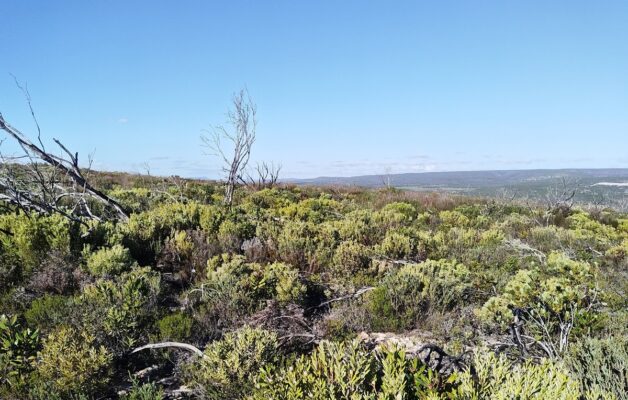
The Wild Rescue nature reserve near Still Bay will host free training and observation sessions during the Challenge weekend, led by experts from the Gouritz Cluster Biosphere. Says Gill Simpson, Executive Director of Wild Rescue, “We all have a duty to look after this extraordinary home we have been given. Nature is there for us to enjoy. As we learn to appreciate it we should accept our responsibility to act as stewards, to keep and preserve it for future generations.”
Earth Day 2026 serves as a reminder that small actions taken by individuals and communities can create meaningful changes, and it can begin by just opening your eyes to the real natural world.
To find local volunteer opportunities and projects, Earthday.org provides an events tracker here.
The Nature Conservancy – celebrating their 75th year – has a free downloadable Earth Day 2026 Guide, filled with ideas and inspirations for connecting with nature.