

Biodegradable film mulching, also known as biofilm, is emerging as a promising tool to make rice production more climate-resilient by sharply reducing water use and greenhouse gas emissions without sacrificing yield, according to a latest report published by the International Rice Research Institute (IRRI).
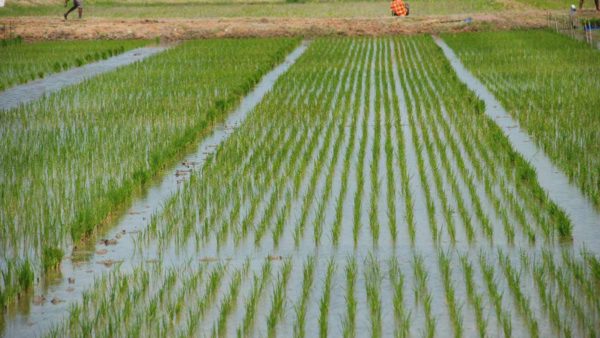
Rice agriculture traditionally relies on continuous flooding, a practice that consumes vast quantities of freshwater and creates anaerobic soil conditions that promote methane emissions — a greenhouse gas far more potent than carbon dioxide.
With climate change tightening water supplies and intensifying environmental concerns, scientists and farmers are exploring sustainable alternatives that maintain productivity while lowering environmental footprints.
What is biofilm?
Biofilm refers to thin, biodegradable sheets made from plant-based materials such as polybutylene adipate terephthalate (PBAT) and polylactic acid (PLA) — polymers derived from crops like corn and sugarcane.
Once applied as mulch on rice fields, these films break down naturally in soil within approximately 100 days, eliminating plastic residue and reducing waste.
When laid over the soil surface, biofilms help conserve soil moisture, suppress weed growth, and improve seed-to-soil contact, leading to healthier crop establishment and reduced labor needs.
Major environmental and agronomic benefits
According to the IRRI report, biodegradable film mulching offers multiple advantages that could transform rice systems:
- Dramatic Water Savings: Biofilm mulching can cut irrigation water requirements by up to 50–60 percent compared with traditional flooded rice systems, making it a powerful tool for water-scarce regions.
- Lower Greenhouse Gas Emissions: The technique has been shown to reduce emissions of methane (CH₄) and nitrous oxide (N₂O) by up to 54 percent, contributing to lower overall climate impacts from rice fields.
- Improved Soil Health: Beyond acting as a physical barrier, biofilms can add organic carbon to the soil as they degrade, boosting microbial activity, aiding nutrient cycling, and enhancing soil structure — all vital for long-term fertility.
- Enhanced Yields: Biofilm use has been associated with yield increases of approximately 20–25 percent relative to conventional puddled transplanted rice, driven by better tillering, root development, and reduced fertilizer leaching.
Academic studies cited in the IRRI report support these findings. For example, a 2023 paper in Resources, Conservation and Recycling found that biodegradable film mulching in dryland rice production could save as much as 67 percent of irrigation water and lower methane emissions by 73 percent while maintaining yields comparable to traditional systems.
Additionally, a 2025 study in the Journal of Integrative Agriculture highlighted how biofilm created favorable soil conditions, allowing stronger root growth and improved water efficiency under reduced‐water regimes.
Supporting sustainable direct-seeded rice
Biofilm also facilitates direct-seeded rice (DSR), an emerging method that bypasses traditional transplanting to save water.
However, DSR’s reliance on non-flooded fields can lead to weed problems. Biofilm mulch acts as a physical barrier to weed emergence, helping farmers reduce dependence on water for weed control and integrate other sustainable practices such as alternate wetting and drying (AWD) to further enhance efficiency.
Economic and adoption challenges
Despite its potential, widespread adoption of biodegradable film mulching in South Asia and other major rice-growing regions remains limited.
The technology’s current cost — roughly $100–120 per hectare — could be a barrier for smallholder farmers, although local manufacturing and raw material sourcing could help reduce costs.
When paired with reduced water use and lower input costs, total returns per hectare can exceed current profit margins under conventional practices.
Research gaps and future directions
The IRRI report stresses the need for expanded field-level validation across diverse agro-ecological zones, localized economic assessments, and integration with existing climate-smart practices.
Such studies would help tailor biofilm strategies to local conditions and accelerate adoption among farmers facing increasing climate and resource pressures.
As global demand for rice continues to rise amid mounting environmental constraints, innovations like biodegradable film mulching could play a pivotal role in balancing productivity, water conservation, and climate mitigation — ushering in a new era of sustainable rice production.