

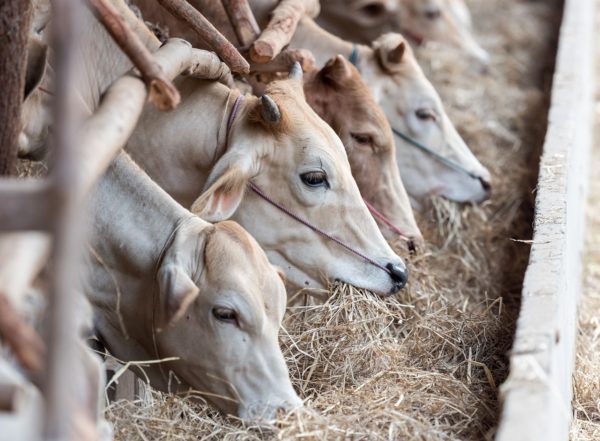
A recently published research has indicated that Accelerating Impacts of CGIAR Climate Research for Africa (AICCRA) project led by national and international research institutions, development partners, and local stakeholders has significantly closed the livestock feed gap for tens of thousands of Ethiopian smallholder farmers by promoting improved feed and forage solutions.
Titled ‘Enhancing AICCRA’s Impact in Ethiopia through Feed and Forage Research and Scaling Innovations’, the report highlights the breadth and depth of interventions that have bolstered livestock productivity across several zones in Ethiopia.
The study shows that more than 31,900 smallholder farmers have benefited directly from feed and forage interventions supported by AICCRA in the North Shewa, Hadiya, Kembata, Siltie, and Guraghe zones of Ethiopia.
Of the farmers reached, about 23–25 percent are women, underscoring gender inclusion in the project’s approach to supporting livestock-dependent households.
The research points out that livestock feed scarcity has long constrained Ethiopian livestock production, reducing productivity, incomes, and resilience in the face of climate variability.
AICCRA’s interventions focused on promoting climate-smart feed and forage innovations to increase the availability and quality of livestock feed across diverse agro-ecological zones in the country.
The project combined on-farm demonstrations of validated innovations with strengthened partnerships involving national research institutions and local stakeholders to promote adoption at scale.
Capacity building was a core element of the initiative, with 998 farmers, development agents, and livestock experts receiving both theoretical and practical training on feed and forage production, management, utilization, and seed systems.
Beyond direct beneficiaries, the project’s communication strategies reached more than 130,000 people through community radio broadcasts in multiple local languages and targeted mobile audio messages.
The report warns that despite progress, challenges remain that could hinder widescale adoption of improved feed and forage technologies.
Key constraints identified include limited access to certified forage seeds and high input costs, which can deter farmers from investing in new feed options.
Land scarcity and weak market linkages for forage seeds and feed products also pose barriers to sustainable scaling of these innovations.
The study notes inadequate coordination among stakeholders and gaps in policy and monitoring tools as additional systemic challenges.
To address these, planned actions include expanding forage seed commercialization models to strengthen private sector participation.
The report highlights the need to collect cost-benefit evidence and map priority forage species to inform investment and scaling decisions.
Learning from ongoing scaling work and widely sharing lessons are also key components of the project’s next phase.
Research authors emphasize that integrating feed and forage innovations within broader farming systems can enhance soil health, restore degraded landscapes, and improve livestock productivity sustainably.
The AICCRA project in Ethiopia is part of a larger regional initiative that aims to support smallholder farmers’ resilience to climate change by enhancing access to climate-smart agriculture technologies and information.
By addressing the livestock feed deficit with evidence-based innovations, the project supports broader objectives of food security and improved livelihoods for rural communities across Ethiopia.
The research calls for continued investment and collaboration among government agencies, research institutions, and the private sector to sustain gains and reach even more livestock farmers in the coming years.