

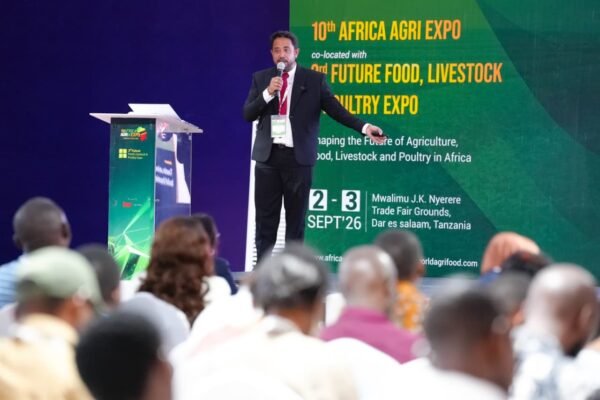
At the 10th Africa Agri Expo, held at the Mwalimu J.K. Nyerere Trade Fair Grounds in Dar es Salaam on 2nd and 3rd September, Agricom opened its “Beyond the Tractor” presentation with a practical question: What must happen after a machine reaches the farm for it to improve output, reduce avoidable costs and support a reliable income?
The value of machinery that works for farmers begins with matching equipment to the job, but it also depends on trained operators, finance, regular maintenance, available parts, storage and access to buyers. If one link fails, a machine can sit idle, miss planting windows or add costs without increasing farm income. The exhibition allowed farmers, contractors, dealers and lenders to examine these practical connections alongside the equipment on display.
Machinery choices should begin with the farm problem.
When choosing a tractor, planter or thresher, the first step is to identify the task causing the biggest delay. It might be late land preparation, uneven planting, slow spraying, or crop losses during harvesting and handling. Focusing on that problem helps the buyer decide on the right working width, capacity, power and how many hectares the machine needs to cover in a limited time.Farm size alone does not determine the best choice. Factors like soil condition, slope, field access, crop type, distance between plots and availability of a trained operator all influence performance.
Farmers comparing Agricom machinery in Tanzania should note these conditions before discussing engine size or price. This information helps dealers and technicians better match the machine and its implements to the job.
Live demonstrations should answer practical questions
A live display lets visitors ask questions that brochures may not cover. How tightly can the machine turn? Can the operator easily and safely reach the controls? How long does it take to attach an implement? What daily checks, maintenance and common repairs will be required? Even when a full field test is not possible, a guided demonstration can show whether the machine is easy to use and compatible with the buyer’s existing equipment.
Visitors should also compare similar machines. A tractor with the right implement may outperform a bigger machine using the wrong tool or settings. Farmers should ask how the implement connects, how much weight the tractor must lift and whether the implement is powered by the tractor’s PTO shaft. Exhibitors should point out any additional equipment used during the demonstration.
A tractor delivers value only as part of the farming cycle
Numbers alone do not show real progress in farming. The true measure is whether farmers can finish work on time, reduce losses and earn more from what they grow. A tractor by itself cannot plant, spray, harvest or prepare crops for sale without the right implements. Mechanization is not just about buying machines; it also involves trained operators, access to hire services, proper maintenance, repairs and spare parts.
This applies across the entire farming process, from land preparation and irrigation to planting, crop management, harvesting, storage and marketing. Successful mechanization depends on who owns the equipment and who can access it. A small farm might rent a machine for a short seasonal task, while a frequent user may justify buying one. In both cases, the machine needs to arrive on time and work well with the crop, field conditions and next steps in production.
The real cost appears after the quotation
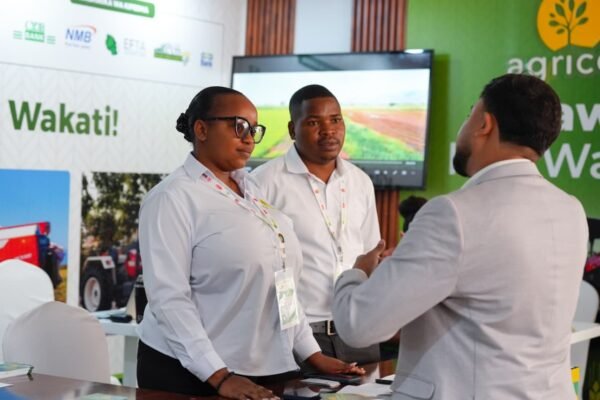
The purchase price is just the beginning. Fredrick Sagemiko, a cashew farmer from Manyoni, said the cost of a Swaraj tractor and its implements was more than he could pay upfront. “I received my tractor in just five days,” he said, after NMB approved his loan, adding that he makes repayments after harvest. This helped with the initial cost, but the tractor still has to do enough work to cover fuel, maintenance, parts, operator wages and loan payments.
Farmers should also consider Agricom’s after-sales support and financing when buying machinery. They need clear information on who will commission the equipment, train the operator, handle regular maintenance and fix any breakdowns. Written agreements should explain what is covered, which parts are kept in stock, how long repairs usually take and what the borrower is responsible for paying.
Africa Agri Expo 2026 showed that the machinery debate cannot end with the number of tractors on display. Progress depends on whether equipment fits a defined task, works with the correct implement, receives timely service and helps farmers move produce from field to storage and buyers without avoidable loss. That is the message the theme “Beyond the Tractor” sought to convey at Africa Agri Expo.