

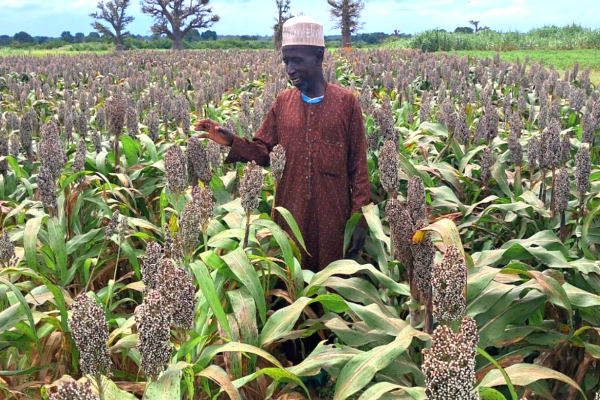
South Sudan is taking steps toward building a stronger and more self-reliant agricultural sector by developing a homegrown seed industry that is creating new opportunities for farmers, women and private businesses.
According to a World Bank (WB) report on Building South Sudan’s Homegrown Seed Industry is Creating Local Opportunities, through South Sudan Resilient Agricultural Livelihoods Project (RALP), farmers are benefiting from nationally a nationally owned seed system supporting local seed production, certification, storage and marketing.
The initiative is addressing longstanding challenges that have left farmers dependent on imported seeds that often arrive late, reducing planting opportunities and crop productivity.
For years, farmers have faced limited access to quality seed, climate shocks, conflict, weak markets and inadequate storage and certification systems. Imported seeds could arrive after the rainy season had begun, while poor handling and the absence of strong regulatory systems sometimes resulted in low germination rates.
RALP, implemented by the Ministry of Agriculture and Food Security with support from the Food and Agriculture Organization of the United Nations, is changing that situation by promoting community-led Quality Declared Seed production and Farmer-Led Seed Enterprise models.
The project has supported the establishment and training of 13 County Seed Quality Control Boards, helping strengthen oversight of seed quality and certification. It has also supported seed producer groups, seed storage facilities, foundation seed production and training in seed multiplication and quality assurance.
One of the most visible signs of progress has been the growth of seed trade fairs, which connect local seed producers directly with farmers ahead of the planting season. These markets give farmers access to affordable, locally produced and climate-adapted seeds while providing seed producers with reliable markets for their products.
Between 2023 and 2025, 286 certified seed producer groups produced 1,740 metric tons of Quality Declared Seed—nearly three times the estimated seasonal requirement of 618 metric tons. The resulting surplus of 1,122 metric tons was valued at about $1.2 million, according to the World Bank.
The initiative is also creating opportunities for women. Women now hold 45 percent of leadership positions in seed producer groups and make up more than half of organized farmer group members. Training and participation in seed enterprises are helping strengthen their economic empowerment and role in local decision-making.
Private companies are also becoming increasingly involved. Five companies initially supported to produce foundation seed are now working with farmer groups to purchase and distribute locally produced seeds, helping expand access beyond areas directly supported by RALP.
The impact can be seen in Aweil East County, where the Omdurman Farmers’ Cooperative has expanded its cultivated land from five to 24 acres within three seasons and produced more than 3.6 metric tons of sesame and groundnut seed.
The growth has given farmers a way to meet their own seed needs while generating income from surplus production.
“The training in quality seed production has enabled us to supply our own seed needs and stop depending on imported seeds that are often delayed and affect productivity due to late planting,” Kiir Lual Kiir told WB. “We no longer wait for seeds from outside Aweil. We even make money from selling our seeds locally, money that we have used to buy oxen and expand our farms.”
The emerging seed industry could therefore help South Sudan reduce dependence on imported seeds, retain more agricultural investment within local communities and strengthen food security while creating sustainable rural businesses.