

Umlibo, a 5×2 m tapestry stitched by 41 women and two men in a remote village on the Eastern Cape coast, goes to auction in Cape Town on 15 September 2026.
First unveiled in 2023, the Umlibo tapestry is the handiwork of the Keiskamma Art Project whose advocacy work is world-renowned. The tapestry takes its name from the isiXhosa word for a pumpkin vine, a plant that spreads wherever conditions allow, just as the artists hope their message will.
Umlibo’s scenes of fishing grounds, cattle and food gardens trace what a changing climate has done to the community that made it. Now, as those climate pressures intensify, the work is being sold to help fund conservation efforts and to give back to the community.
In 2023, Umlibo travelled to the international climate meeting (COP28 in Dubai) where it caught the eye of President Cyril Ramaphosa, who remarked that the colourful, hand-stitched work “contained everything any head of state needs to say about the climate issue”.
“It is the most amazing piece of work and to know that it was done in the deep rural areas of our country makes me very proud,” he said at the time.
Strauss & Co will offer the work at a live virtual auction, where it carries a pre-sale estimate of R250 000 to R300 000.
Stand close, and you see the detail. A woman on a donkey cart. Red cattle grazing beside wind turbines. A fisherman casting his net into an embroidered estuary. Applique, beadwork and thick coloured cotton build the scenes onto hessian, some sections worked in relief so that flowers and waves stand off the surface. Step back, and the fragments resolve into a butterfly, one wing depicting the hardships of a warming world and the other the possibility of a more positive, sustainable future.
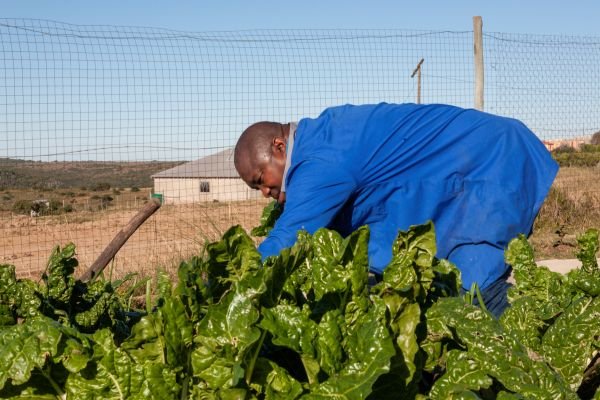
The scenes come from lived experience, and several of the makers stitched their own into the work. Nozeti Makhubalo once dived for abalone by night and now watches the same marine stocks she harvested grow scarcer year on year. Kwandi Paliso keeps a fenced food garden going against moles, roaming livestock and a weather pattern she can no longer read. Veronica Betani, the project’s head seamstress, worries that her cracked house will not stand the stronger winds she expects as the climate shifts.
Umlibo was commissioned by WWF South Africa with funding from the government of Flanders, as part of a marine project focusing on sustainable livelihoods. The Keiskamma Art Project has exhibited internationally for two decades. Its large-scale tapestries, among them The Keiskamma Altarpiece, The Keiskamma Guernica, The Creation Altarpiece and The Keiskamma Tapestry, have been shown in museums and galleries across South Africa, Europe and North America, several of them responding to the HIV/Aids epidemic and its toll on the community.
“The 43 artists stitched their own home and livelihoods into Umlibo, and showed a changing climate already reshaping them,” says Craig Smith, senior marine specialist at WWF South Africa. “What happens in a tiny village such as Hamburg is a warning for all of us. Nature is our home. Selling the work carries that message forward, and we would love it to go somewhere people can keep engaging with it for years to come.”
Learn more at https://explore.wwf.org.za/en/en-za/umlibo.