The Government of Rwanda has launched a Greenhouse Crop Insurance product aimed at protecting farmers against losses and boosting investment in climate-smart agriculture.
The insurance product was unveiled during an event held at the headquarters of the National Institute of Statistics of Rwanda (NISR), bringing together 123 farmers from all districts of the country, representatives from insurance companies, and senior officials from the Ministry of Agriculture and Animal Resources (MINAGRI), the Rwanda Agriculture and Animal Resources Development Board (RAB), and the National Agricultural Export Development Board (NAEB).
The launch comes as Rwanda intensifies efforts to expand export-oriented agriculture. The country is targeting a 22.3% increase in land under export crops, from 79,409 hectares in 2024 to 97,100 hectares by 2029, through the adoption of modern and climate-smart farming methods.
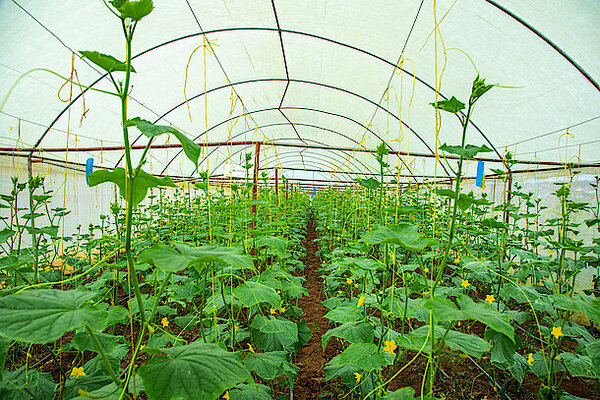
Greenhouse farming has emerged as one of the key technologies being promoted because of its high productivity and resilience to climate change, especially in a country with limited arable land.
Speaking during the launch, Joseph Museruka, Manager of the National Agriculture Insurance Scheme, said greenhouse farming offers significant opportunities for increased productivity and improved crop quality, but also requires substantial financial investment.
He noted that introducing insurance coverage for greenhouse farming would help safeguard farmers’ investments while also encouraging banks and other financial institutions to increase lending to the agricultural sector.
“This Greenhouse Insurance Policy sets out the terms, conditions, and scope of coverage provided to protect the insured against loss or damage to greenhouse structures, equipment, and crops resulting from insured perils,” Museruka said.
“The purpose of this policy is to offer financial protection and stability to greenhouse owners and operators by safeguarding their investments against unforeseen events such as fire, storm, hail, accidental damage, and other risks as specified herein,” he added.
The new product is being implemented under Rwanda’s National Agriculture Insurance Scheme, popularly known as “Tekana Urishingiwe Muhinzi Mworozi.” Under the arrangement, the government subsidizes 40% of the insurance premium while farmers pay the remaining 60%.
Since its introduction in April 2019, the scheme has expanded across all districts of the country and now supports more than 200,000 farmers annually through subsidized insurance coverage.
According to figures released during the launch, compensation payments under the programme have reached RWF 9.39 billion. Of this amount, RWF 5.26 billion has been paid to crop farmers while livestock farmers received RWF 4.13 billion.
The government has also provided insurance subsidies totaling more than RWF 7.02 billion to support farmers and livestock keepers.
Developed in line with Rwanda’s Strategic Plan for Agriculture Transformation (PSTA), the programme currently covers a wide range of crops, including rice, maize, beans, chili, potatoes, cassava, soybeans and vegetables. On the livestock side, coverage includes cattle, poultry, fish and pigs, in addition to greenhouse farming.
Officials said the programme has played a major role in cushioning farmers and livestock keepers against losses caused by unforeseen events, while also improving farmers’ access to agricultural credit by increasing confidence among lenders.
The initiative is implemented through a partnership between the Government of Rwanda and insurance companies including Old Mutual, Radiant Insurance, Sonarwa General Insurance and BK Insurance.
Under the partnership, the government oversees implementation, supports awareness campaigns and ensures timely compensation for beneficiaries.
Authorities urged farmers and livestock keepers to fully utilize the insurance scheme and ensure proper management of their agricultural investments. Local leaders and stakeholders were also encouraged to continue sensitizing communities about the benefits of agricultural insurance.
Officials emphasized that insurance coverage should be secured before the start of farming activities to ensure adequate protection of investments and support sustainable agricultural development in the country.