

Fruit trees commonly grown by smallholder farmers could play a significant role in climate change mitigation while improving livelihoods and food security, according to a new technical brief by the Center for International Forestry Research – World Agroforestry (CIFOR-ICRAF).
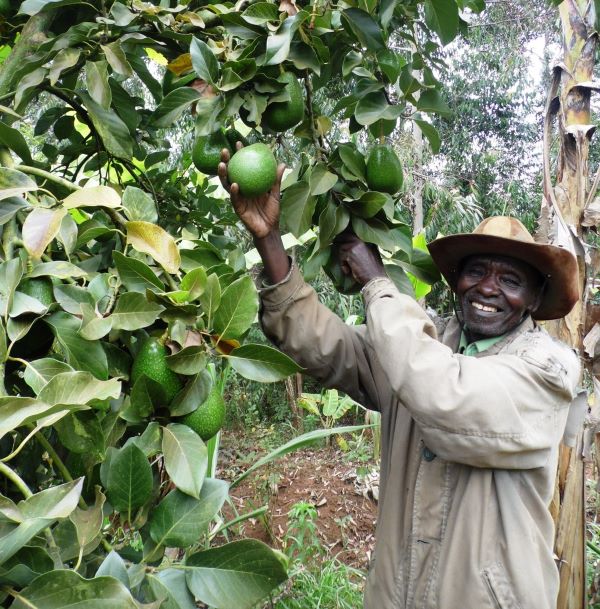
The study highlights the potential of fruit trees such as mango and avocado to store carbon and support sustainable farming systems in Kenya.
The research, titled Carbon Sequestration in Fruit Trees: Insights from Kenya, examines how fruit trees capture and store carbon dioxide from the atmosphere through photosynthesis, helping to reduce greenhouse gas concentrations. Scientists say that integrating fruit trees into farming landscapes can strengthen climate action while supporting farmers’ incomes and nutrition.
According to the brief, fruit trees represent a substantial proportion of trees grown on farms. A survey conducted across two Kenyan counties recorded 158 tree species, of which 60—about 38 percent—were fruit trees. These trees are commonly found in orchards, home gardens and croplands, but they also appear in grazing areas, woodlots and along soil and water conservation structures.
Researchers found that fruit trees store notable amounts of carbon in their above-ground biomass. On average, mango trees were estimated to store about 10.5 ± 2.9 megagrams of carbon per hectare, while avocado trees stored 9.7 ± 2.5 megagrams of carbon per hectare. Much of this carbon is held in farm orchards and home gardens where large and mature fruit trees are common.
Despite this potential, accurately estimating the carbon stored in fruit trees has been difficult. Traditional measurement methods are often expensive and rely on international consultants, making them inaccessible for many smallholder farmers.
To address this challenge, the researchers developed new allometric equations—mathematical formulas that estimate tree biomass using easily measurable variables such as trunk diameter or branch thickness.
For example, by measuring the diameter of the trunk or primary branches, farmers can estimate the above-ground biomass of mango and avocado trees and calculate how much carbon they contain. The approach allows farmers to monitor the climate benefits of their trees without destructive sampling or complex procedures.
Experts say these simplified tools could open opportunities for smallholder farmers to participate in carbon markets and access climate finance. By quantifying the carbon stored in their trees, farmers may be able to negotiate results-based payments for the environmental services they provide. The initiative also aims to reduce the risk of exploitation in carbon trading schemes by giving farmers reliable ways to measure their contributions.
Beyond climate benefits, fruit trees offer multiple advantages in agricultural systems. They produce food and income, enhance biodiversity, and improve soil and water conservation. Agroforestry systems that integrate fruit trees into cropland can therefore deliver both environmental and socio-economic gains.
However, the study also found variations in regeneration rates across regions. In Kiambu County, fruit tree regeneration was rated as good to fair, while in Makueni it was relatively poor and limited mainly to a few exotic species. Researchers say this indicates the need for improved management, better planting strategies and increased diversity of fruit species to maximize benefits.
The findings highlight the growing recognition that agriculture and forestry must work together to tackle climate change. By scaling up fruit tree planting within agroforestry systems, researchers believe countries like Kenya can simultaneously strengthen food security, enhance rural livelihoods and contribute to global climate mitigation efforts.
Overall, the study underscores that fruit trees—long valued for their nutritional and economic benefits—may also become powerful allies in the fight against climate change when properly integrated into farming landscapes.