

Researchers have uncovered a key mechanism that allows plants to temporarily halt growth during environmental stress and then rapidly resume development when conditions improve—a discovery that could help scientists breed crops better suited to withstand climate change.
The findings, published in the journal New Phytologist, show that plants use a coordinated “pause-and-play” system at the cellular level to survive stresses such as cold temperatures, salinity and drought.
The study, led by scientists at the University of British Columbia, highlights how plants respond dynamically to extreme weather—an increasingly urgent issue as climate change intensifies the frequency of heatwaves, floods and cold snaps that threaten global food production.
A survival strategy built on timing
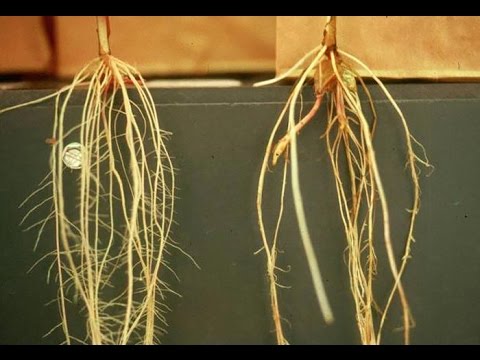
Rather than continuing to grow under harsh conditions, plants deliberately slow or stop growth processes, particularly in their roots, which are critical for water and nutrient uptake. Once favorable conditions return, growth resumes—often within a short time frame.
Researchers observed that this recovery is not simply a passive rebound but a tightly regulated biological process. In experiments involving model plants and grasses, root growth paused during stress exposure and restarted when the stress was removed, demonstrating a consistent pattern across species.
This ability to “pause and restart” may determine whether a plant merely survives or successfully completes its life cycle and produces a harvest.
Cell cycle control at the core
At the heart of this mechanism is the plant cell cycle—the process that controls cell division. The study found that during cold and salt stress, the cell cycle halts at a specific stage known as the “gap phase.” Once the stress subsides, the cycle resumes, allowing growth to continue.
Key molecular regulators, including a protein known as CDKA;1, play a central role in restarting cell division. When researchers inhibited this protein, plants struggled to recover, confirming that the restart process depends on specific genetic controls rather than occurring automatically.
The consistency of this mechanism across different plant species suggests it is evolutionarily conserved, raising the possibility that it could be harnessed in a wide range of crops.
Beyond survival to recovery
Traditionally, crop research has focused on improving tolerance—helping plants survive adverse conditions. However, the new findings shift attention to recovery, a stage that may be equally critical for agricultural productivity.
A plant that survives stress but fails to resume growth quickly may miss key developmental windows, leading to reduced yields. By contrast, plants that recover rapidly can still flower and produce food on schedule.
“Understanding recovery—what happens after stress—is crucial,” researchers note, as it determines whether crops can maintain productivity under increasingly unpredictable weather patterns.
Implications for climate-smart agriculture
The discovery has significant implications for global food security. Climate change is already reducing agricultural productivity in many regions, particularly in warmer parts of the world, and is expected to intensify environmental stresses on crops.
By identifying the genes and pathways that control growth recovery, scientists could develop crop varieties that rebound more quickly after stress events. This could be achieved through advanced breeding techniques or genetic engineering.
Such crops would not only survive extreme conditions but also maintain yields—an essential step toward ensuring stable food supplies in a changing climate.
The researchers emphasize that future work will focus on applying these findings to major staple crops. If successful, the “pause-and-play” mechanism could become a cornerstone of efforts to build climate-resilient agriculture.
As extreme weather becomes the new normal, understanding how plants manage stress—and more importantly, how they recover from it—may prove vital in safeguarding global food systems.