A young Kenyan farmer is carving out a niche in the country’s growing pet industry by introducing a medium-sized, visually striking rabbit breed that appeals to urban pet lovers.
Andrew Kavila, founder of Palmer Rabbitry, is tapping into the rising demand for companion animals among Nairobi residents, a trend driven by urbanisation, social media influence, and the growth of the middle class.
A study by Nairobi-based Step By Step Insurance Agency notes that pet ownership in Kenya’s urban centres is rapidly evolving, with pets no longer viewed merely as security assets or status symbols, but increasingly as companions and family members.
Motivated by these changing attitudes, Kavila in April 2022, founded Palmer Rabbitry currently based in Joska Town, about 14km from Nairobi Central Business District.
Since then, the start–up has grown steadily from a modest number of cages and rabbits, Kavila now manages a diverse stock and a network that serves both local households and high-end clients in Nairobi.
“As demand increased, I realised I couldn’t just focus on rearing rabbits alone. I had to build a complete system that supports other farmers and adds value beyond meat production,” Kavila explains.
Today, Palmer Rabbitry goes beyond breeding rabbits. The farm offers training for aspiring farmers, constructs modern rabbit cages, and sells accessories as well as organic products such as rabbit manure and urine.
Introducing the American Sable
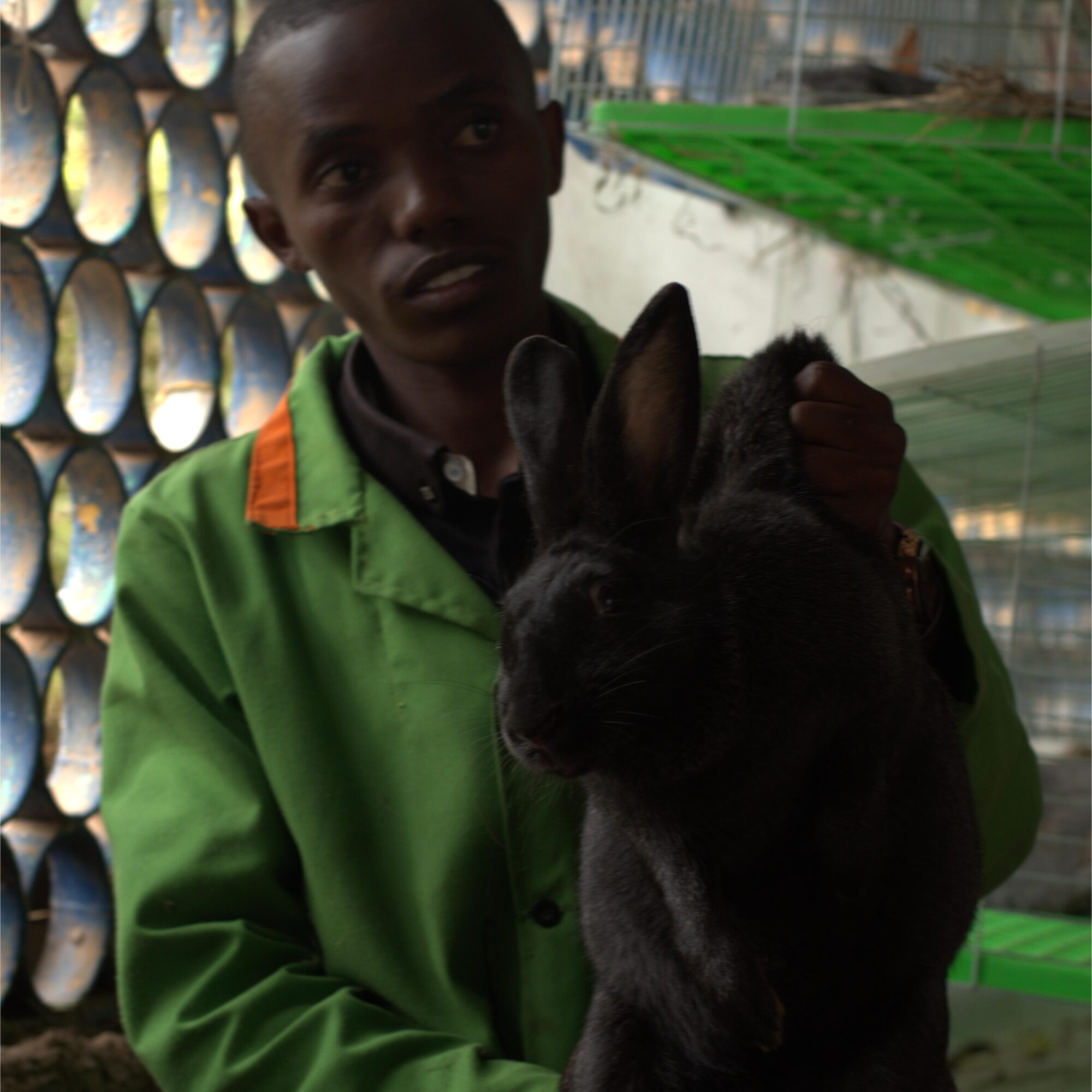
In 2024, Kavila expanded his stock to include the American Sable rabbit, a unique and elegant breed prized for its rich sepia-toned coat, soft fur, and gentle temperament—qualities that make it especially attractive to pet enthusiasts.
The breed originated in California, United States, and was developed to resemble the luxurious coat of a Siamese cat. According to Kavila, American Sables trace their lineage to American Chinchilla rabbits, selectively bred to enhance their distinctive sepia coloration.
The American Rabbit Breeders Association (ARBA) describes the breed as medium-sized, with a well-rounded, muscular body and expressive dark eyes. It is further distinguished by its dense, velvety rollback fur and a signature coat that darkens around the ears, face, feet, and tail, creating a Siamese-like colour gradient that ranges from deep sepia to lighter tan shades.
“Because of these appealing characteristics, the American Sable has become popular among our customers who keep them as pets or show rabbits, thanks to their affectionate nature and beautiful appearance,” Kavila says.
 American Sable rabbit breed
Growth and productivity
American Sable rabbits typically reach sexual maturity between four and six months, while full physical maturity occurs between six and 12 months. Mature bucks weigh between 4.08 and 4.99 kilograms, while does weigh about 4.54 to 5.44 kilograms.
“If well maintained, a doe can give birth to up to eight or nine kits, which means they are highly productive and multiply very fast,” Kavila notes.
To enhance meat production, the farm often crossbreeds American Sables with Chinchilla and Flemish Giant rabbits. This results in larger rabbits that produce nutritious white meat, which is increasingly popular among health-conscious urban consumers.
Feeding and housing
American Sables are fed on hay, pellets, fresh vegetables, and occasional fruit treats. However, toxic foods such as chocolate, onions, garlic, and avocado are strictly avoided. According to ARBA, the breed is active and requires daily exercise to support both physical and mental well-being.
They can be kept indoors or outdoors, provided they have a spacious, well-ventilated enclosure measuring at least four feet long, two feet wide, and two feet high. Kavila recommends soft, absorbent bedding such as aspen shavings or recycled paper, alongside regular spot cleaning and weekly deep cleaning to maintain hygiene. Outdoor rabbits require insulated hutches to protect them from harsh weather conditions.
A diverse operation
In addition to American Sables, Palmer Rabbitry keeps a wide range of breeds, including New Zealand White, California White, Chinchilla, Flemish Giant, Dutch, Palomino, Checkered Giant, Silver Marten, Silver Fox, Blue Vienna, and Havana. Breeds such as New Zealand White, Chinchilla, California White, Palomino, and Havana are primarily suited for meat production.
The farm employs two full-time workers responsible for feeding, cleaning, and overall rabbit care. “Maintaining hygiene is crucial,” Kavila emphasises.
To further diversify income, the farm manufactures modern self-cleaning hutches and sells cage construction materials and accessories. Rabbit manure and urine are marketed as organic fertilisers, promoting sustainability while providing additional revenue streams.
Through training programmes for upcoming farmers, Palmer Rabbitry is also playing a role in strengthening and professionalising rabbit farming in Kenya, positioning the sector as both a viable agribusiness and a contributor to the country’s evolving pet culture.