

In a world where climate change is tightening its grip on water availability and many high-value crops demand substantial water to produce, traditional irrigation approaches are increasingly unsustainable.
Recent data shows that agriculture alone consumes an estimated 70 % of global freshwater withdrawals, and inefficient irrigation methods often waste large volumes of this precious resource—through over-watering, runoff, or evaporation—exacerbating depletion of aquifers and rivers already under stress from rising temperatures and shifting rainfall patterns.
As populations grow and climate variability intensifies drought and unpredictable weather, the stakes for smarter water use in farming couldn’t be higher.
According to FoodLAND Africa, precision irrigation has emerged as one of the most promising tools in the water-conservation toolkit, enabling farmers to apply water and nutrients at the right time, in the right place and in the exact amount crops need.
This shift from blanket field watering to data-informed, targeted irrigation isn’t just good for sustainability—it’s becoming essential for securing food production without draining our water reserves.
What Precision Irrigation Really Means
Precision irrigation isn’t a single device, but a holistic, technology-driven approach to water management in agriculture. At its core, it involves delivering water and, often, nutrients directly to the crop’s root zone in measured doses based on real-time information about soil conditions, plant needs, weather, and topography.
According to leading agritech providers, it’s defined as a “sustainable irrigation scheduling system that delivers applications of water and nutrients to a plant at the right time and place in small, measured doses,” optimizing plant growth and reducing environmental impact.
In practice, precision irrigation uses innovations like soil moisture sensors, remote sensing, GPS/GIS, automated valves, and decision-support software to ensure water is applied only when and where it’s truly needed.
The guidelines developed by the FOODLAND project, for example, stress the role of real-time monitoring and site-specific environmental data in tailoring irrigation schedules to crop water requirements, boosting efficiency and productivity while reducing waste.
Turning Data Into Water Savings
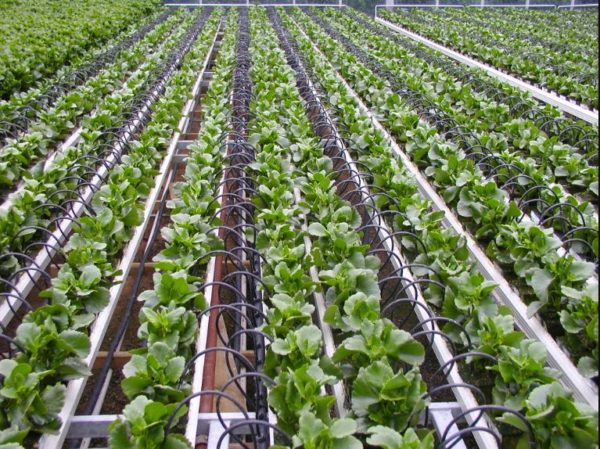
The benefits of precision irrigation are striking when seen through the lens of water use efficiency. Drip systems that feed water directly to the root zone lose far less to evaporation or runoff than traditional sprinklers or flood irrigation, where up to 30 % of applied water can be lost before crops absorb a single drop.
By matching water application to plant needs—based on real-time soil-moisture data and environmental conditions—precision irrigation:
- Reduces water waste through runoff and leaching, keeping valuable resources in the root zone rather than washing them away.
- Cuts evaporation losses by delivering water close to the ground and minimizing exposure to heat and wind.
- Improves soil health by preventing saturation and preserving the ideal balance of air and moisture for roots.
- Optimizes plant nutrition when integrated with fertigation systems that co-deliver water and nutrients efficiently.
Research reviews show precision irrigation can reduce agricultural water use by 10 – 50 % compared with uniform irrigation systems, depending on soil type, management and system design, while maintaining or even increasing yields.
Why This Matters Now
The urgency of adopting precision irrigation grows as water resources face mounting threats. Climate change is altering rainfall patterns, reducing snowpack that feeds major rivers and making water supplies less reliable in many regions.
Over-extraction of groundwater and surface water for irrigation can lead to aquifer depletion and degraded ecosystems.
In agricultural landscapes where water scarcity is already a lived reality, precision irrigation offers a way to stretch scarce water further while safeguarding yields.
It supports farmers in semi-arid environments and regions with limited rainfall, helping to tame the risk of drought-induced yield losses while making every drop count.
Challenges on the Ground
Despite its promise, precision irrigation isn’t universally accessible yet. High initial costs for technology and equipment, limited technical expertise among farmers, and connectivity gaps in rural areas can slow adoption—especially for smallholder farmers.
However, guidelines from development projects emphasize that training, affordable solutions, and context-appropriate system design are critical for broader uptake.
A Path to Sustainable Water Use
Precision irrigation represents more than an upgrade to watering systems; it’s a paradigm shift toward smarter water stewardship in agriculture.
By aligning water application with actual crop needs, integrating digital tools, and prioritizing efficiency at every decision point, farmers can significantly reduce water waste, preserve vital water resources, and build more resilient food systems in the face of climate uncertainty.
As pressure on water sources continues to grow, adopting precision irrigation isn’t just a matter of productivity—it’s a strategy for sustainability and survival in a water-stressed world.