



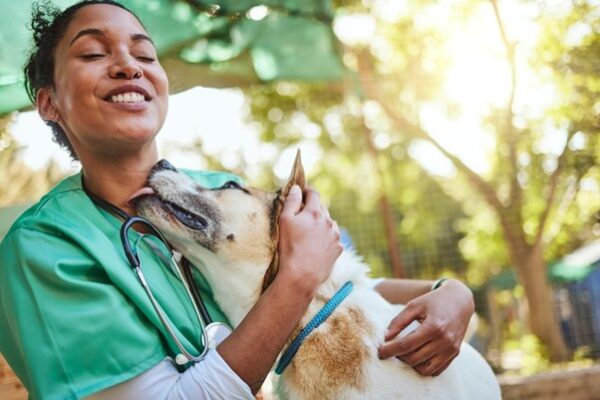
Vets are not only animal doctors, but they are vital in terms of the health status of pets, livestock, and even wildlife within a community. Their role goes beyond clinical treatments into involving public education, disease prevention, and access to veterinary care for underserved populations.
Community outreach has also opened up more avenues in veterinarian jobs, particularly for those interested in public health and community service.
Community-based initiatives, animal health programs, and awareness are some of the many different ways veterinarians greatly contribute to healthier animal and human environments.
The Importance of Community Animal Care
When it comes to community animal care, a teamwork approach involving veterinarians, neighborhood entities, and animal rights activists is a must. A considerable number of veterinarians take part in outreach programs as a way of making sure that the required veterinary care is accessible to pet owners facing financial or location restrictions.
- Offering free or inexpensive spaying and neutering, vaccines, and preventive check-ups for common diseases.
- Delivering healthcare services via mobile clinics and extending the realm of vet services to reach remote and underserved communities through the use of telemedicine.
- Organizing educational workshops that promote responsible pet ownership and disease prevention.
- Addressing socio-economic challenges that limit access to essential animal healthcare services.
- Effecting medical treatments and assisting rescued animals with respect to adoption operations in association with animal shelters.
- Engaging with local educators who can then teach children the importance of animal care and veterinary services.
Animal Disease Prevention Through Education and Awareness
The limitation of diseases in animals is an essential component of veterinary outreach. The veterinarians, instead of concentrating exclusively on treatment, join forces with the local communities in the early education of the pet owners on the health measures that they can take.
- Promoting hygiene and proper nutrition to enhance pet well-being.
- Organizing community workshops, school programs, and public awareness campaigns on zoonotic diseases.
- Encouraging regular deworming, flea control, and vaccination programs to reduce the spread of infections.
- Aligning veterinary outreach initiatives with public health programs to create safer environments for pets and people.
- Supporting disaster response teams to care for animals affected by natural disasters and prevent disease outbreaks.
- Partnering with governmental organizations to enforce pet vaccinations, animal health regulations, and policies.
The Role of Veterinarians in Animal Health Programs
The animal health initiatives aim to tackle major health issues via a very important partnership for music-oriented healthcare service, which mainly involves veterinarians, the government, and organizations supporting the welfare of animals.
- Setting up programs to control diseases, run vaccination drives, and teach people how to care for their pets.
- Finding and treating animal illnesses while also researching ways to improve veterinary medicine.
- Organizing rabies vaccination programs in high-risk areas to stop the disease from spreading.
- Working with animal shelters to keep stray and abandoned pets healthy, making it easier for them to find homes.
- Implementing trap-neuter-release (TNR) programs to manage stray cat populations and reduce disease transmission risks.
- Helping farmers keep their livestock healthy, ensuring a safe food supply for everyone.
How Investing in Livestock and Pays Off
The economic strength of farms is directly linked to the health of the livestock. When animals are well cared for, disease-free protection is provided, and productivity increases, resulting in more milk, meat, eggs, and calves. There is a decrease in mortality, and the rates of growth and fertility are better.
- Foot-and-Mouth Disease (FMD) is one of the diseases that causes enormous economic losses. The situation in Africa is very serious, where FMD still exists as a highly contagious and widespread disease leading to production losses, trade limitations, and lesser access to export markets.
- The repercussions on the economy are extensive. Just one outbreak can lead to decreased milk production, lower weight gain, poorer fertility, and higher death rates, all of which will cumulatively reduce the farmer’s income and disturb the food security of the household.
- On the contrary, investments in preventive veterinary care, vaccines, dewormers, and constant health check-ups give visible returns. This can result in farmers with small holdings and pastoralists getting a stable income from healthy animals, better yields, and being able to cope with shocks.
The veterinary outreach and medicine programmes are also beneficial in terms of cutting down hidden costs, which are all factors contributing to the better long-term economics and sustainability of farms.
Veterinary Support in Rural and Underserved Communities
In most cases, the availability of veterinary services in rural areas is greatly influenced by geographical and economic factors. The participation of veterinarians through mobile clinics and online consultations is of paramount importance in bridging this gap.
- Establishing veterinary outreach programs in areas with inadequate animal healthcare infrastructure.
- Providing subsidized treatment for low-income pet owners.
- Training farmers in optimal livestock health and disease control practices.
- Training local animal caregivers in basic veterinary care and first aid.
- Collaboration with policymakers to obtain funding for veterinary care in underserved communities.
- Introducing telemedicine platforms for pet consultations to provide expert advice remotely.
Impact of Veterinary Education on the Livestock Sector
Quality animal care on a large scale is beyond casual measures; it requires a combination of long-term investment, policy support, and supportive institutional frameworks. State authorities and regional agricultural organizations need to put money into providing veterinary services and setting up communication programs for farmers in distant areas.
Veterinary conferences also provide an opportunity to improve competence and learn about the latest trends in the field. These forums serve as a channel for the sharing of information and the growth of professionals.
Cooperation between the public and private sectors will support the distribution of veterinary medicines and vaccines to remote areas at reduced prices, which would thus be economically viable for smallholder farmers. Aids to vaccination campaigns or integrated livestock health projects would be able to cut the disease burden hugely.
At the policy level, implementing animal‑health regulations, supporting the responsible use of veterinary medicines, and promoting preventive care rather than reactive treatment will strengthen national livestock sectors. This, in turn, supports food security, export potential, and resilience of farming communities.
Expanding Career Opportunities in Community Veterinary Care
Veterinarians looking to expand their impact beyond traditional clinical practice can pursue careers in public health, animal welfare, and community outreach.
- Working in government agencies, nonprofits, and public health to support large animal welfare projects.
- Joining mobile clinics and rural veterinary programs to bring healthcare to animals in remote areas.
- Taking on international roles in disease control, wildlife conservation, and veterinary policy-making.
- Finding personal satisfaction in careers that help both animals and communities stay healthy.
- Becoming a veterinary educator will train future professionals in outreach and preventive care.
- Partnering with rescue organizations to create sustainable adoption and rehabilitation programs.
The Role of Veterinary Technology in Outreach Programs
The advancement of veterinary technology has revolutionized outreach efforts, making animal healthcare more accessible and efficient.
- Utilizing digital health records to track and monitor animal health trends.
- Implementing mobile diagnostic labs to provide on-the-spot testing and treatments.
- Using drones for wildlife monitoring and disease tracking in remote locations.
- Developing mobile applications for pet owners to schedule remote consultations with veterinarians.
- Expanding the use of AI-driven diagnostics to improve early disease detection in animals.
- Training veterinary students and volunteers on the latest technologies to enhance outreach effectiveness.
Overcoming Challenges: Knowledge Gaps, Drug Use, and Sustainability
Although the benefits are there, a lot of challenges exist. In certain areas, the use of vaccines and medications is not very high because of factors like unawareness, cost, supply problems, or lack of confidence.
Often, veterinary infrastructure cannot meet the needs, particularly in areas where farming is not only remote but also of low income. Moreover, the improper or excessive use of antibiotics and dewormers is a one-way ticket to the development of drug resistance, which, in the end, will worsen the animals’ health over the long term.
Sustainable practices, proper amounts, waiting periods, and vigilant monitoring are musts. Additionally, the lack of comprehensive, up-to-date information on disease prevalence, mortality, economic losses, and medical coverage reduces the effectiveness of planning and policy-making.
Improving surveillance activities, record-keeping, and research will contribute to the design of more effective, data-driven livestock health interventions.
What’s Ahead in Veterinary Outreach and Animal Health
As technology continues to develop and raise awareness of animal welfare issues, veterinary extension programs will follow suit, broadening and strengthening.
- In order to expand telemedicine and online health platforms, one must increase accessibility to veterinary care.
- Veterinarians, policymakers, and animal welfare organizations need to develop a strengthened partnership to expand outreach.
- Veterinarians will continue contributing to disease prevention and public health initiatives.
- Ongoing learning and acclimation will drive long-term enhancements in community veterinary care.
- Extra funding and scholarships would certainly help in generating more impact for the research and outreach functions for the underprivileged groups.
Visit Vet and Tech to explore advanced veterinarian education sources, career opportunities, and the latest developments in veterinary medicine. The consideration of veterinary medicine together with nature’s preservation will correspondingly become the biggest factor in getting the overall well-being of the community.
With community outreach, veterinarians promote animal health, safeguard public health, strengthen the human-animal bond, and leave a lasting impact on society.




[…] Veterinarians’ Pivotal Role in Community Outreach for Enhanced Animal Health and Public Well-b… […]
Comments are closed.