


The government of Somalia in partnership with the Food Agriculture Organization (FAO), and the Government of Japan has launched a major fisheries development project aimed at modernising Somalia’s marine sector, boosting incomes for coastal communities, and cracking down on illegal, unreported and unregulated (IUU) fishing along its coastline.
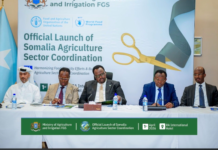
The initiative — unveiled in Mogadishu on December 6, 2025 by the country’s Ministry of Fisheries and Blue Economy (MFBE) — was formally presented by Deputy Minister Ali Ifiye Ali. He described the effort as “vital for economic growth, job creation and the fight against illegal fishing.”
At the core of the project is a push to upgrade fisheries infrastructure, strengthen marine resource-management services, and provide coastal fishing communities with equipment and training to improve how they catch, process and market seafood.
A key component involves enhancing governance over Somalia’s marine resources. The plan includes the establishment of improved monitoring and management systems to detect and deter illegal or unregulated fishing — a problem experts say has long undermined both national revenue and the livelihoods of small-scale fishers.
In addition to protecting fish stocks and supporting sustainability, the project aims to raise the economic value of catches from coastal communities by reducing post-harvest losses and giving fishers access to better storage, processing, and market channels.
Analysts say the initiative could finally activate Somalia’s largely under-tapped marine potential. Despite having one of Africa’s longest coastlines, fisheries have contributed only a small fraction to GDP — in part because of weak infrastructure, limited regulation, and lack of value-chain facilities.
With the support of Japan’s technology and FAO’s technical know-how, this project represents a renewed commitment to making Somalia’s “blue economy” a driver of stability and prosperity for coastal populations.