

For years, US agencies involved in foreign aid advocated “localization.” This means relying on local people, organizations and communities to provide the kind of assistance that results in independence and sustainable economic and social development. Cuts in aid spending by the US and other governments has made that approach even more urgent than before.
There are successful models out there, including those that rely on capital accumulation.
Saving money to invest in a small business, education, etc. is a time-tested way to move out of poverty. But it is not easy. This is especially so for those with low incomes in low-income countries.
But it can be done.
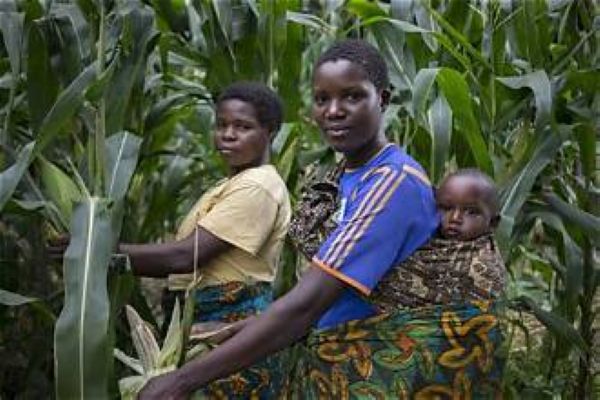
Lucia, a widow and mother of six from Kewamamba village in Tanzania’s Tarime District, has been struggling for years to provide for her family through subsistence farming. Her income has been low and irregular. She had no access to credit and was unable to save or even to repair the leaking roof of her mud-walled house.
Then Lucia was introduced to and joined the Wakulima na Wafugaji (Farmers and Livestock Keepers) Savings and Credit group, set up with the assistance of international development organization World Neighbors and its local partner. Like others in the group, Lucia invested a small amount each month. When a savings and credit group amasses sufficient capital, it lends to members at very low interest rates. There are no loan sharks or other middlemen. And if a borrower has trouble repaying, they work with fellow members to restructure payment. There is no risk of losing land or livestock or something else, as there can be with loan sharks or even banks. Savings and credit groups are owned and controlled by a community, to meet community needs.
When she joined the savings and credit group, Lucia received training in entrepreneurship and business management. Empowered by this new knowledge and new skills, Lucia took out a loan and started selling cassava and maize, which are in high demand.
Lucia’s business began to generate steady income, raising her income from $230.00 to $790.00 annually. This has transformed her life and now she is able to send her children to school, buy food and pay for healthcare services for the family. In addition, she has built a better house.
Lucia plans to expand her business.In addition to her added income, she is now highly regarded in her community as an inspiration to adults and children seeking better lives.
And it all started with very small monthly savings in a savings and credit group.
World Neighbors has used this successful development model for 75 years in Africa, Asia, South America and the Caribbean.